

Plywood Production Line: A Deep Dive
For industry outsiders, understanding the plywood manufacturing process can seem daunting. However, breaking down the modern plywood production line into its core components—the plywood making machine, veneer drying machine, plywood cold press, and plywood hot press—reveals a fascinating interplay of precision engineering and material science. This guide offers a clear, technical pathway to comprehending how raw logs are transformed into durable panels.
The Foundation: Raw Material Preparation
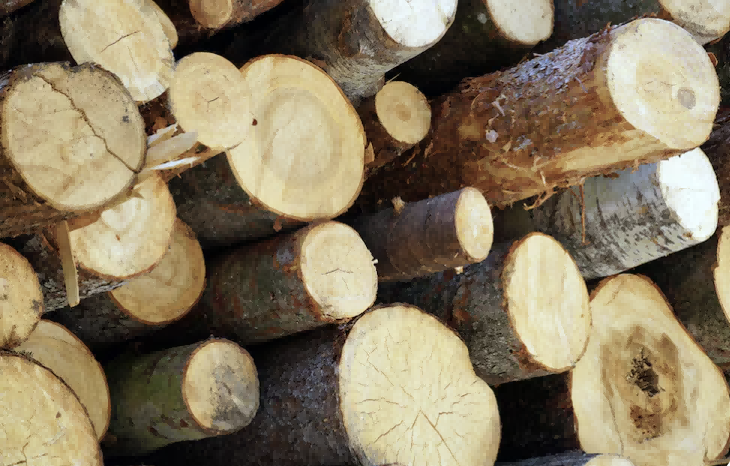
The journey begins long before the veneer enters the plywood dryer. Logs are first debarked and cut into precise lengths. They are then softened in hot water baths or steam chambers, a critical step that plasticizes the lignin in the wood, making it pliable for the rotary lathe. This initial stage is often overlooked but is vital for preventing veneer tear-out during peeling.
The softened logs are fed into a rotary peeling machine, the heart of the plywood making machine setup. Here, the log is rotated against a sharp blade, unspooling a continuous sheet of thin veneer. The precision of this machine dictates the entire process; even minor thickness variations can cause delamination or warping in the final panel. The resulting "green" veneer, while dimensionally accurate, is saturated with moisture and must be stabilized before further processing.
The Drying Phase: Stabilizing the Veneer
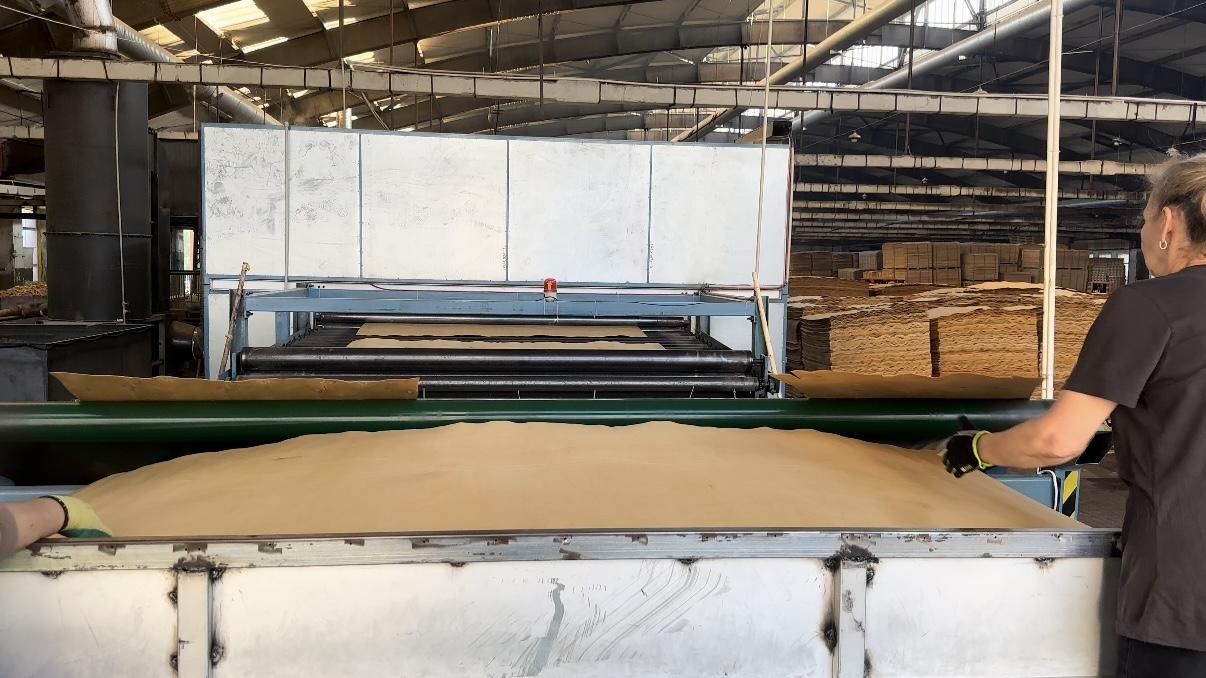
Freshly peeled veneer has a moisture content that can exceed 80%. Attempting to glue it at this stage would result in steam blisters and failed bonds. This is where the veneer drying machine becomes indispensable. Often referred to as a plywood dryer, this equipment typically employs a conveyor system that carries the veneer through a heated tunnel.
Modern veneer drying machines operate at temperatures between 150°C and 200°C, using forced air circulation to reduce moisture content to an optimal 6-12%. The efficiency of the plywood dryer directly impacts energy consumption and veneer quality. Advanced dryers now feature multi-zone controls and moisture-sensing feedback loops that automatically adjust temperature profiles based on wood species and initial moisture levels, ensuring uniform drying without cracking.
Assembly and Pre-Pressing: The Cold Press Stage
Once dried, the veneers are graded, trimmed, and fed into the gluing station. Adhesives are applied via automated spreaders, and the layers are assembled in a cross-grain pattern. This "mat" of layered veneers then enters a plywood cold press.
The role of the plywood cold press is frequently misunderstood. It is not for curing the adhesive but for pre-consolidation. By applying significant pressure at ambient temperature, the plywood cold press accomplishes three key tasks: it expels trapped air, ensures intimate contact between veneer layers for initial adhesive grab, and creates a semi-rigid mat that is stable enough to be conveyed into the hot press without shifting. This step is crucial for preventing panel delamination and ensuring a smooth surface finish.
The Heart of the Process: Hot Press Curing
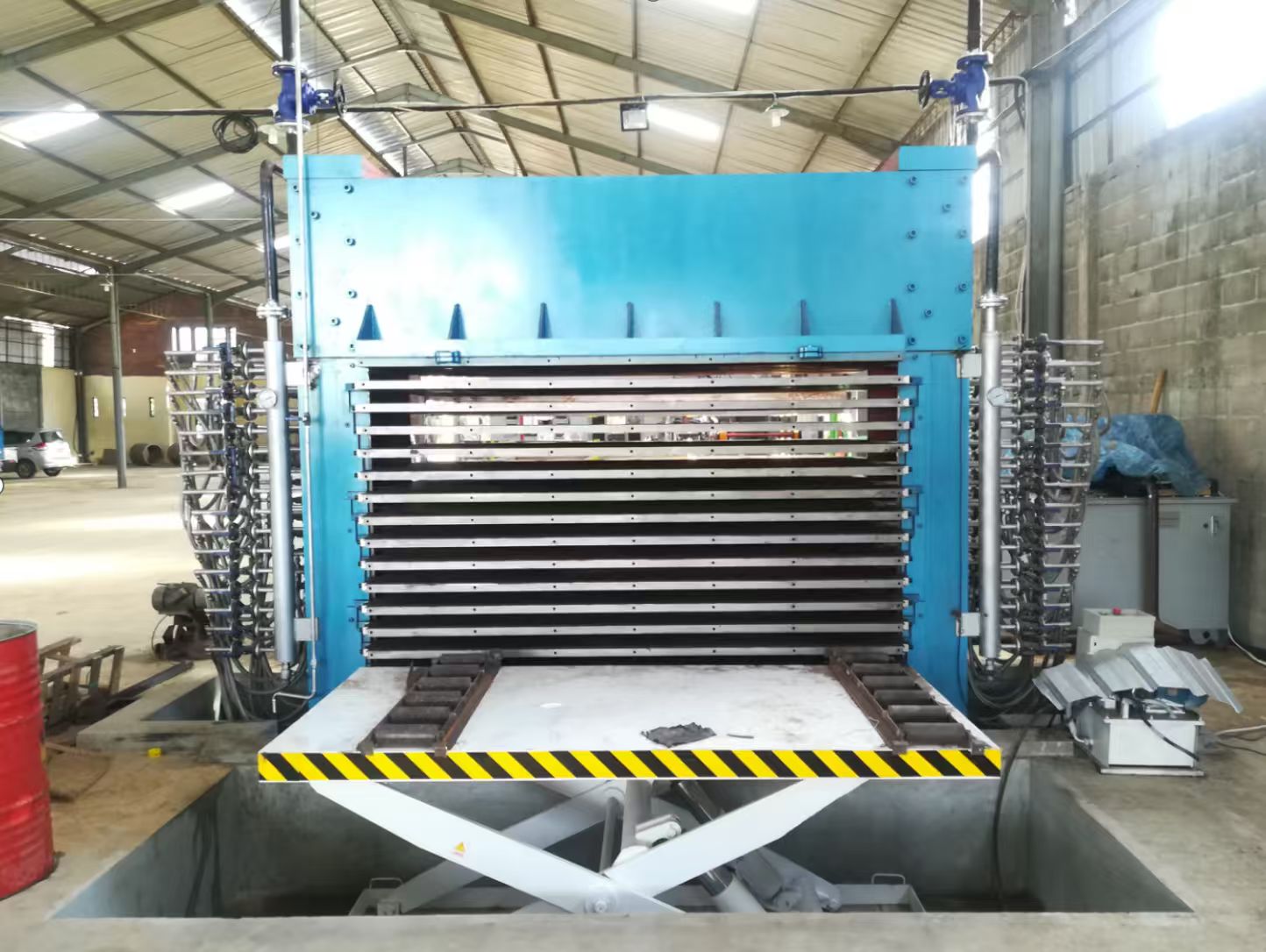
The final bonding occurs in the plywood hot press. This is the most critical piece of equipment in the plywood production line. The pre-assembled mat is loaded into the press, where it is subjected to intense heat (typically 110°C–140°C) and high pressure (1.0–1.5 MPa).
The plywood hot press does more than just glue the layers; it sets the final panel density and thickness. The heat triggers the thermosetting reaction in the adhesive (usually urea-formaldehyde or phenol-formaldehyde), permanently curing it. The pressure compresses the wood fibers, creating a dense, uniform panel. Modern plywood hot press units are fully automated, with PLCs controlling the pressure and temperature curves to ensure consistent curing across all panels, regardless of batch size.
Finishing and Quality Control
After exiting the plywood hot press, the panels are hot and still under internal stress. They undergo a cooling and conditioning period to allow moisture to equilibrate. The panels are then trimmed to exact dimensions and sanded to a smooth finish. Automated grading systems scan for surface defects before the plywood is packaged.
Understanding the plywood production line is not just about knowing the machines but appreciating the synergy between them. From the initial peel to the final press, each component—from the veneer drying machine to the plywood cold press—plays a distinct and vital role in creating the strong, versatile panels that drive global construction and furniture industries.