

Softwood Veneer Drying: Key Precautions
In the plywood and veneer manufacturing industry, drying is the most energy-intensive and quality-critical stage. When it comes to softwood veneers—such as poplar, pine, fir, eucalyptus, and basswood—the challenges multiply. Softwoods have a looser structure, lower density, shorter fibers, and higher susceptibility to defects like curling, fuzzing, sticking to mesh belts, blue stain, resin exudation, and uneven moisture content. Unlike hardwoods, softwoods demand a gentler, more controlled approach: low-temperature start, staged heating, high-humidity transition, slow dehumidification, and light-air slow conveying.
For plywood mills and veneer producers targeting international markets, mastering softwood veneer drying is not just about reducing energy costs; it directly impacts product grade, glue consumption, and downstream lamination quality. This blog outlines the essential precautions and best practices for drying softwood veneers, based on field-proven production experience.
1. Pre-Drying Sorting: More Important Than Parameters
Many factories jump straight into setting dryer temperatures, but the real key to stable drying lies in sorting before the veneers even reach the infeed.
Separate by species. Pine contains resin, eucalyptus is prone to collapse and end-splitting, poplar is soft and curls easily. Each requires a distinct drying curve. Never mix them in one batch.
Separate by thickness. Keep thickness variation within ≤0.2 mm per batch. Mixing thick and thin veneers guarantees that one sheet is over-dried while another remains wet.
Separate by initial moisture content (MC). Heartwood and sapwood often have drastically different initial MC, especially in pine. If possible, dry them separately to avoid final MC differences of 3–5 percentage points.
Pre-drain after peeling. Don’t feed veneers dripping with water directly into the dryer. Let them air-drain for 2–4 hours after rotary cutting. This reduces the load on the main dryer and saves fuel.
2. Temperature Curve: Avoid “Surface Crusting”
Softwood veneers are extremely sensitive to sudden high heat. If the surface moisture evaporates too fast, it forms a hard “crust” that traps internal moisture, resulting in a dry exterior and wet interior, accompanied by curling and cracking.
A recommended multi-stage temperature profile for continuous mesh-belt dryers is:
Stage | Temperature | Relative Humidity | Purpose |
|---|---|---|---|
Preheating | 40–50°C (104–122°F) | 60–70% | Soften lignin, initiate internal moisture migration |
Constant-rate drying | 60–75°C (140–167°F) | 40–50% | Remove free water, main dehydration zone |
Falling-rate stage | 70–80°C (158–176°F) pine ≤80°C | 20–30% | Remove bound water, balance MC |
Balancing/Cooling | 50–60°C (122–140°F) | 50–60% | Relieve stress, prevent distortion from sudden cooling |
Critical note: For resinous softwoods like pine and fir, never exceed 80°C (176°F). Higher temperatures cause excessive resin bleed, yellowing, and embrittlement. Poplar can tolerate slightly higher peaks, but even in continuous lines, keep the high-temperature zone brief and avoid prolonged full heat.
3. Humidity Control: Dehumidify Slowly, Re-moisturize When Needed
The moisture gradient must be gentle. Rapid dehumidification is the enemy of softwood veneer quality.
Start with high humidity (60–70% RH) to prevent the surface from drying too quickly.
Gradually increase dehumidification, but never open exhaust dampers fully at once.
If edge whitening or micro-cracks appear, immediately activate steam spray for 10–15 minutes to raise surface humidity. This allows internal moisture to continue migrating outward.
Prevent blue stain in pine. Dry fast enough in the initial stage to lower surface MC quickly, but keep temperature moderate to avoid resin issues.
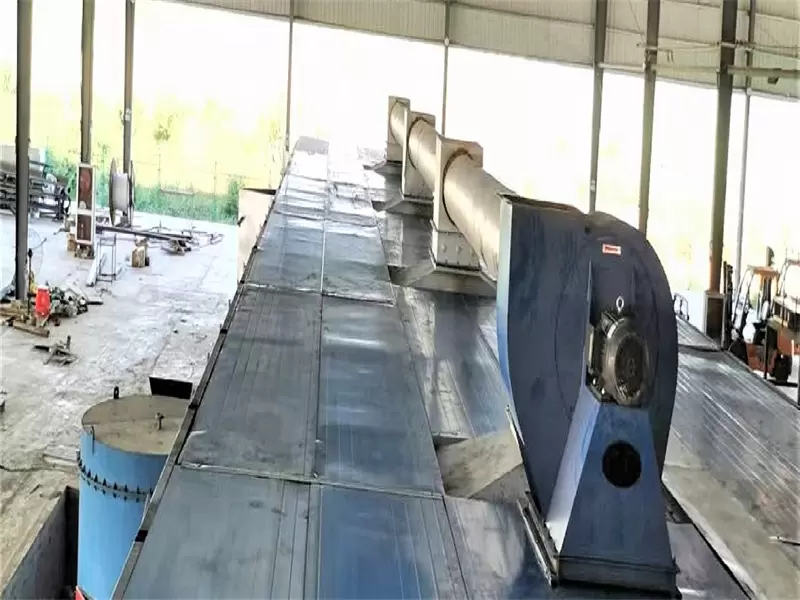
4. Air Speed and Distribution: Gentle, Uniform, No Blow-Overs
Softwood veneers, especially thin sheets (<0.6 mm), can easily be blown over, wrinkled, or edge-dried by excessive airflow.
Maintain air velocity between 0.5–2 m/s. Use the lower end for thin veneers, upper end for thicker ones.
High-speed air causes thin sheets to flip and wrinkle, with edges drying and cracking first.
Ensure symmetrical upper and lower air nozzles with even pressure. Chamber temperature difference should be ≤3°C (5.4°F); otherwise, the same sheet may exit with one side at 6% MC and the other at 14%.
Use variable frequency drives (VFDs) on fans: low airflow in preheating, increase in main drying, reduce again in balancing.
5. Anti-Curling and Anti-Cracking Techniques
This is where many production lines fail. Implement these proven methods:
Edge overlapping during feeding. When feeding continuous veneer strips, overlap the edges of two consecutive sheets by 1–2 cm. This reduces edge evaporation speed and prevents the “wet center, curled edges” problem.
Edge spraying. Spray a fine water mist on both edges (about 6 mm width) of the veneer strip. This delays edge drying—particularly effective for eucalyptus and pine.
Pressure drying. Prioritize mesh-belt press type or roller type dryers. The slight pressure applied at high temperature suppresses waviness and deformation.
Reinforcement tape. Apply reinforcing tape along both edges of long continuous veneers to prevent end splitting.
Anti-stick measures. Softwoods (especially pine) tend to stick to mesh belts under hot, humid conditions. Use anti-stick belt materials and clean resin and wood debris every shift to avoid imprints and holes.
6. Final Moisture Content and Post-Drying Handling
Target MC: 8–12%. For plywood, aim for 8–10%; for construction film-faced plywood, 10–12% is acceptable.
Install an online moisture meter at the outfeed for real-time feedback and automatic belt-speed adjustment to prevent over-drying and brittleness.
Never stack immediately after exiting. Route veneers through a buffer cooling zone at 40–50°C (104–122°F) for 30–60 minutes to avoid thermal shock deformation.
Conditioning (re-moisturizing) for 12–24 hours at 40–50°C with humidity close to the usage environment. This reduces the internal-to-surface MC gradient to <3%.
During storage, place veneers flat in single layers with ventilation gaps. Do not apply heavy weights, as this can cause secondary deformation if moisture re-absorption occurs.
7. Species-Specific Precautions (Quick Reference)
Species | Main Risk | Key Precaution |
|---|---|---|
Pine | Resin bleed, blue stain, yellowing | Keep ≤80°C, clean resin promptly, prevent blue stain |
Eucalyptus | Collapse, end splitting | Low-temp, high-humidity start; pre-air-dry to 20–30% MC before machine drying |
Poplar | Edge curling, fuzzing, breakage | Gentle air, slow conveyance, edge spraying, pressure drying |
Fir/Spruce | Low density, blow-overs | Use lower air speed limit, ensure mesh belt tension |
Basswood | Brittleness, discoloration | Final MC not below 8%, cool slowly after drying |
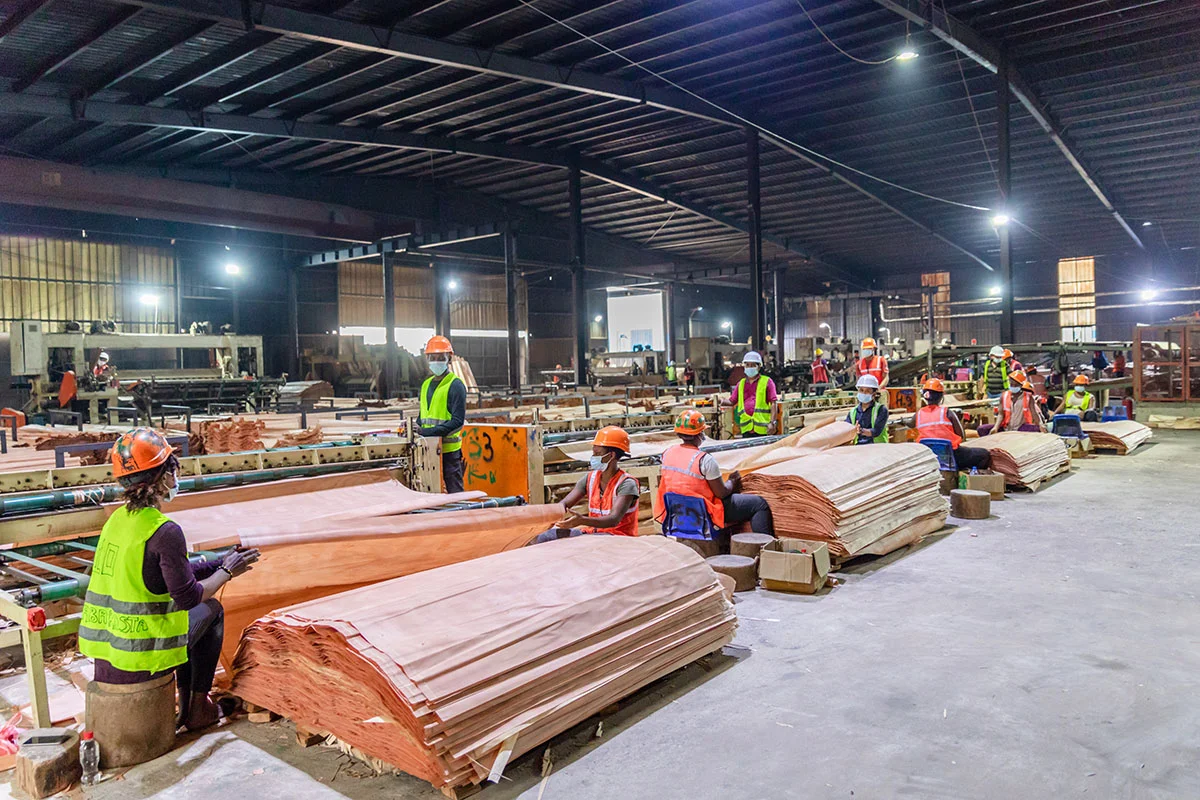
8. Online Detection and Process Recipes
Softwood veneer batches vary greatly. Relying on an operator’s visual judgment (“checking color”) is unstable. Modern lines should:
Install resistance-type or microwave moisture meters at the outfeed, linked to the PLC.
Store drying recipes (temperature, humidity, belt speed) for each species (pine, eucalyptus, poplar) and switch with one click when changing material.
Sample 3–5 sheets per shift, measuring MC at four corners and center. If deviation exceeds 2%, adjust fan speed and belt speed immediately.
Conclusion
Drying softwood veneers is a balancing act. The mantra is: low-temperature slow drying + high-humidity transition + gentle uniform air pressure + edge moisture retention + post-drying conditioning. It is always better to dry a little slower than to rush production and end up with curled, brittle, or resin-stained veneers that lower your product grade and waste downstream glue.
For plywood mills and veneer producers looking to upgrade their drying lines, investing in proper sorting systems, zoned temperature control, VFD fans, and online moisture detection pays back quickly through reduced rejects and fuel savings.
Are you planning to optimize your existing softwood veneer dryer or purchase a new energy-efficient model tailored to your species mix? Our team designs customized drying solutions for global plywood mills, with proven configurations for poplar, pine, eucalyptus, and more. Contact us today to discuss your production needs and get a detailed proposal.