

Dried Veneer: 7 Key Applications
For any plywood or furniture factory, the veneer dryer is not just another piece of equipment; it is the gatekeeper of quality. Many overseas buyers focus heavily on the peeling machine and the hot press, but the drying stage is where the real value is either locked in or lost forever.
When you invest in a semi-automatic veneer dryer, you are not just removing water from wood. You are stabilizing the material, preventing defects, and preparing it for high-value manufacturing. A well-dried veneer—with uniform moisture content typically between 8% and 12%—opens the door to a wide range of industrial applications.
This article explores the seven most important production scenarios where dried veneer plays a critical role. If you are in the wood processing business, understanding these applications will help you explain to your customers why your drying process matters—and why your equipment choice makes all the difference.
1. Plywood and Multi-Layer Board Production
The largest consumer of dried veneer is the plywood industry. Whether it is standard plywood for packaging, film-faced plywood for concrete formwork, or high-grade multilayer solid wood boards for furniture, the core requirement is the same: every veneer layer must have a consistent moisture level.
If wet or unevenly dried veneers are used in hot pressing, the trapped moisture turns into steam. This causes blisters, delamination, and weak glue bonds. A semi-automatic dryer with staged temperature and humidity control ensures that each sheet is evenly dried, eliminating these risks. For plywood mills, this directly translates to higher yields and fewer rejected batches.
2. Decorative Veneer and Surface Paneling
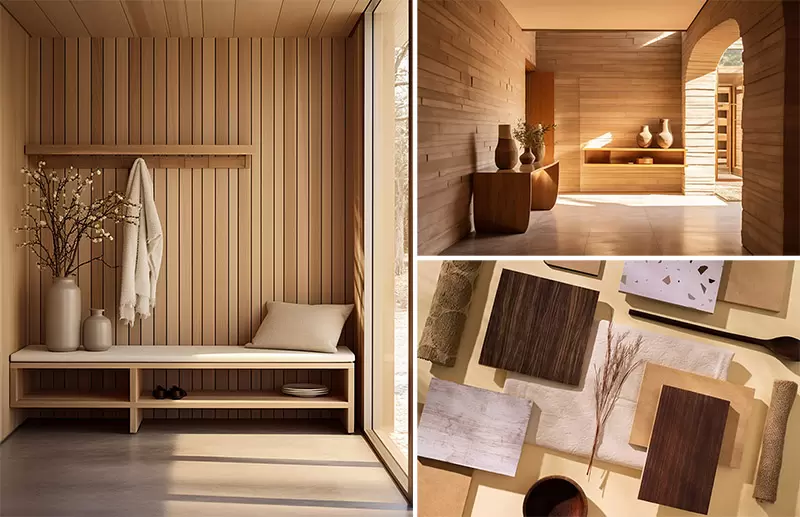
This is where dried veneer commands the highest premium. Natural wood veneer is sliced or peeled, dried, and then applied as a thin surface layer on MDF, particleboard, or plywood panels. The result is used for high-end furniture, interior doors, wall cladding, and luxury cabinetry.
In this application, appearance is everything. Any curl, crack, or color change caused by poor drying ruins the veneer’s value. A quality drying machine keeps the veneer flat and smooth, preserving the natural grain and ensuring perfect adhesion during lamination. For manufacturers serving the decorative panel market, investing in precise drying equipment is not an expense—it is a necessity for staying competitive.
3. Laminated Veneer Lumber (LVL) and Structural Composites
LVL is an engineered wood product made by bonding multiple layers of dried veneer with the grain aligned in the same direction. It is widely used in construction as beams, headers, and floor joists, as well as in the transportation industry for truck floors and container linings.
Structural applications demand strict moisture control—usually 6% to 10%. Any inconsistency can compromise the beam’s load-bearing capacity or cause warping over time. Dried veneer produced by a reliable semi-automatic dryer meets these tight specifications, making it suitable for export-grade structural products that comply with international building codes.
4. Blockboard and Ecoboard Core Stock
Blockboards (also called ecoboards) consist of a solid wood core sandwiched between two veneer layers. The core strips are often made from dried veneer offcuts or full sheets. These boards are popular in modular furniture, wardrobes, and interior partitions.
The biggest headache for blockboard makers is post-production deformation. If the veneer core is not dried evenly, the board will twist or develop gaps months after installation. Proper drying eliminates this problem at the source, giving furniture brands the dimensional stability they promise to end users.
5. Molded and Woven Veneer Products
Beyond flat panels, dried veneer can be re-engineered into three-dimensional shapes. By carefully controlling the drying curve, the veneer retains just enough flexibility to be molded into door skins, lampshades, planters, and decorative wall tiles. It can also be sliced into thin strips and woven into intricate patterns before being pressed onto a backing board.
These niche products require veneers that are dry but not brittle. A semi-automatic dryer with adjustable temperature zones allows operators to fine-tune the output for optimal pliability—something that simple air-drying or crude ovens cannot achieve.
6. Engineered Wood Composites
Dried veneer serves as a reinforcing layer in wood-plastic composites (WPC) and other hybrid materials. When combined with plastics or resins, veneer adds natural wood texture and structural integrity to outdoor decking, fencing, and cladding. The key is that the veneer must be thoroughly dried to prevent moisture-related expansion after the composite is formed.
Manufacturers in this segment often look for dryers that can handle both thin and thick veneers without scorching the surface. Modern semi-automatic units, with their even heat circulation and precise exhaust control, are well suited for this dual-purpose role.
7. Export Packaging and ISPM 15 Compliance
One of the most overlooked applications of dried veneer is in the export packaging industry. Wooden pallets, crates, and boxes used for international shipping must comply with ISPM 15 regulations, which require wood materials to be either kiln-dried or heat-treated to a minimum core temperature.
A properly configured veneer dryer can double as a heat treatment unit, bringing the moisture content below 14% and satisfying phytosanitary standards. This means a veneer drying line can also produce compliant packaging materials, giving factories an additional revenue stream without extra capital investment.
Why Your Dryer Choice Matters
Across all seven applications, one theme is constant: uniform moisture content equals higher value. Whether your customers are making plywood, furniture, or shipping crates, they all suffer when veneer comes out of the dryer with hot spots, cracks, or uneven moisture.
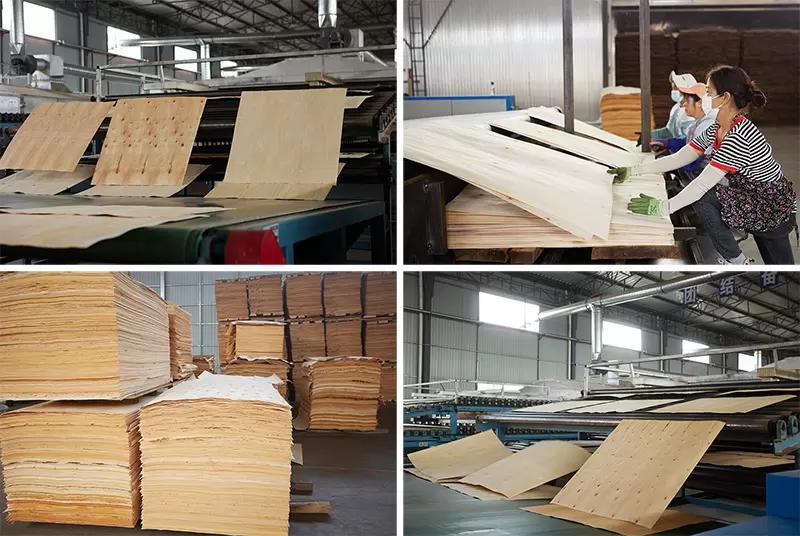
A semi-automatic wood veneer dryer addresses these challenges with:
Staged drying curves that prevent surface cracking while ensuring deep-layer moisture is removed.
Even hot air circulation that eliminates the “wet core” problem common in sun-dried veneers.
Static drying beds that keep thin veneers flat, reducing labor costs associated with manual turning and flattening.
Energy recovery systems that lower operating costs—a critical factor for factories in regions with high electricity or fuel prices.
Conclusion
Dried veneer is far more than a semi-finished product. It is the foundation of plywood, the face of luxury furniture, the core of engineered beams, and the key to compliant export packaging. By choosing the right drying equipment, you are not just improving efficiency—you are expanding what your customers can produce and sell.
For equipment manufacturers and suppliers, this is the message that resonates with overseas buyers: a good dryer does not just dry wood; it unlocks new markets. Whether your clients aim to produce high-end decorative panels or industrial-grade LVL, the quality of their dried veneer will determine their success.
If you are exploring options for a semi-automatic veneer dryer, look for a supplier who understands these downstream applications and can configure the machine accordingly. The right partner will help you move beyond “just drying” and into high-value wood processing.