Why Veneer Factories Are Ditching Sun-Drying?
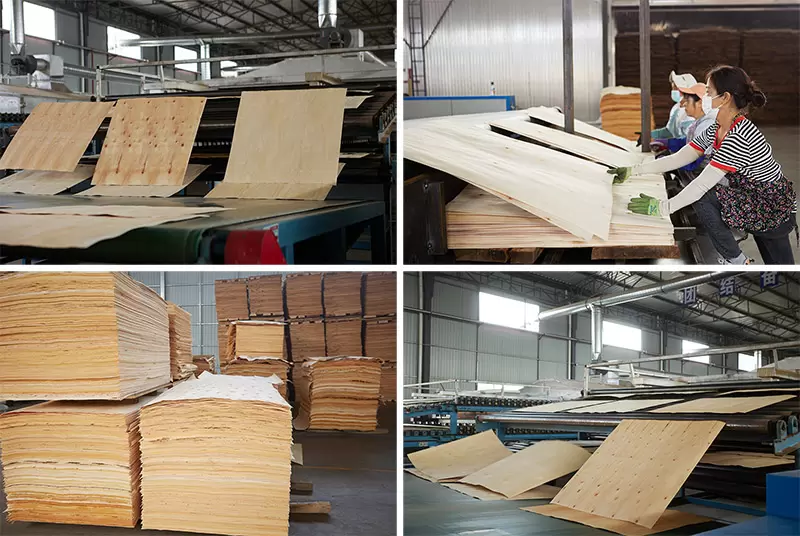
In the world of veneer manufacturing, a quiet revolution is taking place. For decades, the image of vast outdoor yards filled with thin wood sheets baking under the sun was the industry standard. However, walk into any modern veneer rotary cutting factory today, and you are likely to see a different scene: enclosed drying machines humming away, processing stacks of wet veneer with precision. The shift from natural sun-drying to industrial veneer dryers is no longer a niche trend; it has become a strategic necessity for factories aiming to survive and thrive in the competitive global timber market. But why exactly are more and more manufacturers making this switch? The answer lies in transforming an unpredictable, weather-dependent process into a controlled, efficient, and high-quality industrial operation.
To understand this shift, we must first look at the most obvious factor: time. In traditional sun-drying, wet veneer—which often leaves the rotary cutter with a moisture content between 40% and 60%—needs to sit in the open air for three to seven days. This timeline is entirely at the mercy of the weather. A sudden rainstorm can halt production completely, turning a carefully planned schedule into chaos. In contrast, modern veneer drying machines, whether they use hot air, rollers, or heat pump technology, can reduce this drying cycle from days to mere hours. Most industrial dryers can process a batch of veneer in just four to eight hours, with some high-speed models achieving results in under an hour. This allows factories to run a continuous 24-hour operation. When the rotary cutting machine produces a sheet, it goes directly into the dryer. This seamless workflow means that delivery times are no longer held hostage by the weather, enabling manufacturers to accept larger orders and guarantee strict delivery deadlines. For any factory that relies on custom processing or export contracts, this reliability is the difference between winning a client and losing them to a competitor.
Beyond speed, the second major driver is quality control, specifically regarding moisture content. Natural sun-drying is inherently uneven. The edges of a veneer sheet dry much faster than the core, leading to significant fluctuations in moisture levels across a single batch—often varying by 10% to 20%. On humid or rainy days, the wood can even reabsorb moisture from the air, undoing all the progress of the previous sunny days. Industrial veneer dryers solve this problem by allowing operators to set precise drying curves based on the wood species and veneer thickness. The final moisture content can be locked in at an optimal range, typically between 8% and 12%, with a precision of plus or minus 1%. This consistency is vital for producing high-quality plywood, flooring substrates, and other engineered wood products. When moisture levels are uneven, the subsequent hot-pressing stage becomes a nightmare. It can lead to delamination, blistering, warping, and cracking—defects that cost factories millions in rejected products. By ensuring uniform moisture content, veneer dryers drastically reduce the defect rate and provide the stability needed for superior glue bonding.
Another compelling reason for this transition is the reduction of material waste. When veneer is left to dry outdoors, it is highly susceptible to mold, fungal stains, and end-splitting, especially with species like eucalyptus or rubberwood. A prolonged rainy season can ruin an entire batch of valuable veneer. Furthermore, the uneven drying of sun-exposed sheets often leads to warping and cracking, lowering the yield of usable material. Veneer drying machines, particularly those with high-temperature sections, effectively sterilize the wood, killing mold spores and bacteria. Because the drying process is controlled and rapid, the incidence of cracking and warping is significantly lower compared to sun-dried sheets. Factories that have made the switch often report an increase in material yield by 5% to 15%. In an industry where profit margins are often thin, recovering this much usable material from what would otherwise be waste is a massive financial boost.
At first glance, investing in a veneer dryer seems like a heavy capital expense, especially when sun-drying appears to be "free." However, a deeper look at the total operational costs reveals a different story. Sun-drying requires vast amounts of land—sometimes dozens of acres for a single rotary cutting line. As land rents rise and industrial zones become more crowded, maintaining such large open yards is becoming increasingly expensive and, in some areas, impossible. Additionally, sun-drying is labor-intensive, requiring workers to manually spread, turn, and collect the veneer sheets. Industrial drying lines, on the other hand, can be housed in a compact factory space of a few hundred square meters and feature automatic feeding and collecting systems. This can reduce labor requirements by 60% to 80%. Modern dryers, especially those utilizing heat pump technology or waste heat recovery systems, are highly energy-efficient. The cost per cubic meter of dried veneer can be as low as $3 to $6 (20 to 40 RMB). When you factor in the savings on land, labor, and the reduction of mold-related losses, the return on investment for a dryer is often realized much faster than factory owners expect.
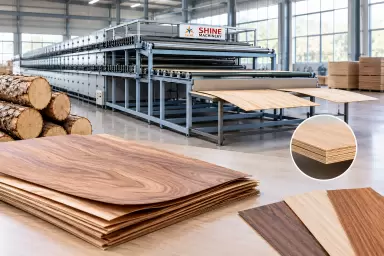
Furthermore, environmental regulations and market demands are pushing factories toward modernization. In many industrial parks, large open-air drying yards are now restricted due to concerns over land use, dust, and wastewater runoff during the rainy season. Veneer dryers offer a closed-loop solution that is much easier to manage from an environmental compliance standpoint. Many modern machines can even be powered by biomass waste, such as bark and wood scraps generated by the factory itself, turning waste into energy and creating a more sustainable production cycle.
Finally, the global market is evolving. Customers today are not just looking for basic wood sheets; they demand first-grade boards, high-quality flooring substrates, laminated veneer lumber (LVL), and export-grade plywood. Sun-dried veneer simply cannot meet the stringent consistency required for these high-end products. To enter the supply chains of top-tier furniture brands and construction material suppliers, factories must adopt industrial drying. It is the entry ticket to the high-value segment of the market.
In conclusion, the move from natural sun-drying to veneer drying machines is a classic case of replacing an unpredictable, extensive process with a controlled, intensive one. While sun-drying might save money on equipment upfront, it hides massive costs in land, labor, mold damage, and missed delivery deadlines. Veneer dryers, by contrast, require an initial investment but effectively "buy out" the variability and inefficiency of traditional methods. As veneer factories scale up to produce dozens or even hundreds of cubic meters per day while maintaining strict quality standards, the choice becomes clear. The future of veneer manufacturing is dry, fast, and precisely controlled—and it is happening inside the dryer, not under the sun.