

Press vs Roller Veneer Dryer
Choosing the right veneer dryer is never just about price. For plywood and veneer mills, the real question is whether the drying line matches the production rhythm, the veneer thickness, and the factory layout. Two machines can both carry the name “wood veneer dryer,” yet work in completely different ways. The multi-layer press dryer and the roller veneer dryer represent two distinct philosophies: batch pressing versus continuous convection. Understanding the difference helps owners avoid expensive mismatches.
How each machine works
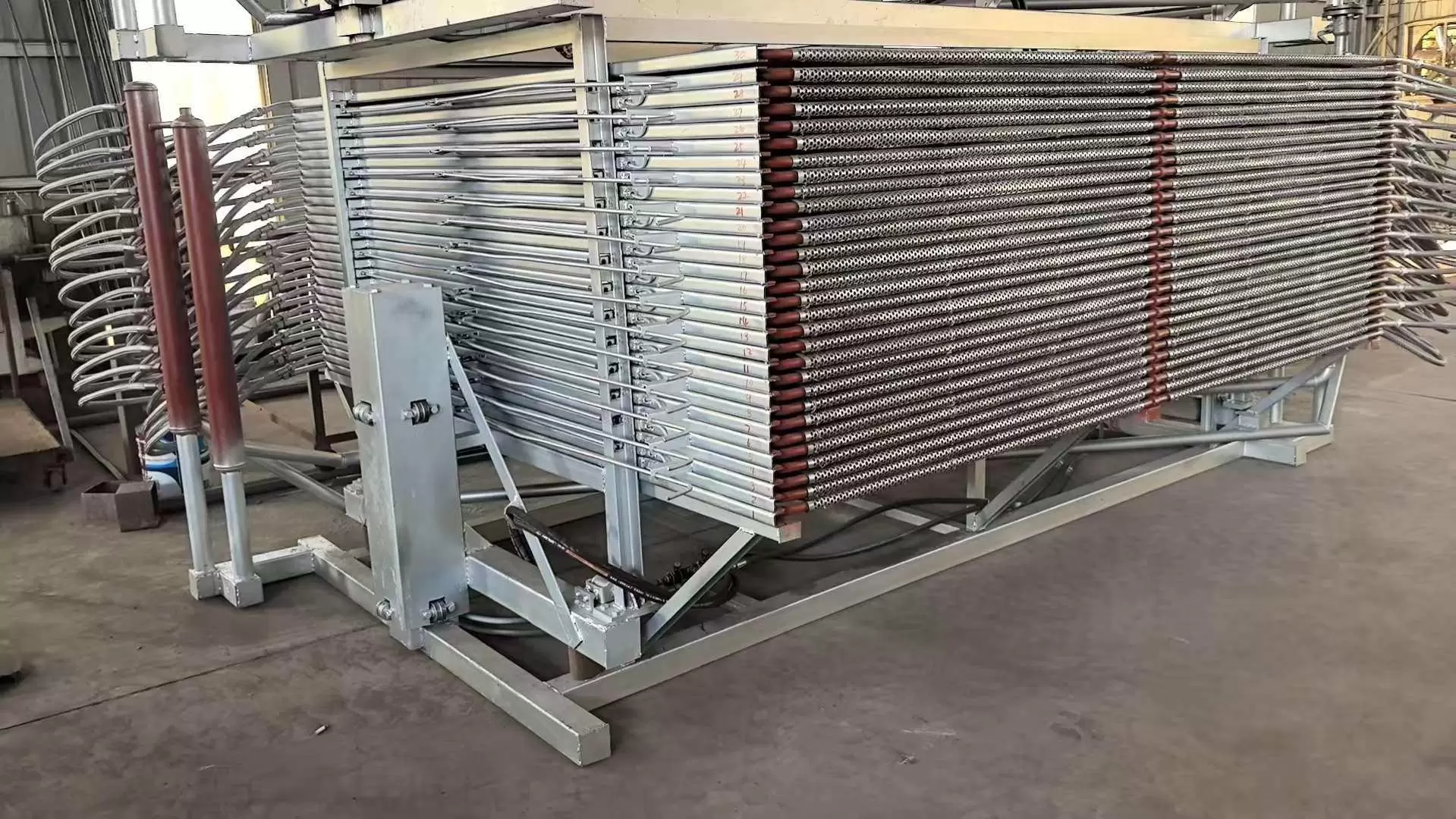
A press-type veneer dryer, sometimes called a multi-layer platen dryer, works in batches. Freshly peeled veneer is stacked layer by layer between heated platens. Hydraulic pressure closes the press, and the hot plates—usually heated by steam or thermal oil—conduct heat directly into the wood. Moisture escapes through a breathing cycle of pressure release and re-clamping. Each batch takes roughly 30 to 60 minutes. The machine does not run continuously; it loads, presses, breathes, cools slightly, and unloads.
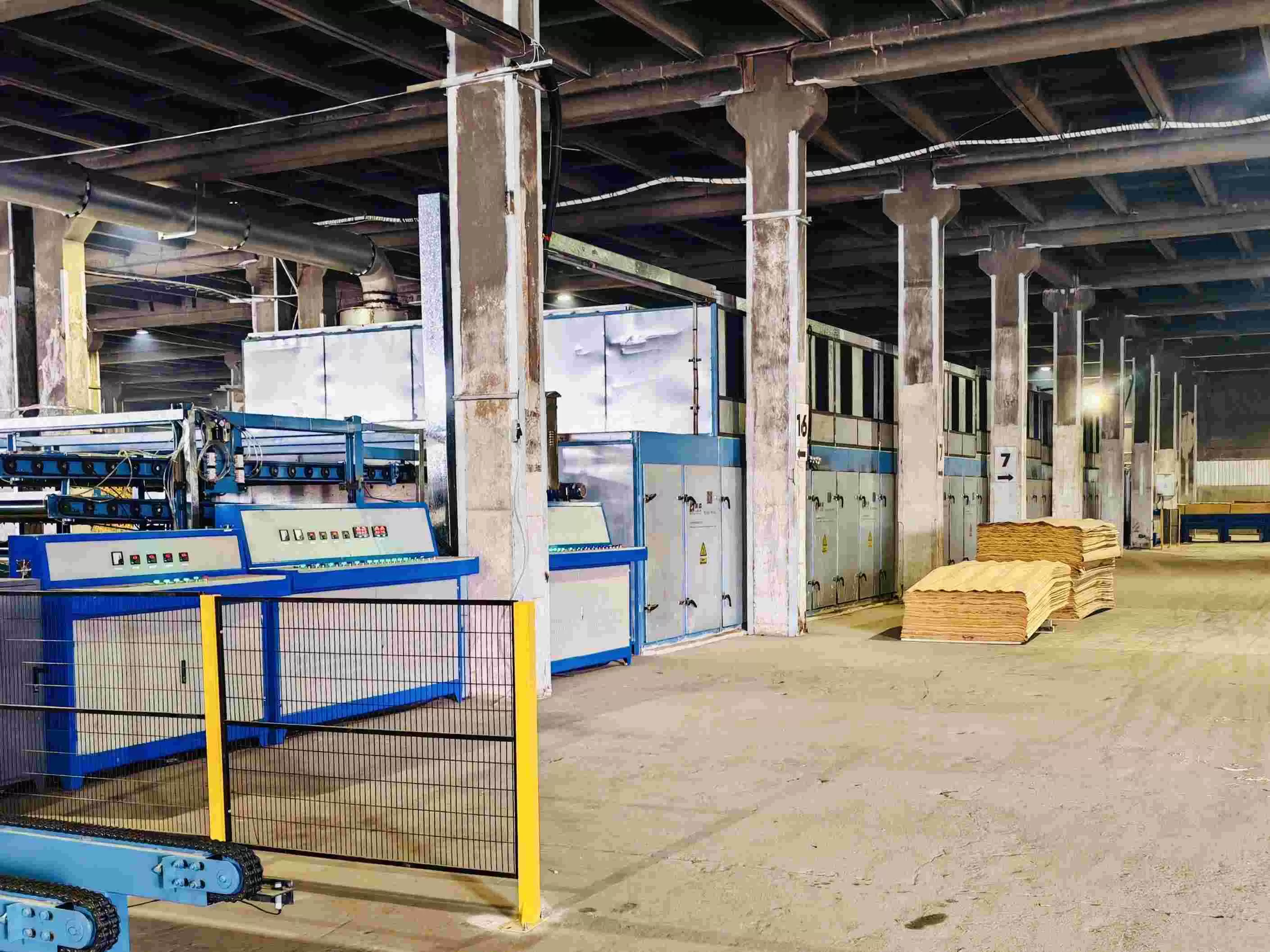
A roller veneer dryer works on a completely different principle. Veneer enters from one end and is gripped between upper and lower driven rollers. The sheet moves continuously through multiple temperature zones. Hot air jets down from the top and up from the bottom, penetrating the veneer from both sides. The rollers themselves are often heated or at least conduct some thermal energy. The entire process is continuous: feed veneer in one end, collect dry sheets at the other, and adjust line speed through a VFD to match target moisture content.
Production rhythm: batch versus continuous
The most obvious difference is how the two machines handle time.
Press dryers run in cycles. A typical 30-layer machine like the Shine DH-30-2.6 loads up to 480 sheets per batch. At roughly 45 minutes per batch, daily output reaches about 10 to 15 cubic meters per unit. Two operators can manage three to four such units simultaneously. This makes press dryers suitable for mills that buy wet veneer from outside and need to re-dry it, or for operations where volume does not justify a long continuous line.
Roller dryers, by contrast, are built for continuous flow. Once the line starts, it runs for a full shift or longer. A properly configured roller dryer handles anywhere from a few cubic meters per hour to over 20 cubic meters per hour, depending on deck count, heat source, and veneer thickness. A four-deck roller line can produce the daily output of several press dryers in a single shift. For large-scale plywood plants with their own peeling lines, this continuous capacity is essential.
Pressure and veneer density
Here lies one of the most misunderstood topics in veneer drying. Because press dryers apply clamping force during heating, they do change the veneer physically. The pressure flattens the sheet, reduces spring-back, and can slightly increase density. For mills drying poplar or similar low-density species, this mild compaction improves surface flatness and glue-ability.
However, the pressure in a standard multi-layer press dryer is far below what is needed for real wood densification. True densification requires pressures in the range of 8 to 10 MPa and carefully controlled moisture-temperature-time combinations. A typical press dryer operates at much lower clamping force, designed for drying and flattening rather than structural modification. Claims that a standard press dryer can turn low-density veneer into high-density engineered sheets should be treated with caution. No customer cases currently confirm such a result on Shine press dryers.
Roller dryers apply only light line pressure through the rollers. Their purpose is to keep thick veneer flat and moving, not to compress it. Any density change in a roller dryer is negligible. Buyers looking for densification must look at dedicated hot-press densification lines, not standard drying equipment.
Veneer thickness and suitability
Press dryers handle a wide range of thicknesses but are especially popular for thicker core veneers and large-format sheets such as 4×8 ft panels. The platen contact ensures even heating across the whole sheet. Because the sheet is stationary during pressing, there is no risk of curling mid-process. This makes press dryers a common choice for mills processing outside-purchased wet veneer that arrives warped or unevenly cut.
Roller dryers perform best in the medium-to-thick range, typically 1.2 to 5.0 mm. Thin decorative veneers below 0.8 mm tend to wrinkle or develop roller marks. For face veneers and thin stock, mesh-belt dryers are a better choice. Roller dryers dominate in high-volume plywood production where consistent core veneer quality and high throughput matter more than the slight flatness advantage of platen pressing.
Footprint and factory layout
A single press dryer unit occupies only about 7 square meters of floor space, with a recommended operating area of 25 square meters including loading and unloading space. Multiple units can be placed side by side. This compact footprint is a major advantage for mills with limited building length or those operating in retrofitted workshops. Installation is straightforward: connect steam and power, fill the hydraulic station with oil, and the machine is ready.
Roller dryers need significantly more linear space. Even a compact two-deck line stretches 20 meters or more when infeed and outfeed sections are included. Four-deck machines reduce length but require ceiling heights of 6.5 meters or more. The trade-off is clear: press dryers save floor space and suit batch operations; roller dryers demand more building volume but deliver continuous, high-volume output.
Automation and labor
Press dryers are semi-batch machines. Loading and unloading require manual handling of each veneer stack, though hydraulic systems automate the pressing cycle itself. Labor is moderate: two workers can oversee multiple press units, but each unit still needs loading and unloading attention.
Roller dryers integrate naturally with automatic infeed and outfeed systems. Once configured, a roller line can run with minimal hands-on intervention. Automatic loaders synchronize with line speed, maintain consistent spacing, reduce overlap, and improve moisture uniformity. For mills facing labor shortages or running multiple shifts, this automation potential is a decisive advantage.
Energy consumption
Press dryers rely mainly on conduction heating through platens. A typical unit consumes about 300,000 kcal per hour of steam. Electric consumption is lower because there are no large circulation fans. The batch nature means energy use is tied directly to the number of batches run per day.
Roller dryers consume energy through both the heat source—biomass, steam, thermal oil, or gas—and the electrical load of multiple fans, rollers, and conveyors. A well-designed roller line with heat recovery and VFD control can achieve excellent fuel efficiency per cubic meter dried, but the absolute power draw is higher than a press dryer. The key metric for both types is fuel or energy cost per cubic meter of dried veneer, not just the nameplate rating.
Which one should you choose?
The answer depends on production scale, veneer characteristics, and factory conditions. Choose a press-type veneer dryer if the mill processes thick core veneers or large panels, operates in a space-limited workshop, runs on batch production rather than continuous peeling, or needs the flattening effect of platen pressing. Choose a roller veneer dryer if the operation is a high-volume plywood plant with continuous peeling, requires consistent high throughput, plans to integrate automatic loading and stacking, or needs zoned temperature control for different species and thicknesses.
For some mills, the best solution is both: a press dryer for re-drying purchased wet veneer and a roller dryer for continuous in-house production. Shine Machinery manufactures both types and helps customers evaluate based on actual veneer size, species, moisture profile, daily volume, and building dimensions.
Bottom line
A press dryer and a roller dryer are not two versions of the same machine. They are different tools for different production strategies. One excels at batch flexibility, flatness, and compact installation. The other delivers continuous volume, automation potential, and tight moisture control at scale. Specifying the wrong type locks the mill into compromised output and higher operating cost. Specifying the right one turns the drying section from a bottleneck into a profit center.
Send your veneer specifications, daily output target, and workshop drawing to Shine Machinery. The right dryer configuration starts with the right questions.