

Why Pine Veneer Resists Drying
In plywood and veneer mills, not all wood species behave the same way once they hit the dryer. Operators who have run poplar, rubberwood, or Falcata and then switch to pine quickly learn a hard lesson: the machine did not break; the wood simply fights back. Pine veneer is one of the most difficult softwoods to dry at industrial scale, and the reasons are baked into the wood’s chemistry, density, and structure long before it reaches the lathe.
A modern wood veneer dryer is built to remove free and bound water efficiently. But pine does not cooperate the way other species do. The moment heat rises inside the chamber, resin softens, fibers move unevenly, and the sheet starts looking for a way to warp, crack, or discolor. Understanding why this happens is the first step to building a drying curve that actually works.
The first and most notorious problem is resin. Pine is a resinous softwood. Its resin canals carry significant amounts of oleoresin, and when veneer enters a hot zone above roughly 120°C, that resin does not politely evaporate—it softens, bleeds, and climbs to the surface. On a roller-type line, hot resin sticks to the rollers. On a mesh belt line, it coats the belt and clogs the airflow gaps. Once resin is on the hardware, every sheet that passes picks up a little contamination. The result is a sticky film on the veneer surface that resists glue during lay-up and refuses paint during finishing. Worse, resin vapor travels with the exhaust air and condenses on heat-exchanger surfaces and duct walls. Over a few weeks, the exchanger loses efficiency, static pressure rises, and the whole veneer drying machine starts fighting itself. Some mills using high-temperature roller dryers run zones up to 140–180°C for harder species, but pine cannot be pushed that way without paying for it in resin mess.
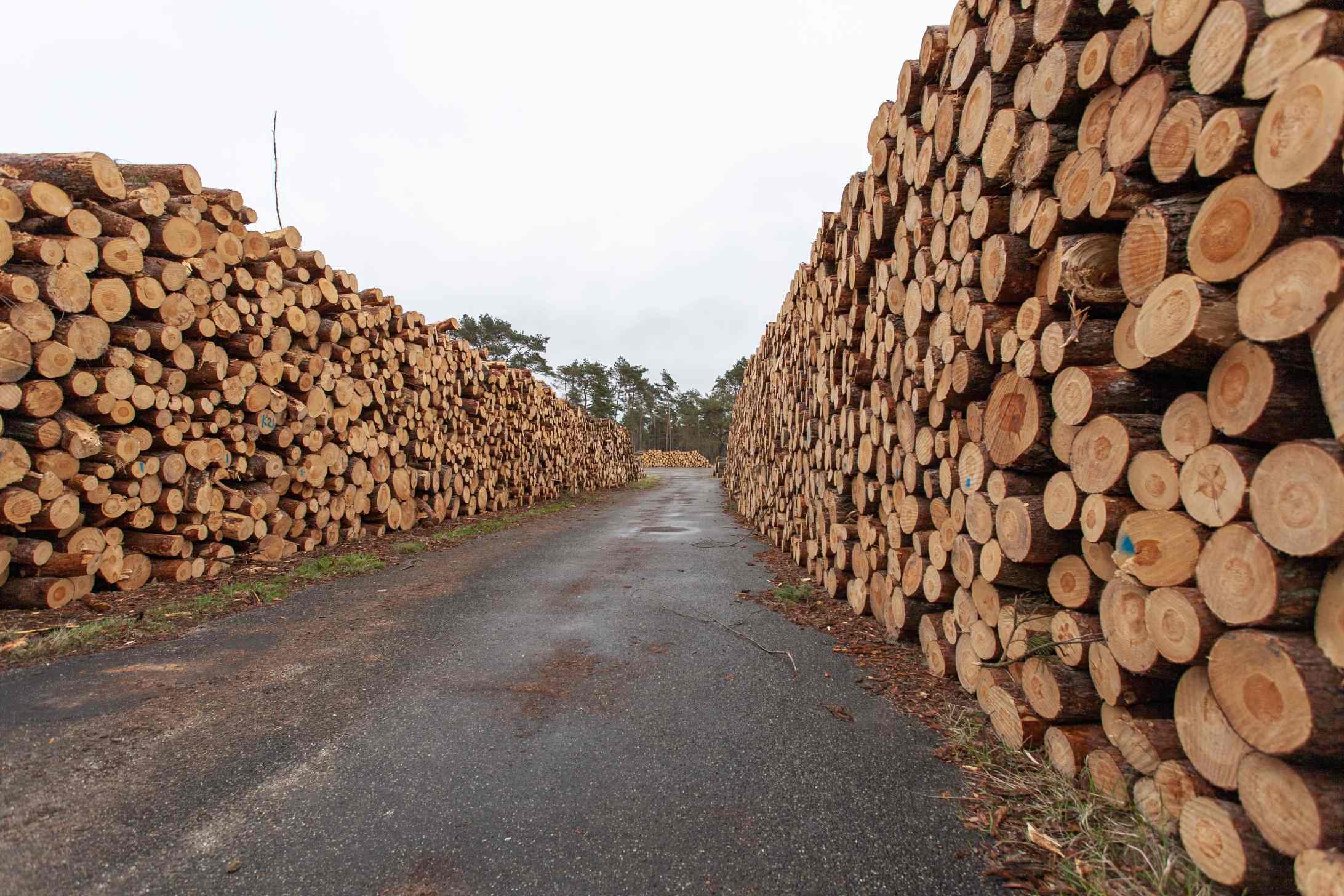
The second issue is structural. Pine has a low and somewhat variable density, generally in the range of 0.35–0.50 g/cm³ depending on species and growing conditions. That sounds like an advantage—light wood should dry fast—but in practice the opposite happens. Low-density veneer has weak fiber-to-fiber bonding, so when one face dries faster than the other, the sheet curls. A 2.5 mm pine veneer coming off the lathe at high moisture content will roll into a tube if the top side sees hot air before the bottom side is ready. Thinner sheets, say 1.6–2.5 mm, are even more fragile. They wrinkle under high air velocity, they tear at the edges, and they magnify every small defect that a harder wood would simply shrug off.
Third, pine builds a moisture gradient that refuses to relax. The sapwood is open and permeable; the heartwood is loaded with extractives—resin acids, tannins, fatty acids—that partially block the very channels water is supposed to use to escape. So the surface of the sheet gives up its water quickly, drops to 6–7%, and hardens into a shell. Meanwhile the interior is still sitting at 30% or more. Push harder with temperature, and you do not fix the gradient—you bake the shell. The sheet looks dry, tests dry on the surface, and then two days later in the yard it cups, twists, or shows internal checking that no grader caught at the outfeed. This “case-hardening” behavior is the single most common reason pine veneer gets downgraded after it leaves the dryer.
Fourth, pine is color-sensitive in a way that frustrates quality managers. Species like radiata, slash, and loblolly pine carry pigments and resin acids that oxidize under heat. Run the chamber at 140°C as you would for rubberwood and the pale cream-colored face turns yellow, then brownish, then blotchy. For mills supplying clear-face plywood, laminated veneer lumber, or anything destined for the European and North American decorative market, that discoloration is not a cosmetic nitpick—it is a rejection. Pine wants a narrow window: gentle preheat, moderate main-zone temperature, and a soft finish. Anything hotter than about 130°C for sustained exposure starts eating into the grade.
Fifth, thin pine veneer amplifies every mistake in airflow and handling. At 0.100"–0.175" (2.54–4.45 mm) the sheet has almost no thermal mass. A localized hot spot that a 5 mm rubber-wood core would absorb without complaint will scorch a pine face in seconds. A fan speed set 10% too high will lift the leading edge and fold it. A roller gap set for mixed hardwood will chatter the soft pine surface and leave roller marks that sand out poorly. None of these are “machine failures”; they are all signs that the drying system was tuned for a wood that pine is not.
The practical answer is not to buy a bigger burner. It is to redesign the curve. For pine veneer, the preheat zone should sit low—around 80–90°C—with enough humidity to keep the surface from flashing off its water before the core warms up. The main drying zone should be held in the 120–130°C band, not the 140–160°C band used for poplar or rubberwood. Line speed is reduced relative to hardwood schedules so the moisture gradient has time to equalize instead of locking in. The finishing zone drops to 90–110°C, and a real cooling section pulls sheet temperature below 40°C before stacking, so trapped vapor does not steam the bundle after it leaves the machine.
Conveyor choice matters as much as temperature. Roller dryers are common for core veneer, but on pine the rollers accumulate resin and mark the sheet unless surfaces are treated and cleaned on a strict schedule. Mesh belt lines are often the better call for thin pine face stock: the belt supports the sheet flat, dual-side airflow keeps both faces moving together, and there is no hard roller contact to bruise soft fibers. Either way, the wood veneer dryer needs zone-isolated heat exchangers, independent circulation fans per zone, and a PLC recipe that locks the pine curve in so the next shift cannot “turn it up a little” and undo the whole schedule.
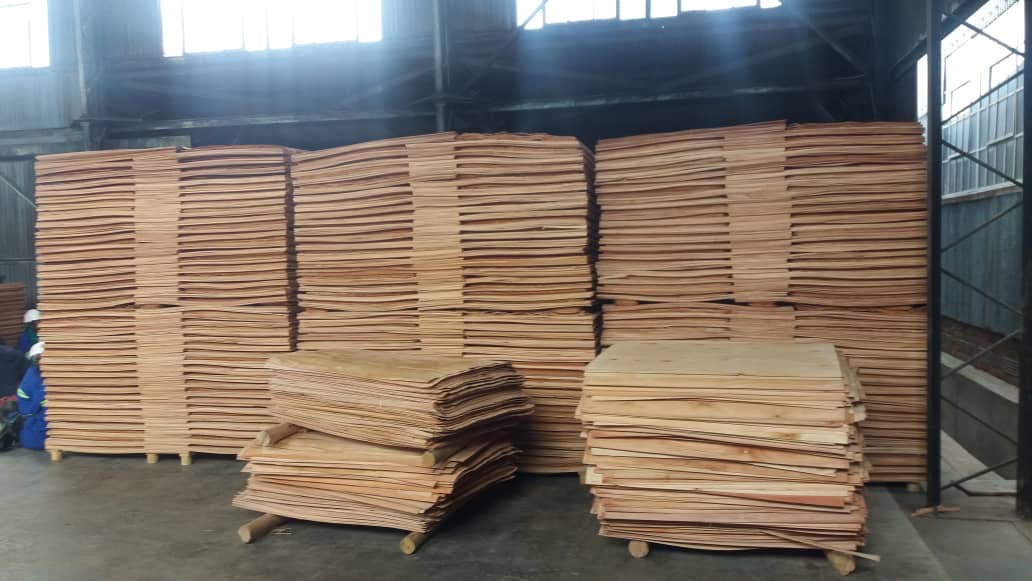
Exhaust design deserves special attention for pine. Because resin rides out with the moist air, the exhaust system has to move vapor out without dumping all the sensible heat. A well-balanced veneer drying machine recirculates 80–90% of zone air, exhausts only the moisture-laden fraction, and routes that exhaust through a heat-recovery loop so the incoming make-up air is pre-warmed. On pine especially, that recovered heat pays for itself twice: once in fuel savings, once in reduced resin buildup because the ducts are not swinging between hot and cold as violently. Mills that skip heat recovery on pine lines usually regret it within a season when the exchanger fouling calls for weekly shutdowns.
Maintenance discipline is the part nobody puts in the brochure. Pine lines need a cleaning rhythm. Rollers or belts get scraped on a schedule—often every one to two weeks depending on throughput and resin load. Ducts get opened and the condensate film removed before it polymerizes into a varnish-like coating. Fan blades get checked because resin imbalance throws off the rotation and creates uneven airflow that no controller can fully compensate for. A wood veneer dryer running pine is not a “set and forget” asset; it is a system that rewards the mill that treats resin like the contaminant it is.
The commercial side is where pine drying finally makes sense. Yes, line speed drops versus poplar. Yes, cleaning labor goes up. Yes, the temperature window is tighter. But pine is cheap, abundant, and in high demand across construction plywood, packing grades, and laminated products. The mills winning with pine are not the ones chasing the hottest machine—they are the ones holding final moisture at 8–12%, keeping edge-crack and curl rejection low, and delivering a sheet the gluing line can trust. When a veneer drying machine holds that envelope shift after shift, the slight loss in throughput is irrelevant next to the gain in sellable face grade.
Shine Machinery’s experience with Southeast Asian and export-facing mills points the same direction. Pine schedules are stored as their own recipe: low inlet, restrained main zone, gentle exit, real cooling, and a cleaning plan written into the standard operating procedure rather than left to chance. Where a four-layer dryer runs mixed species, the pine pass gets its own zone map and its own line speed so the machine is not asked to dry birch and pine on the same curve. The goal is not to force pine to behave like hardwood. The goal is to let pine dry the way pine actually wants to—slow enough that resin bleeds instead of boiling, even enough that the sheet stays flat, cool enough that the color survives.
Operators new to pine make a predictable mistake: they see the green sheet at 60–100% moisture and assume the dryer is “not aggressive enough.” So they open the burner, crank the fans, and watch the outfeed pile up with seemingly dry sheets. A day later the quality clerk is holding sheets that read 5% on the surface probe and 14% on the snap test. That is not a dryer problem. That is pine reminding the mill who is in charge. The fix is rarely more heat. It is less heat, longer time, better airflow balance, and a resin-cleaning routine that actually gets done.
None of this means pine cannot be dried at volume. It absolutely can. Mills in Guangxi, Fujian, Vietnam, and the southern United States run pine veneer lines at serious tonnage. The ones that stay profitable are the ones that stopped treating pine like a softwood version of poplar and started treating it like the resin-loaded, low-density, color-shy material it actually is. They preheat kindly. They dry firmly but not ferociously. They cool completely. They clean relentlessly. And they let the moisture meter—not the temperature gauge—tell them when the sheet is done.
So the next time someone asks why pine veneer is “hard to dry,” the honest answer is not that the equipment is wrong. It is that pine arrives with resin in the channels, weakness in the fibers, pigment in the cell walls, and a moisture gradient that will not be rushed. A competent wood veneer dryer does not overcome those traits by brute force. It works with them—zone by zone, degree by degree—until a wet, curly, resin-heavy sheet comes out flat, uniform, glue-ready, and the right color. That is the whole job. Everything else is just keeping the rollers clean and the recorder running.
In the end, pine teaches a mill discipline. It punishes shortcuts and rewards patience. Run it hot and lazy and you will bury yourself in rejects, resin buildup, and regrade claims. Run it on a real curve—low preheat, 120–130°C main zone, soft finish, below-40°C cooling, disciplined exhaust, scheduled cleaning—and pine becomes what it always could have been: a cheap, plentiful, perfectly serviceable veneer that dries clean and sells steady. The machine is only as smart as the curve you hand it. For pine, the curve is everything.