

Visual Inspection Sorts Veneer Sheets
AI Sees Veneer Flaws
The global market for plywood and engineered wood products is fiercely competitive, demanding ever-increasing levels of efficiency and quality control from manufacturers. In response to these pressures, a quiet technological revolution is taking place on the factory floors of veneer sheet processors and plywood producers worldwide. The humble task of inspecting dried veneer sheets for defects is being transformed by the widespread adoption of advanced visual grading systems. This technology is rapidly becoming the new standard, replacing subjective human inspection with objective, high-speed machine vision.
This shift is driven by the fundamental need for consistency. After veneer sheets are dried in massive kilns or continuous dryers, they must be sorted before they can be layered and glued to form plywood. This sorting process is critical because the quality of the final plywood panel is only as good as its weakest veneer layer. Historically, this job fell to teams of quality control inspectors who visually scanned each sheet for imperfections like knots, holes, dents, and splits. While skilled inspectors were effective, the nature of the work led to inevitable inconsistencies due to fatigue, distraction, and simple human error. A sheet deemed "Grade B" by one inspector might be classified as "Grade A" by another, creating variability in the final product. The visual grading system eliminates this variability entirely.
The technology itself is a powerful blend of hardware and software. The process begins as the continuous stream of dried veneer sheets moves along a conveyor system. High-definition industrial cameras, capable of capturing fine details, are mounted above and sometimes below the sheets. As a sheet passes under the lens, the camera captures a high-resolution image of its entire surface. This digital image is instantly fed into an onboard computer running sophisticated Artificial Intelligence (AI) algorithms. These algorithms have been meticulously trained using vast datasets of veneer sheet images, teaching them to recognize and categorize a wide array of surface anomalies with remarkable accuracy. The AI doesn't just see a hole; it measures its diameter and depth, classifying it according to pre-programmed quality thresholds.
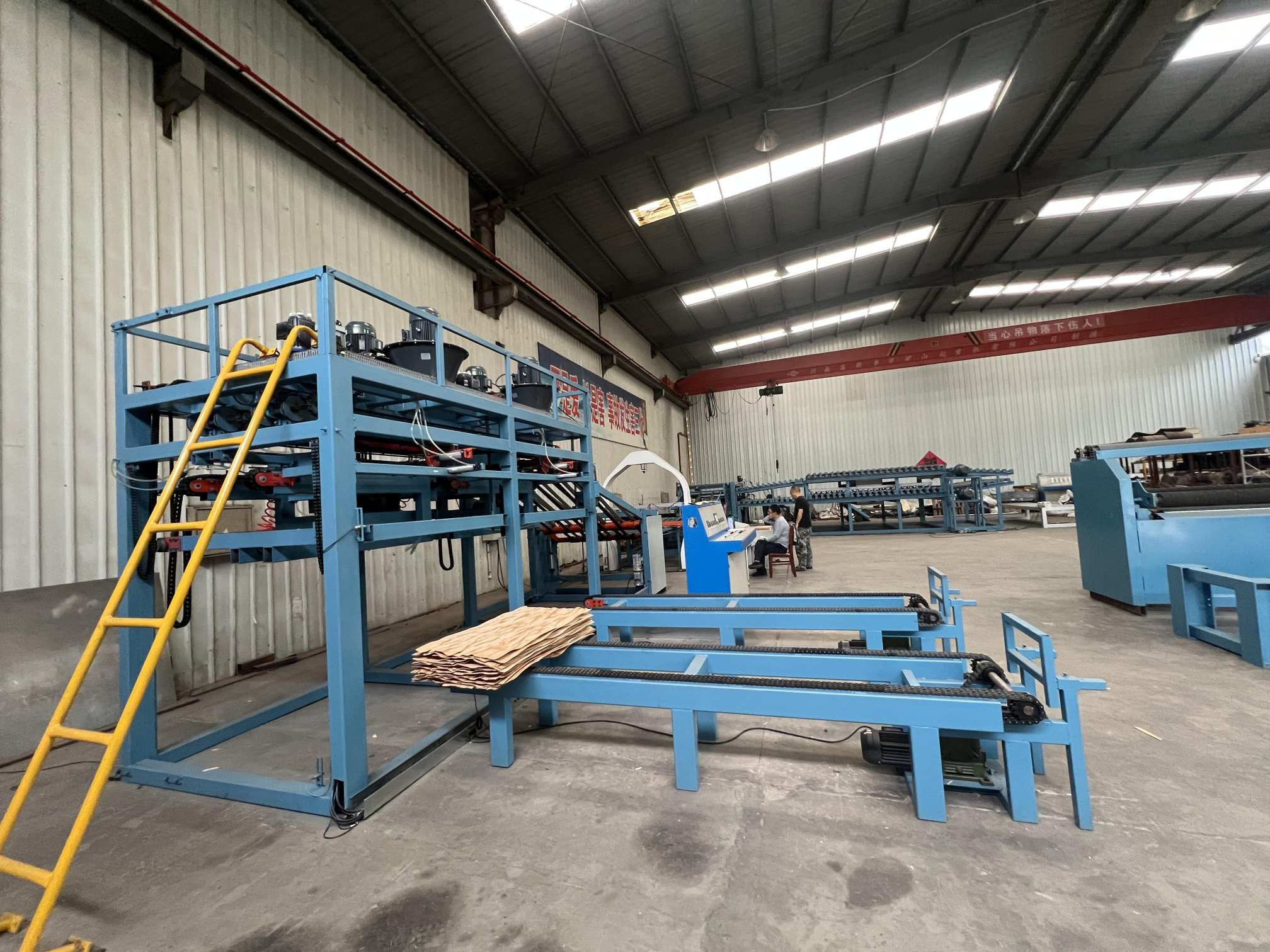
The outcome is a fully automated sorting mechanism. Based on the analysis, the system assigns each veneer sheet to one of four distinct grades: A, B, C, or D. Sheets that meet the pristine criteria for face veneers are directed to the 'A' stacking area. Those with minor, acceptable imperfections are routed to 'B'. Sheets with moderate flaws find their way to 'C', typically destined for internal layers of plywood. Finally, severely defective sheets are sorted into 'D' for rejection or alternative processing. This automated segregation creates perfectly organized stacks of graded veneer, ready for the next stage of production.
The impact of this technology on the industry is profound. For plywood manufacturers, the primary benefit is a guaranteed consistency in raw material quality. This leads directly to more predictable glue bonding, fewer manufacturing defects, and a superior finished product that commands better prices in the market. Operationally, the gains are equally significant. A single visual grading system can inspect and sort veneer sheets at a rate far exceeding any human team, dramatically increasing a factory's daily processing capacity. This allows companies to fulfill larger orders and improve their bottom line. Additionally, the system generates a wealth of data, providing insights into the types and frequency of defects. This data is invaluable for process engineers, who can trace recurring issues back to their source—whether it's a dull cutting blade in the peeling lathe or an imbalance in the dryer's airflow—and implement corrective actions. As the demand for sustainable, high-quality building materials grows, technologies like the visual grading system are proving essential for manufacturers to scale their operations responsibly and competitively.
Integration into Existing Veneer Production Lines
Installing a visual grading system doesn’t require a complete production line overhaul. Here’s how it seamlessly integrates with current workflows:
Physical Integration
Location: The system is typically placed immediately after the veneer dryer’s output (e.g., the discharge point of a roller dryer) and before the plywood lamination line. This ensures dried veneers are inspected at their optimal temperature (before cooling-induced warping) and before manual handling risks additional damage.
Conveyor Connection: The dryer’s existing conveyor (or a short transitional belt) feeds directly into the grading system’s input conveyor. No major structural modifications are needed if the dryer and grading system share compatible belt widths (commonly 1–1.5 meters).
2. Electrical & Software Integration
Power Supply: The system operates on standard 380V/3-phase industrial power (like other production line equipment) and includes surge protection for camera stability.
Control System Compatibility: Most visual graders use PLC (Programmable Logic Controller) interfaces or OPC-UA protocols to sync with the factory’s central control panel. This allows operators to:
Adjust grading thresholds (e.g., redefine “Grade A” criteria) via a touchscreen HMI (Human-Machine Interface).
Monitor real-time throughput (sheets/hour) and defect rates on a centralized dashboard.
Receive alerts (e.g., “Camera 2 obstructed”) if the system encounters operational issues.
3. Calibration & Testing
Initial Setup: Technicians calibrate cameras for focus, lighting intensity, and conveyor speed during installation. Sample veneer sheets with known defects are run through the system to validate AI accuracy (targeting ≥95% detection rate for common defects).
Ongoing Maintenance: Routine checks (weekly/monthly) include cleaning camera lenses, inspecting LED lights for brightness degradation, and updating the AI model with new defect examples (if new wood species or drying issues arise).
4. Training & Workforce Adaptation
Operator Training: Staff receive brief training (1–2 days) on system operation (e.g., overriding grades manually for special orders) and basic troubleshooting (e.g., restarting the HMI after a power glitch).
Role Shift: Human inspectors transition from repetitive visual checks to quality assurance oversight—reviewing flagged sheets or analyzing data reports to improve upstream processes.
Summary
The visual grading system transforms veneer sheet inspection from a subjective, labor-intensive task into an objective, data-driven process. By integrating seamlessly with existing dryers and production lines, it delivers consistent quality, boosts efficiency, and provides actionable insights—making it a strategic asset for modern plywood manufacturers.