

Recover Heat, Cut Fuel Bills
In the competitive world of plywood and veneer manufacturing, margins are no longer decided at the hot press—they are decided at the dryer. Across Southeast Asia, Africa, and South America, mill owners are discovering that a modern veneer drying machine can do far more than just remove moisture. With the right heat-recovery configuration, it can recycle a significant share of the energy that used to escape through the exhaust stacks. For factories running 20-hour shifts in humid climates, this single upgrade is reshaping operating costs, drying consistency, and even the grade of veneer they can sell.
To understand why, it helps to recall what actually happens inside a dryer. As wet veneer travels through the chamber—whether on rollers in a roller-type line or across mesh belts in a fine-veneer line—its surface moisture evaporates and is drawn away by exhaust fans. That exhaust air typically leaves the chamber at 50°C to 80°C, carrying both sensible heat (temperature) and latent heat (trapped in water vapor). In a conventional setup, this warm, moist air is simply discharged into the workshop or atmosphere. The fuel burned to create that heat is, in effect, vented away. A wood veneer dryer equipped with heat recovery intercepts that energy before it disappears.
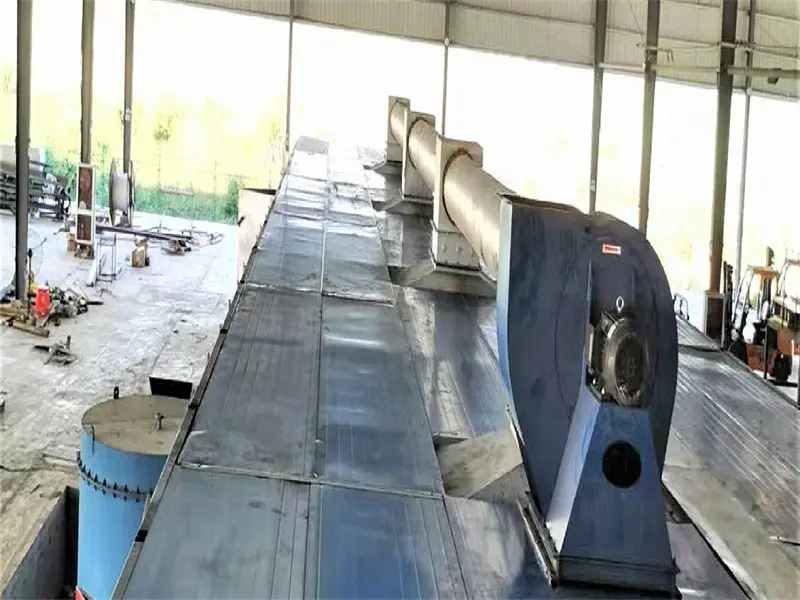
The most common and cost-effective method is exhaust-to-fresh-air heat exchange. A plate or shell-and-tube heat exchanger is installed on the exhaust duct. Cold fresh air drawn from the workshop or outdoors passes through the exchanger, absorbing heat from the outgoing exhaust without mixing with it. Pre-warmed air at 50°C to 55°C is then returned to the dryer’s preheating zone. The main burner—biomass, steam, thermal oil, or gas—now has to raise the air only from 55°C instead of from 25°C. In real terms, this cuts fuel consumption by 15% to 30%. For a 60 m³/day biomass-fired veneer drying machine burning roughly 300 kg of wood waste per hour, a 15% saving means about 45 kg/hour less fuel, translating into more than 13 tons of wood waste saved per year across a 300-day operating calendar.
A second, more elegant approach pairs heat recovery with veneer pre-drying. Here, a portion of the exhaust stream is routed through a short pre-drying tunnel ahead of the main chamber, gently blowing warm, humid air over freshly peeled wet sheets. The surface moisture begins to evaporate slowly before the sheet enters the high-temperature zone. This does two things at once: it reclaims waste heat, and it softens the thermal shock that causes edge cracking. Light, fibrous species such as Falcata, Lauan, poplar, and balsa benefit most, since their thin edges are prone to splitting when thrust suddenly into 140°C air. A wood veneer dryer with an exhaust-preheat section therefore delivers not only lower fuel bills but also a higher proportion of AB- and AA-grade sheets.
The third layer of recovery is the one most often taken for granted: internal hot-air recirculation. In every well-designed veneer drying machine, each hot-air zone is fitted with its own heat exchanger and circulating fan. Roughly 80% to 90% of the zone’s hot air is recirculated back across the veneer, while only the moisture-laden fraction is exhausted. This keeps thermal efficiency stable and moisture distribution uniform across the sheet width. Without recirculation, operators would have to over-fire the burner to compensate for losses, driving up fuel use and creating hot spots that dry edges faster than centers. Recirculation is the quiet workhorse of heat recovery—less glamorous than a shiny exhaust exchanger, but fundamental to achieving the tight 8%–12% moisture window that plywood graders demand.
The numbers tell a compelling story. Independent mill trials across tropical plywood clusters show that adding an exhaust-to-fresh-air heat exchanger to an existing roller dryer reduces biomass consumption by 15%–25%, while a gas-fired wood veneer dryer sees fuel savings of 15%–30% thanks to the higher cost of the energy source. Payback periods typically fall between 6 and 18 months. For lines upgraded with both exhaust preheat and recirculation optimization, edge-crack rejection rates drop by 2%–4%, and the share of sheets qualifying for AB face grade rises noticeably. In an industry where a 1% improvement in yield can mean the difference between a thin profit and a loss, these are not marginal gains.
Heat recovery also transforms the working environment. Untreated exhaust from a veneer drying machine can be hot, humid, and laden with fine wood dust, raising workshop temperatures and creating both comfort and fire-risk concerns. By recovering heat through a sealed exchanger, the discharged air leaves at a lower temperature and with reduced velocity, improving shop-floor conditions and easing the load on dust-extraction systems. Combined with spark-detection and automatic suppression—already standard on Shine dryers—this makes the drying hall safer as well as leaner.
Not every mill needs the same heat-recovery package, however. New builds benefit most from integrating a plate heat exchanger as standard, sized to the dryer’s exhaust volume and local ambient conditions. Existing lines can be retrofitted with a compact exhaust recuperator and a preheat duct without halting production for more than a weekend. In high-humidity regions such as coastal Vietnam, Indonesia, and the Philippines, a dual strategy—exhaust preheat of wet veneer plus fresh-air recovery—performs best during the rainy season when green veneer moisture can exceed 100%. Smaller mills below 30 m³/day may rely first on high recirculation ratios, adding a formal exchanger only when throughput grows. And for gas- or oil-fired installations, heat recovery moves from “optional” to “essential,” since fuel economics leave little room for waste.
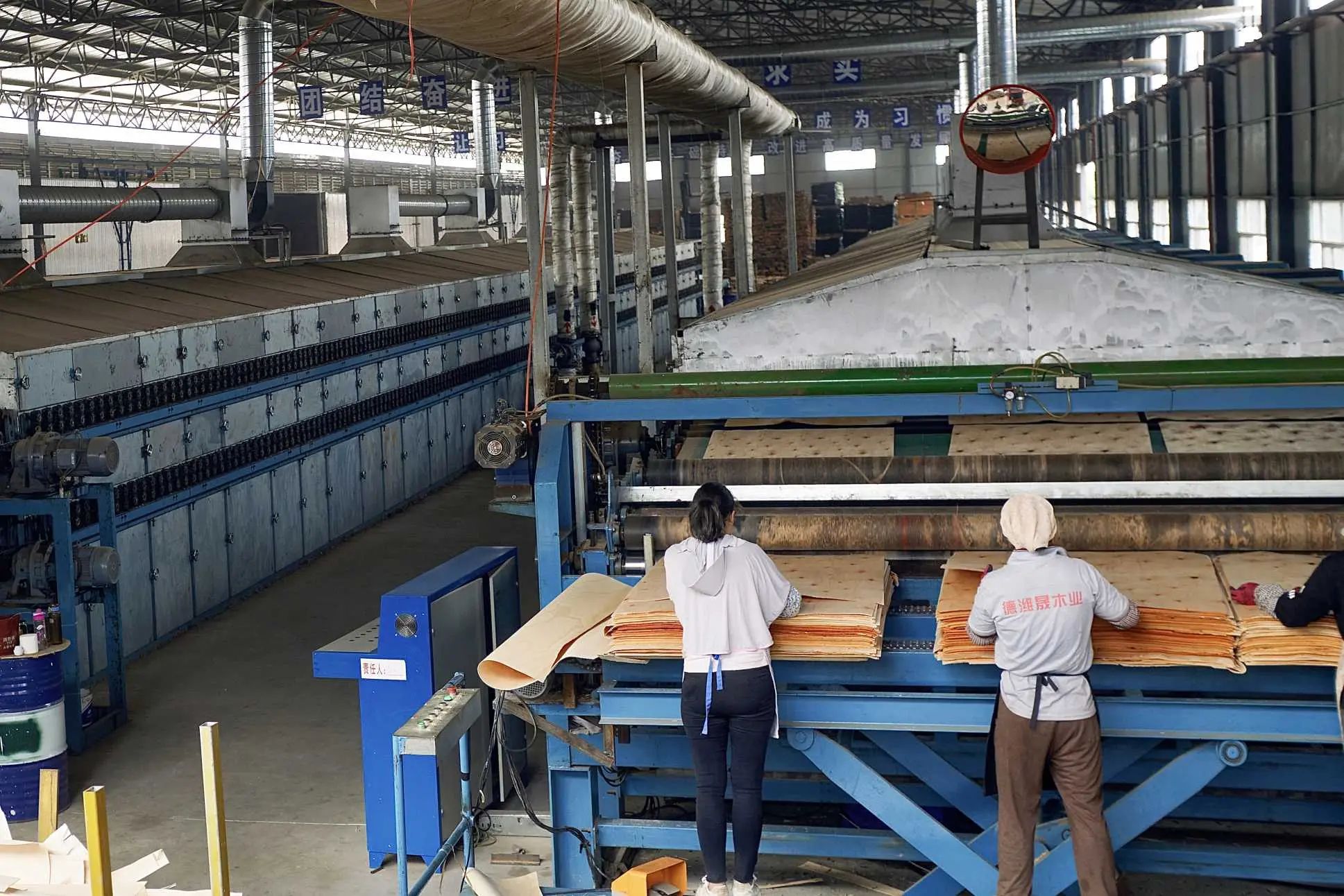
Shine Machinery has standardized heat-recovery options across its wood veneer dryer portfolio. Roller dryers for poplar, rubber wood, and Falcata core veneer can be supplied with a biomass-matched exhaust recuperator and 85% recirculation fans. Mesh belt dryers for engineered decorative veneer feature a low-temperature exhaust-preheat tunnel to protect dyed faces from thermal shock. Multi-deck dryers for 60–120 m³/day operations integrate zone-by-zone heat exchangers with PLC-controlled damper modulation, so the system automatically balances recirculation against exhaust to hold moisture uniformity within ±1%. Retrofit kits for older Shine and non-Shine dryers are also available, including pre-engineered ducting, gasket sets, and flow-balancing dampers.
Looking ahead, heat recovery will become a selling point rather than a footnote. Buyers in Europe increasingly ask about energy intensity per cubic meter of dried veneer. Green-building certifications and carbon-reporting requirements in export markets push mills to document fuel savings. And as biomass availability tightens in some regions, squeezing more drying out of every kilogram of fuel is no longer a nice-to-have. A veneer drying machine without heat recovery is quickly becoming a legacy machine; one with intelligent recovery is the asset that protects margin through volatile fuel prices and rainy-season moisture swings alike.
In summary, heat recovery on a wood veneer dryer is not a single gadget but a three-part philosophy: recirculate most of the hot air inside the chamber, recover exhaust heat to pre-warm incoming air, and use residual warmth to gently pre-dry wet veneer before it meets high heat. The payoff is lower fuel cost, steadier thermal efficiency, fewer edge cracks, better grade yields, and a safer workshop. For mill owners weighing an upgrade, the math is unusually clear: spend once on recovery, save every shift thereafter. In the plywood business, the smartest heat is the heat you don’t have to pay for twice.