

Plywood Types Every Trader Should Know
Walk into any plywood factory in China, Indonesia, Vietnam, or India, and you will hear the same question from overseas buyers: "Can you supply good plywood?" The sentence sounds simple, but it is dangerously vague. "Good plywood" for a furniture maker in Germany is completely different from "good plywood" for a construction contractor in Dubai or a boat builder in Norway. For salespeople writing quotations and traders negotiating with overseas distributors, understanding plywood classification is not academic knowledge—it is the difference between winning the order and losing it to a competitor who sounds more professional. This article breaks down the plywood types that matter most in international trade, organized by application, species, adhesive, grade, and thickness, so that every quotation you send is precise, defensible, and profitable.
The first and most important classification is by application. Furniture plywood is the largest volume category in global trade. It demands flat surfaces, tight thickness tolerance, and certified formaldehyde emissions. Film-faced plywood, also called shuttering or formwork plywood, is coated with phenolic film on both sides and built to survive repeated concrete pours on construction sites. Marine plywood sits at the top of the quality pyramid: void-free core, phenolic bonding, and certification to BS 1088. It is used for boat hulls, docks, and coastal structures where failure is not an option. Container flooring plywood must withstand forklift impact, heavy rolling loads, and extreme humidity for years—it carries APIT certification and uses densified hardwood veneers. LVL, or Laminated Veneer Lumber, is a cousin of plywood where all plies run mainly in one direction, creating beams, scaffold planks, and industrial load members with strength rivaling steel. Packaging plywood is the economy option: ISPM 15 compliant, no bark, no live pests, designed for export crates and pallets. Decorative veneer plywood uses engineered or natural face veneers for hotel interiors, wall panels, and high-end cabinetry. Fire-retardant plywood is chemically treated for public buildings, theaters, and airports. When a buyer says "plywood," the first question a trader must ask is: "What will it be used for?" The answer determines every other specification.
The second classification is by face veneer species. Poplar plywood is light, economical, and easy to machine, dominating the Chinese domestic market and budget furniture exports to the Middle East and Africa. Eucalyptus and mixed tropical hardwood cores are the backbone of construction plywood and truck flooring across Asia. Birch plywood, denser and stronger, is the preferred choice in Europe for CNC machining, paint-grade furniture, and structural interiors—Russian and Finnish birch carry a premium. Rubberwood plywood, common in Southeast Asia and southern China, offers medium hardness and straight grain at a reasonable price. Pine plywood, soft with visible knots and resin canals, serves the North American market for crates, sheathing, and rustic furniture. Beech plywood delivers hardness and attractive grain for high-end furniture. Okoume and bintangor from Africa and Southeast Asia are staples of marine and decorative panels because of their light weight and stable grain. Engineered veneer—dyed, reconstituted, and to order—serves luxury hotels and designer projects. Falcata and Lauan, light and fibrous, are workhorse species in Philippine and Indonesian plywood mills. Each species dries differently, presses differently, and prices differently. A trader who cannot name the species on offer sounds like a middleman, not a manufacturer.
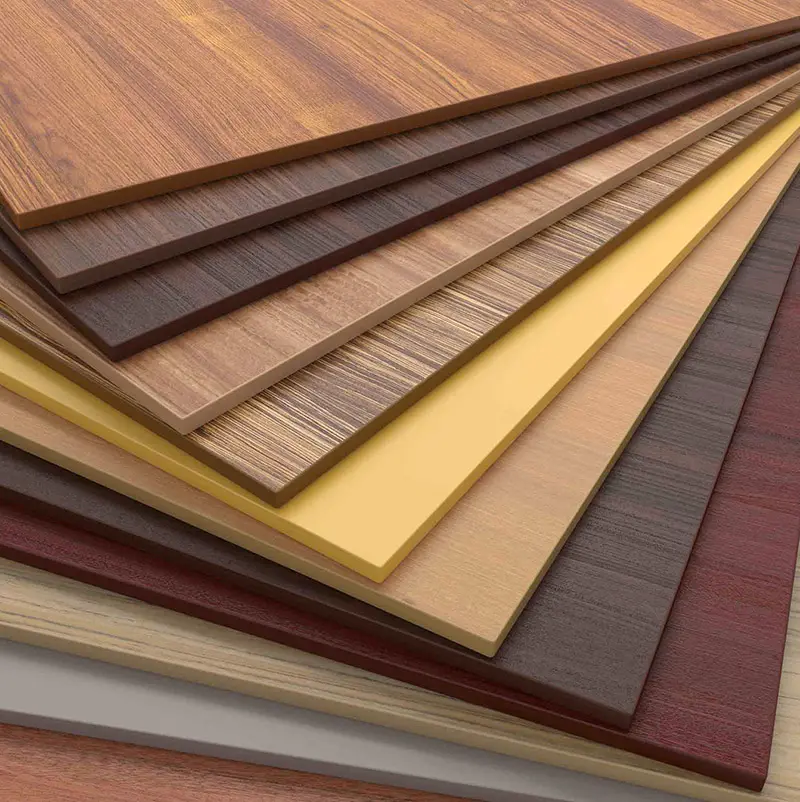
The third classification—and the one that causes the most disputes—is by adhesive and water resistance. MR plywood, short for Moisture Resistant, uses urea-formaldehyde or melamine-urea adhesive. It resists humidity but is not waterproof. It is for indoor furniture, wardrobes, office partitions, and dry-area cabinetry. WBP plywood, Weather and Boil Proof, uses phenol-formaldehyde resin and can survive four hours of boiling-water immersion without delamination. It is the standard for outdoor construction, kitchen units, cold rooms, and container flooring. Marine plywood uses WBP adhesive but adds stricter core construction rules: no voids, no decay, and certification to BS 1088 or equivalent. Here is the critical point many traders miss: WBP is a performance standard, not a single glue formula. Phenolic resin is the gold standard, but melamine-modified urea can also achieve WBP rating under some standards. Buyers who do not understand this sometimes reject perfectly good panels because the mill used melamine instead of phenolic. Traders who explain this difference earn trust. Emission classes—E0, E1, E2, CARB Phase 2, EPA TSCA Title VI—are separate from water resistance but equally important for furniture panels destined for the US, EU, or Japan. A panel can be WBP and still fail CARB if the core adhesive releases excess formaldehyde.
The fourth classification is by face and back grade. Plywood faces are graded AA, AB, BB, CC, and combinations like BB/CC or AA/BB. AA means clean, sanded, defect-free veneer suitable for visible furniture surfaces—no knots, no splits, no discoloration. AB means one premium face and one practical face, ideal when one side is hidden against a wall. BB allows minor repairs, sound knots, and small color variations. CC is utility grade for cores, backs, and non-visible layers—knots and splits are filled but not hidden. This grading system connects directly to the veneer drying machine at the front of the production line. Veneer that leaves the dryer at 8% to 12% moisture with uniform thickness can be graded AA or AB. Veneer that is over-dried, edge-cracked, or uneven forces the mill to downgrade to BB or CC. The dryer, in other words, determines the face grade the factory can sell. A trader quoting AA face panels must confirm the mill has a dryer capable of producing them, not just a hot press and a stack of green veneer.
The fifth classification is by thickness and ply count. Three-ply panels from 2.5 mm to 4 mm are used for backing, laminates, and light decorative work. Five-ply and seven-ply panels from 9 mm to 18 mm dominate furniture carcases, doors, and interior structures. Nine-ply and above, from 21 mm to 30 mm, serve truck bodies, container floors, and heavy construction. The cross-banding rule—adjacent plies oriented at 90 degrees—balances strength and prevents warping. But cross-banding only works if every ply is dimensionally stable. If core veneer was dried too fast and edge-cracked, or too slow and remained at 15% moisture, the pressed panel will cup or delaminate after a few months in the field. Thickness tolerance also matters: furniture panels typically require plus or minus 0.2 mm; construction panels can tolerate plus or minus 0.5 mm. A trader who quotes "18 mm" without specifying tolerance is inviting a claim.
The sixth classification is by international standard. EN 636 covers structural plywood in Europe. EN 314 classifies bond performance. CARB Phase 2 and EPA TSCA Title VI regulate formaldehyde emissions for the US market. JIS A 5908 governs Japanese plywood. IS 303 and IS 710 cover Indian MR and marine grades. BS 1088 remains the global reference for marine plywood. A buyer in Germany, a buyer in Dubai, and a buyer in Manila may all say "plywood," but the certificate they need is completely different. Exporters who understand these standards sell solutions. Exporters who only quote thickness and price get squeezed on margin because the buyer assumes the lowest compliant option will be offered and then complains when it is not.
For the veneer dryer manufacturer, all these plywood types translate into machine requirements. A plant making poplar furniture plywood can use a cost-effective two-deck roller veneer dryer with biomass heating. A plant making engineered decorative veneer for hotel interiors needs a mesh belt veneer dryer with gentle airflow, stainless contact surfaces, low inlet temperature, and a cooling section. A marine-plywood mill needs high-capacity drying with very uniform moisture because every void and every wet streak becomes a warranty claim. The veneer drying machine is not neutral—it shapes which plywood types the mill can profitably make. A wood veneer dryer that delivers uniform 8% to 12% moisture, flat sheets, and clean edges lets a mill produce AA furniture board, BB/CC construction board, WBP outdoor board, and marine-grade panels from the same basic raw material. A poor dryer locks the mill into low grades forever.
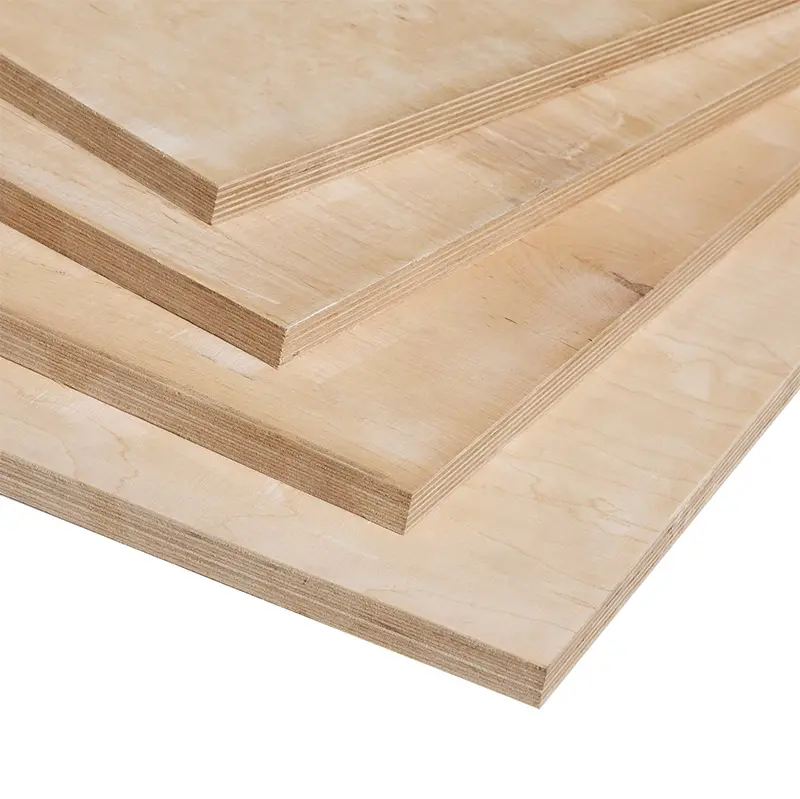
In practice, the smart way to discuss plywood types with a customer is to ask five questions before quoting: What species? What glue system—MR, melamine, WBP, phenolic? What face grade—AA, AB, BB, CC? What standard—EN, BS, CARB, JIS, IS? What end use—furniture, marine, formwork, packaging, structural? Those five answers tell the supplier which dryer, which press, which adhesive, and which moisture window to propose. A 0.4 mm engineered walnut face for a Dubai hotel is a different universe from a 2.5 mm rubber-wood core for a Chinese formwork mill, even though both begin as wet veneer on a lathe.
Plywood, then, is not a commodity. It is a system: log selection, peeling, drying, grading, gluing, cross-band lay-up, pressing, sanding, finishing, and certification. The dryer sits at the front of that value chain. A wood veneer dryer that holds output at tight moisture tolerance is what makes AA and AB production commercially possible. Without proper drying, the mill can peel beautiful logs but still ship BB/CC panels by default. For agents, distributors, and factory owners, the takeaway is clear: when someone asks "what kinds of plywood are there," answer with adhesive classes, face grades, species groups, functional finishes, standards, and end-use markets. Then connect every plywood type back to the machine that makes it possible—the veneer drying machine. That is how equipment suppliers stop sounding like sellers and start sounding like partners. And in the plywood industry, partners get the order; commodities get replaced.
Plywood types will keep multiplying as markets demand low-emission boards, decorative engineered faces, reusable formwork, and certified marine panels. But the constant behind all of them is quality veneer. Dry it wrong, and the best log becomes a reject panel. Dry it right with a properly configured wood veneer dryer, and even modest species become stable, salable, profitable plywood. For every trader, every factory owner, and every project manager specifying panels on a bill of quantities, the seven classifications above are the vocabulary of the trade. Learn them, use them, and quote with confidence.