

How to Choose a Suitable Veneer Dryer
Selecting the right veneer drying machine is one of the most consequential decisions a plywood or veneer mill owner makes. It is not a simple commodity purchase where the lowest price wins. The wrong dryer locks a factory into chronic edge cracking, uneven moisture, excessive fuel consumption, and customer rejections that no amount of hot-press adjustment can fix. The right wood veneer dryer, matched to the mill’s species, thickness range, daily output, and downstream product grade, becomes a profit engine that pays for itself in months. This article walks through a seven-step decision framework that Shine Machinery uses when advising customers across Southeast Asia, Africa, and South America on dryer selection.
Step one is calculating real production demand. Many buyers start by saying “I need a 60 cubic meter per day dryer” without specifying whether that volume is wet veneer or dry veneer, one shift or three shifts, or what initial moisture content their logs carry. These details change everything. In tropical conditions, freshly peeled veneer can carry 60% to 100% moisture, sometimes exceeding 120% during rainy season. Industry data shows that drying one cubic meter of wet veneer consumes roughly 400,000 kcal of heat. A plant targeting 60 cubic meters per day on a two-shift schedule of 20 hours needs to process about 3 cubic meters per hour, which translates to roughly 1,200,000 kcal per hour of thermal load. Factoring in 75% thermal efficiency and a 20% to 30% safety margin, the burner and chamber must be sized for approximately 1,600,000 kcal per hour or higher. Quoting a dryer based on dry-cubic-meter capacity without confirming shifts, initial moisture, and weather conditions is a recipe for chronic under-capacity. The wood veneer dryer must be sized for the worst-case wet input, not the best-case dry output.
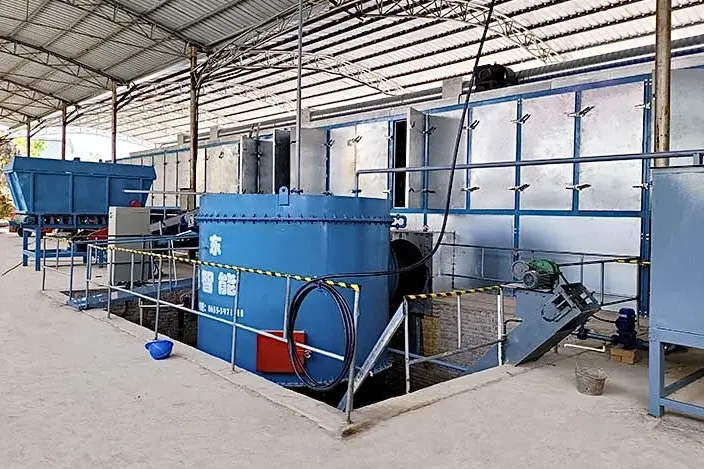
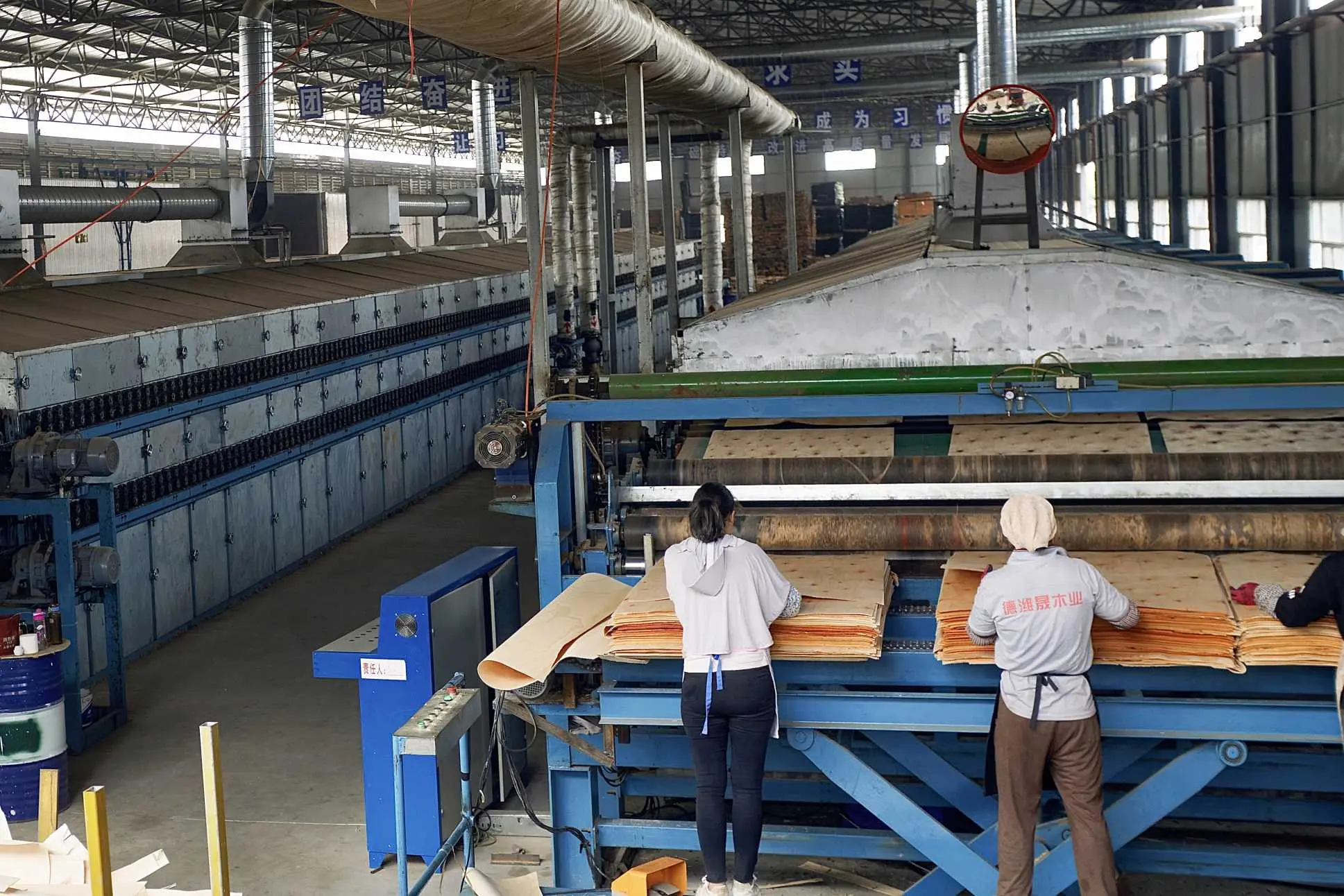
Step two is choosing the machine type based on veneer thickness and end use. This is where more mistakes are made than anywhere else. Mesh belt dryers and roller dryers are not interchangeable. Mesh belt veneer drying machines fully support thin decorative veneers from 0.3 mm to 1.5 mm, preventing curl, edge roll, and indentation. They are mandatory for engineered veneer, reconstituted walnut, and hotel-grade face stock. Roller dryers use heated steel rollers to mechanically flatten and convey sheets from 1.2 mm to 5.0 mm. They are faster, cheaper, and ideal for plywood core and back veneers in species like poplar, rubberwood, eucalyptus, and Falcata. Trying to run 0.5 mm face veneer through a roller dryer produces roller marks and edge curl. Running 3.5 mm structural core stock through a mesh belt dryer wastes floor space and energy. Mills that produce both thin face and thick core stock should either install two dedicated lines or select a convertible machine with both mesh and roller sections. A wood veneer dryer is only as good as its mechanical match to the product thickness.
Step three is matching the drying curve to wood species. Not all veneers tolerate the same heat. Lightweight, low-density species such as poplar, balsa, and Falcata need gentle inlet temperatures of 80°C to 90°C and main-zone temperatures of 120°C to 130°C. Rubberwood, which contains natural sugars and gums, needs 90°C to 100°C preheat and 140°C to 155°C main drying, followed by thorough cooling to prevent mold. Pine and fir release resin that can bake onto rollers and belts; they demand 80°C to 90°C inlet and 120°C to 130°C main zones with slower line speeds. Hard hardwoods like birch and beech migrate moisture slowly and need extended residence time. Engineered dyed veneers are the most sensitive—they require 70°C to 80°C inlet, 90°C to 110°C main drying, and a dedicated cooling section to prevent color shift. A quality veneer drying machine must offer multi-zone independent temperature control and variable-frequency drive on the conveyor, not a single setpoint for the entire chamber. One generic curve for every species guarantees rejects on at least one product line.
Step four is selecting the heat source, which is really a decision about operating cost and fuel availability. Biomass hot-air furnaces burning wood waste, sawdust, and trimming scraps deliver the lowest running cost for mills that generate their own waste stream. This is why Shine Machinery’s biomass hot-air dryers dominate in plywood clusters across Vietnam, Indonesia, and India. Steam boiler systems suit plants with existing steam networks but require heat exchangers and careful condensate management. Thermal oil systems provide the most stable temperature control for high-end engineered veneer but cost more upfront. Natural gas is clean and automated but expensive and unavailable in many producing regions. Electric heating is limited to laboratory lines. For most tropical and subtropical plywood mills, a biomass hot-air furnace paired with a steam backup offers the best flexibility and lowest lifetime cost. The wood veneer dryer is only as economical as its fuel, and fuel is local.
Step five is defining the automation level by plant scale. A small mill producing under 30 cubic meters per day can operate with manual infeed, mechanical thermostats, and two or three operators. A mid-size plant at 30 to 90 cubic meters per day needs automatic infeed, PLC touchscreen control, and periodic inline moisture checks. A large operation above 90 cubic meters per day should have automated grading integration, online moisture meters at the outfeed, remote alarm monitoring, and data logging for quality traceability. Over-automating a small plant wastes capital. Under-automating a large plant creates labor bottlenecks and inconsistent output. The veneer drying machine should match the mill’s management maturity, not just its budget.
Step six is verifying site conditions and safety systems. Many dryer projects stall at installation because the hall dimensions, door heights, crane access, or maintenance aisles were never measured. Electrical supply must be confirmed—a modern dryer with fans, inverters, and PLC controls can draw 50 kW to 200 kW depending on size. Fire safety is non-negotiable: fine wood dust mixed with hot air and resin vapor is a combustible mixture. Spark detection, automatic water or gas suppression, and dust extraction at infeed and outfeed zones are mandatory, not optional. The cooling section must be long enough to bring sheet temperature below 40°C before stacking; hot-sheet bundling causes warping, delayed edge cracks, and in pine, spontaneous combustion. Hot-air ducting from furnace to dryer chamber should be as short as possible—every meter of uninsulated duct loses heat. A wood veneer dryer that cannot be installed safely and serviced easily will never deliver its rated performance.
Step seven is calculating payback, which is how equipment decisions get approved. The formula is straightforward: annual fuel savings plus annual value from reduced rejection rates, divided by total equipment investment. Replacing a natural gas dryer with a biomass system in a wood-waste-rich plant can cut fuel cost by 40% to 60%. Tightening moisture uniformity from plus or minus 2% to plus or minus 1% typically reduces rejected sheets by 2% to 4%. Eliminating edge cracking through proper inlet zoning and controlled line speed upgrades more sheets from BB grade to AB grade. Most well-specified Shine dryers achieve payback in 6 to 18 months. Any proposal exceeding 24 months deserves a hard second look at either the capacity assumption or the heat-source choice. A veneer drying machine is not a cost center when it is sized and run correctly—it is a margin protector.
To summarize the framework in one sentence: calculate capacity on wet input, pick mesh belt or roller by thickness, set the curve by species, choose biomass where waste wood exists, match automation to plant size, confirm the site and fire safety, and prove the payback in months, not years. For mills that follow these seven steps, the wood veneer dryer becomes the most reliable machine on the floor. For those that skip steps two, three, or six, it becomes an expensive lesson.
Shine Machinery supplies both mesh belt and roller veneer drying machines with biomass, steam, thermal oil, and gas heat sources, engineered for Falcata, Lauan, rubberwood, pine, birch, and engineered veneer production lines from 30 to 120 cubic meters per day. Every proposal starts with the same seven questions: daily wet output, shifts, thickness range, species, initial and target moisture, existing heat source, and hall dimensions. The answers determine whether the customer needs a compact single-deck roller dryer, a dual-deck energy-saver, or a multi-zone mesh belt line with cooling. Because in veneer drying, the right machine is not the one with the lowest quote—it is the one that turns wet peeled sheets into flat, uniformly dry veneer at the lowest cost per cubic meter, day after day, season after season.