

Veneer Dryer Maintenance Checklist
A veneer drying machine is one of the hardest-working pieces of equipment in any plywood or veneer plant. It runs hot for 20 hours a day, handles thousands of wet sheets, and never gets a break during peak season. But like any industrial machine operating at high temperature with moving parts and combustible dust, it demands disciplined maintenance. Neglecting even one subsystem can trigger a chain reaction: poor drying, edge cracks, higher fuel bills, unexpected downtime, and in the worst cases, fire. This article lays out the maintenance points that matter most on a wood veneer dryer, organized by system priority, so plant managers and maintenance teams know exactly where to focus their time.
The first and most visible maintenance area is the conveyance system—either rollers in a roller veneer dryer or mesh belts in a mesh belt veneer dryer. These components carry every sheet through the drying chamber, and any misalignment, wear, or mechanical failure stops production instantly. On roller machines, the rollers themselves must be kept clean and free of resin buildup. Hot veneer releases natural sugars and resins that bake onto roller surfaces, creating high spots that mark or indent the next sheet. Each shift should include a visual check of roller faces, especially in the first and last zones where sheet contact pressure is highest. Roller bearings and bearing housings need monthly greasing with high-temperature grease rated above 150°C. Over-greasing is wasteful, but under-greasing is dangerous—heat destroys bearings fast. On mesh belt machines, belt tension and tracking are the daily concerns. A belt that drifts to one side will scrape the chamber wall, fray the mesh, and eventually tear. Daily tracking adjustment and weekly tension checks prevent most belt failures. Drive chains and sprockets on both machine types need lubrication every week using 220# heavy-duty gear oil on reducers and appropriate chain lube on open links. Reducer oil levels should be checked every 500 operating hours and changed per manufacturer schedule.
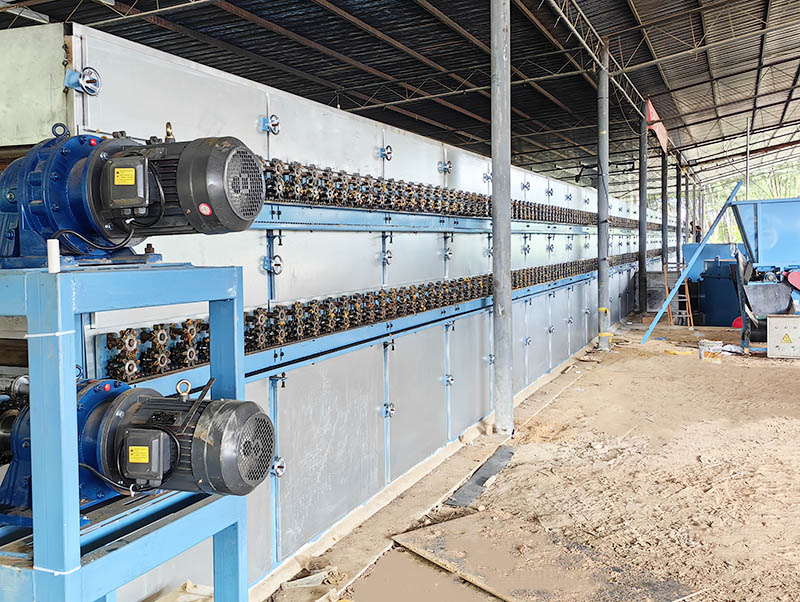
The second priority is bearings and lubrication points. A typical wood veneer dryer has dozens of bearings operating in high-temperature, high-humidity, dust-heavy conditions. Standard grease breaks down quickly above 120°C, so high-temperature lithium-complex or synthetic grease is mandatory for all hot-zone bearings. Sealed bearings should be packed to 20%–30% capacity; open bearings to 30%–50%. Over-packing generates excess heat and attracts dust. Hot-zone bearings on roller dryers often need greasing every two weeks during peak season, not the once-a-month schedule used in cooler departments. Maintenance teams should keep a lubrication map posted at the dryer showing every bearing point, grease type, and frequency. When a bearing fails on a running dryer, the repair window is short—but if the spare bearing was not pre-greased and staged nearby, that short window becomes a half-day shutdown.
Third comes the air system: fans, impellers, belts, and ductwork. Fans are the lungs of a veneer drying machine. They move hot air across the veneer surface and carry away evaporated moisture. Over time, impellers accumulate dust, resin, and fine wood particles. This buildup destroys dynamic balance, causing vibration, noise, and premature bearing failure. Impellers should be cleaned every shift or at minimum every week. A simple visual check—looking for uneven caking on blade surfaces—catches most problems early. Drive belts (V-belts) connecting motors to fan shafts need tension checks every month. Loose belts slip, reducing airflow and increasing motor load. Tight belts overload bearings. Ductwork inside the chamber should be inspected quarterly for air leaks, collapsed sections, or detached nozzles. A single blown gasket at a duct joint can redirect hot air away from the veneer, creating a cold spot that shows up later as uneven moisture at the outlet.
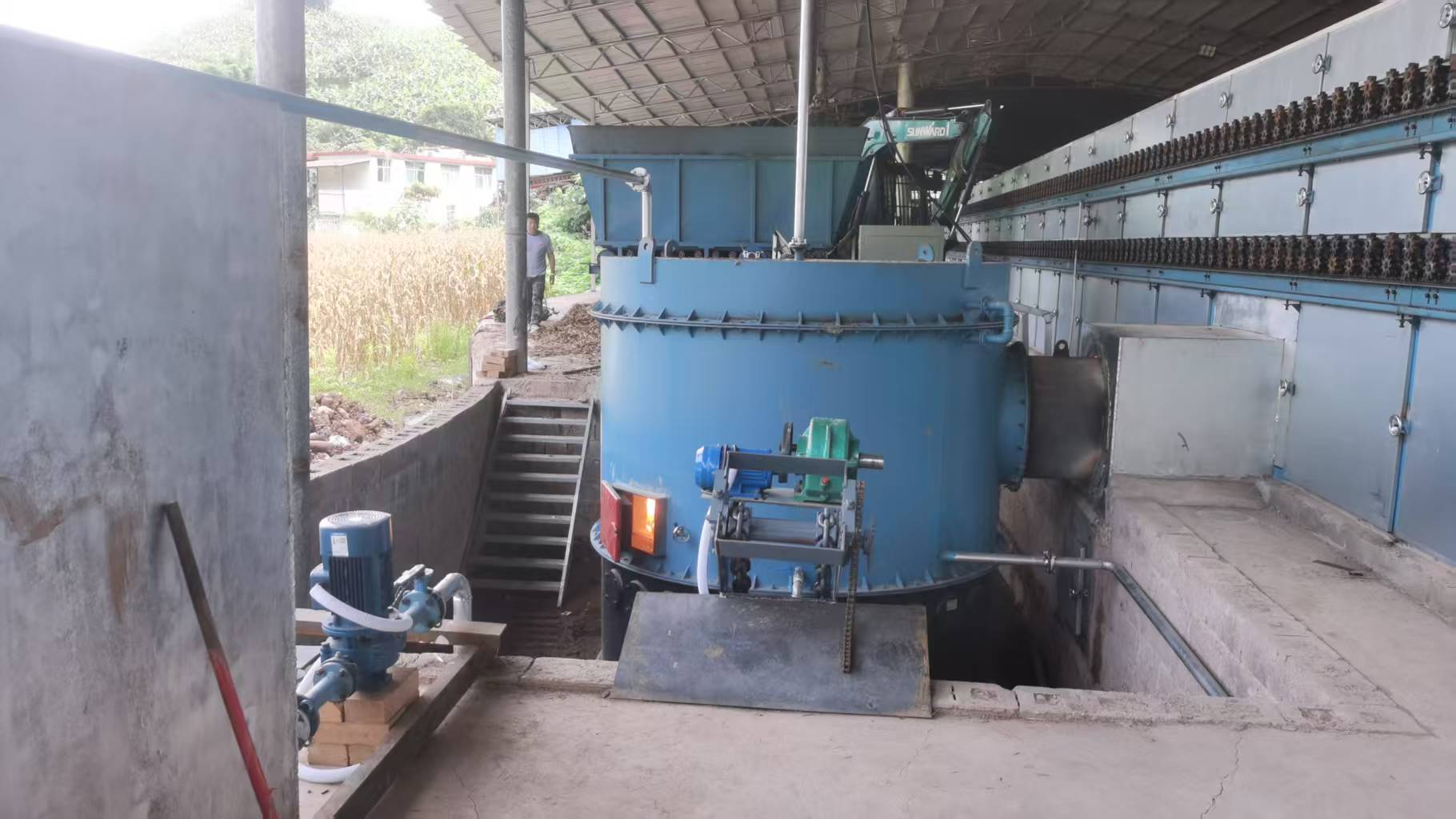
The fourth critical system is the heat source and combustion equipment. Whether the plant uses a biomass hot-air furnace, steam boiler with heat exchanger, or gas burner, this is where most fires start and where most fuel is wasted. Biomass furnaces need daily ash removal from grates and weekly flue-gas passage cleaning. Ash buildup on grates restricts air intake, causing incomplete combustion and smoke that stains light-colored veneer. Flue passages coated with soot lose heat-transfer efficiency rapidly—a 3 mm soot layer can cut efficiency by 15%–30%. Steam systems need condensate drain traps checked weekly; a failed trap lets steam blow straight through, wasting heat and creating humidity swings inside the dryer. Gas and oil burners need nozzle cleaning, flame-sensor inspection, and gas-pressure verification every month. Ignition electrodes wear out and should be replaced before they fail, not after. A wood veneer dryer is only as reliable as its heat source—when the furnace goes down, the entire line stops.
Fifth is the heat exchanger and hot-air channel. In steam- or thermal-oil-heated dryers, finned tube bundles transfer heat from the medium to the air. These fins collect dust, resin, and wood fines that act as insulation, blocking heat transfer. Monthly surface cleaning with compressed air or soft brushing restores efficiency. Quarterly deep cleaning of the entire air channel removes accumulated debris that restricts flow. Inspection of insulation panels, door seals, and access gasket material prevents cold-air infiltration that forces the burner to work harder. A dryer leaking 10% of its hot air through bad seals is essentially burning money.
Sixth, sensors and control systems. Modern dryers rely on PLCs, inverters, temperature sensors, humidity probes, and sometimes inline moisture meters. These devices are only useful if they read accurately. Temperature sensors drift over time, especially in high-cycling environments. Calibrating them against a known reference every quarter prevents the "dryer says 130°C but it feels like 110°C" problem. Humidity and moisture sensors need even more attention—wood dust settles on probe surfaces and throws off readings. Inline moisture meters at the dryer outlet should be checked against oven-dry lab tests weekly. Control cabinets must be kept free of dust; a layer of conductive sawdust on relay terminals can cause intermittent faults that are nearly impossible to trace. Alarm logs in the PLC should be reviewed weekly, not just when a fault trips. Repeated "minor" alarms—belt slip, over-temperature, low airflow—are early warnings of a bigger failure coming.
Seventh is fire prevention and housekeeping. This is not optional maintenance; it is survival maintenance. Hot air, fine wood dust, and resin vapors inside a veneer drying machine create a combustible mixture. Daily cleaning of the infeed and outfeed zones, roller gaps, mesh belt undersides, and chamber floors removes the fuel load. Wood dust should never be allowed to accumulate more than a thin film anywhere inside the dryer. Soft brushes, not angle grinders or steel scrapers, should be used on roller surfaces to avoid damaging the finish. Many plants schedule a full internal clean every weekend during production season—a crew enters the cooled dryer with vacuums and brushes, removing every accessible deposit. This single practice prevents more dryer fires than any sprinkler system.
Eighth, the cooling section at the dryer exit deserves its own mention. Cooling fans and ducts must be inspected monthly for blockages. If the cooling section fails, hot sheets exit above 60°C, get stacked immediately, and either warp, self-ignite (especially pine), or develop delayed edge cracks. A simple infrared thermometer check at the outfeed conveyor tells the maintenance team whether the cooling system is working. If sheet temperature exceeds 40°C at the stacker, the cooling fans need service.
Putting it all together, the maintenance rhythm for a wood veneer dryer looks like this:
Daily: Check belt tracking/tension or roller cleanliness, inspect fan impellers, clean infeed/outfeed zones, check bearing temperatures by hand, verify burner flame and ash removal (biomass), review PLC alarm log.
Weekly: Grease hot-zone bearings, lubricate chains, check V-belt tension, clean impellers if not done daily, test condensate traps (steam), calibrate moisture sensor against lab sample, inspect door seals.
Monthly: Deep-clean heat exchanger fins, check reducer oil levels, verify temperature sensor calibration, inspect ductwork for leaks, service cooling fans, stage spare bearings and belts.
Quarterly: Full internal chamber cleaning, flue-gas passage descaling, inverter and motor insulation testing, replace worn mesh belt sections, rebuild burner nozzles.
Annually: Complete gearbox oil change, full bearing inventory audit, replace all high-temp grease with fresh stock, pressure-test steam/thermal oil circuits, overhaul burner, upgrade PLC software if available.
A well-maintained veneer drying machine runs quieter, uses less fuel, produces more uniform output, and lasts years longer than a neglected one. The difference in annual operating cost between a disciplined maintenance program and a reactive "fix it when it breaks" approach is often 15%–25% in fuel savings alone, plus the avoided cost of one major breakdown. For Shine Machinery customers, we supply a detailed maintenance manual with every dryer, but the real key is building a culture where the maintenance team understands why each task matters—not just what to do.
Edge cracking, uneven moisture, rising fuel bills, and unexpected shutdowns are almost always symptoms of skipped maintenance somewhere on this list. The dryer is telling the operator something. The question is whether anyone is listening before the next sheet cracks, the next belt tears, or the next bearing seizes. A wood veneer dryer is not a "set and forget" machine. It is a precision system that rewards attention with reliability, efficiency, and profit.