

Why Veneer Edges Crack After Drying
Every plywood and veneer manufacturer has faced the same frustrating sight: perfectly peeled sheets enter the dryer looking smooth and intact, only to emerge with thin, jagged cracks running along the edges. These cracks may seem small, but they directly reduce yield, downgrade face veneer to core stock, and in severe cases force entire batches to be re-dried or discarded. Understanding why edge cracking happens—and how to prevent it—is essential for any factory that depends on a veneer drying machine to prepare sheets for gluing and pressing. This article breaks down the six root causes of post-drying edge cracks and explains how proper operation of a wood veneer dryer eliminates each one.
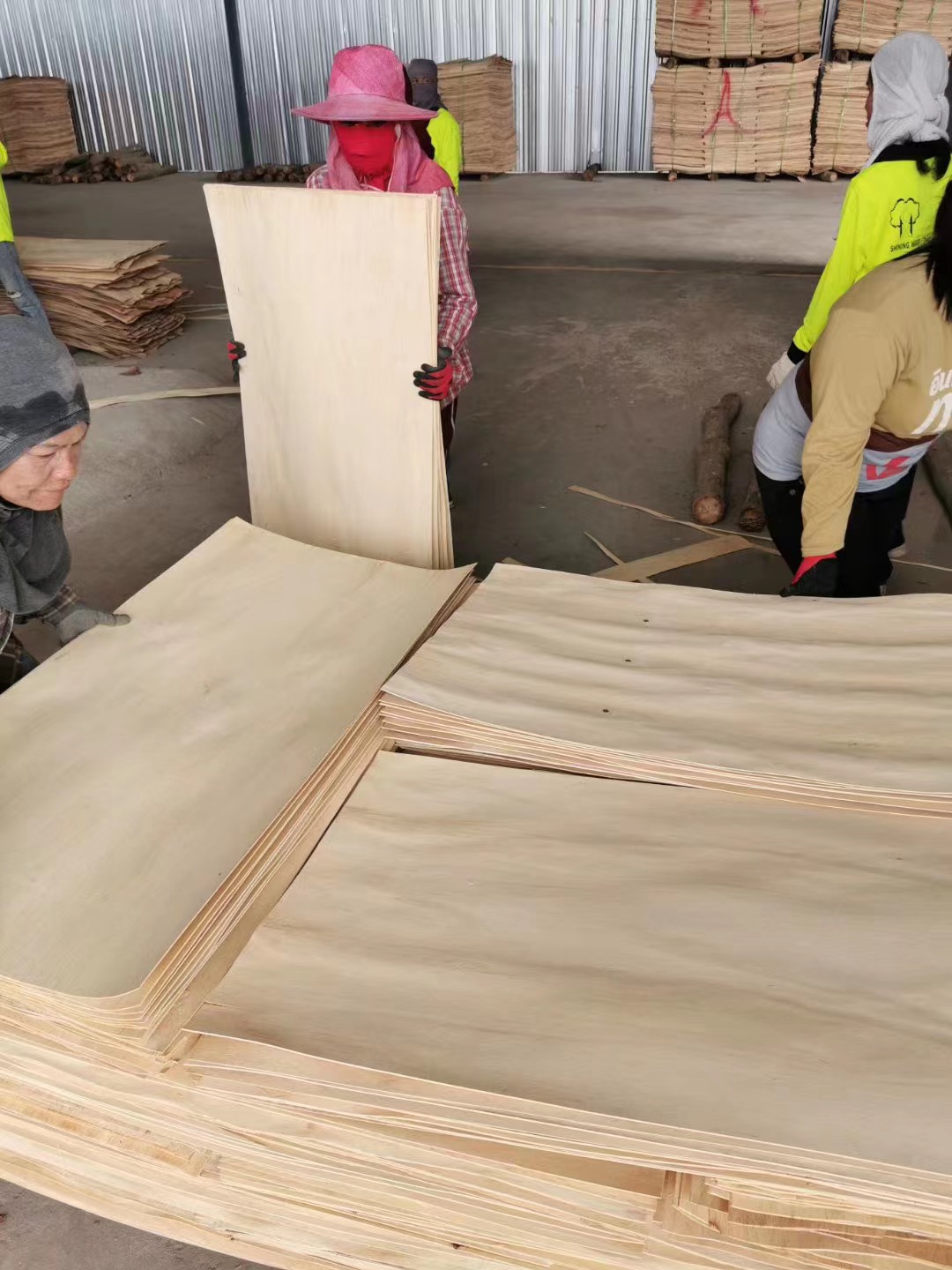
The number one cause of edge cracking is excessive inlet temperature. When wet veneer first enters a veneer drying machine, the surface moisture begins evaporating immediately. If the inlet zone is set too hot—say, 150°C to 180°C—surface fibers shrink almost instantly while the inner layers are still saturated. Because the edges of a veneer sheet expose more surface area to hot air than the center does, they dry fastest. The dry surface pulls against the wet interior, and the edges—being the thinnest and weakest part—split first. The correct approach is to install a preheating zone at the dryer entrance, holding the temperature between 80°C and 100°C. This allows inner moisture to migrate outward gradually before the main drying zone takes over at 120°C to 140°C. A well-designed wood veneer dryer always includes multi-zone temperature control precisely for this reason.
The second major factor is drying speed. Many operators push line speed to maximum because they want higher daily output. But when green veneer at 60% to 100% moisture content is pulled through a veneer drying machine too quickly, the water evaporation rate exceeds what wood fibers can tolerate. Thin sheets of 0.3 mm to 0.8 mm are especially vulnerable. The edge fibers lose moisture so rapidly that cell walls rupture before the sheet even reaches the middle of the chamber. Slowing the line speed by just 10% to 20% often stops cracking entirely. Thick veneers of 2.5 mm to 5.0 mm can tolerate slightly faster speeds, but they too need a matched curve. A wood veneer dryer with variable-frequency drive on the conveyor lets the operator fine-tune speed per wood species and thickness instead of guessing.
Wood species itself is the third and often overlooked cause. Not all veneers behave the same way inside a veneer drying machine. Rubberwood, for example, has coarse vessels and moderate density; dry it above 155°C and edge cracks appear within minutes. Pine and fir contain resin and have large density differences between earlywood and latewood, making them prone to split edges if not preheated slowly at 120°C to 130°C. Lightweight species like poplar and balsa have short fibers that simply cannot withstand aggressive hot-air blasting. Hard hardwoods such as oak and beech migrate moisture slowly and need extended drying time at moderate heat. Even Falcata and Lauan—common in Southeast Asian plywood mills—will crack at the edges if the wood veneer dryer is set for generic tropical hardwood without adjustment. The solution is to create species-specific drying recipes: lower inlet temperature by 10°C to 15°C and extend residence time by 15% to 20% for crack-sensitive species.
Airflow design inside the drying chamber is the fourth culprit. In many mesh-belt dryers, side air nozzles are aimed directly at the veneer edges. This seems logical for uniform heating, but it creates a localized "over-drying zone" at the sheet perimeter. Edge moisture evaporates far faster than the face center, triggering contraction cracks. A professionally engineered veneer drying machine angles side nozzles 5 to 10 degrees toward the sheet center, not straight at the edges. Fan frequency should also be reduced in the inlet section so that air velocity stays within a moderate range. If the mesh belt is much wider than the veneer width, installing edge baffles or curtains prevents stray hot air from scouring the sheet sides. When a wood veneer dryer is commissioned, these nozzle angles and baffle positions should be checked before the first production run—not discovered after a pile of cracked veneer piles up.
Insufficient cooling after drying is the fifth cause—and one of the easiest to fix. Freshly dried veneer exiting a veneer drying machine can still be 80°C to 120°C. If sheets are immediately stacked, bundled, or covered with plastic, residual internal heat continues driving moisture outward. But that vapor is trapped between layers, building steam pressure that forces its way out through the weakest point: the edges. The result is delayed edge cracking that appears not in the dryer, but in the stacking yard an hour later. Every wood veneer dryer intended for plywood production should include a dedicated cooling section—either natural convection or forced cold-air—bringing sheet temperature below 40°C before contact with the next stack. For resin-rich species like pine, full cooling is also a fire-safety requirement; self-ignition has been documented when hot sheets were bundled too soon.
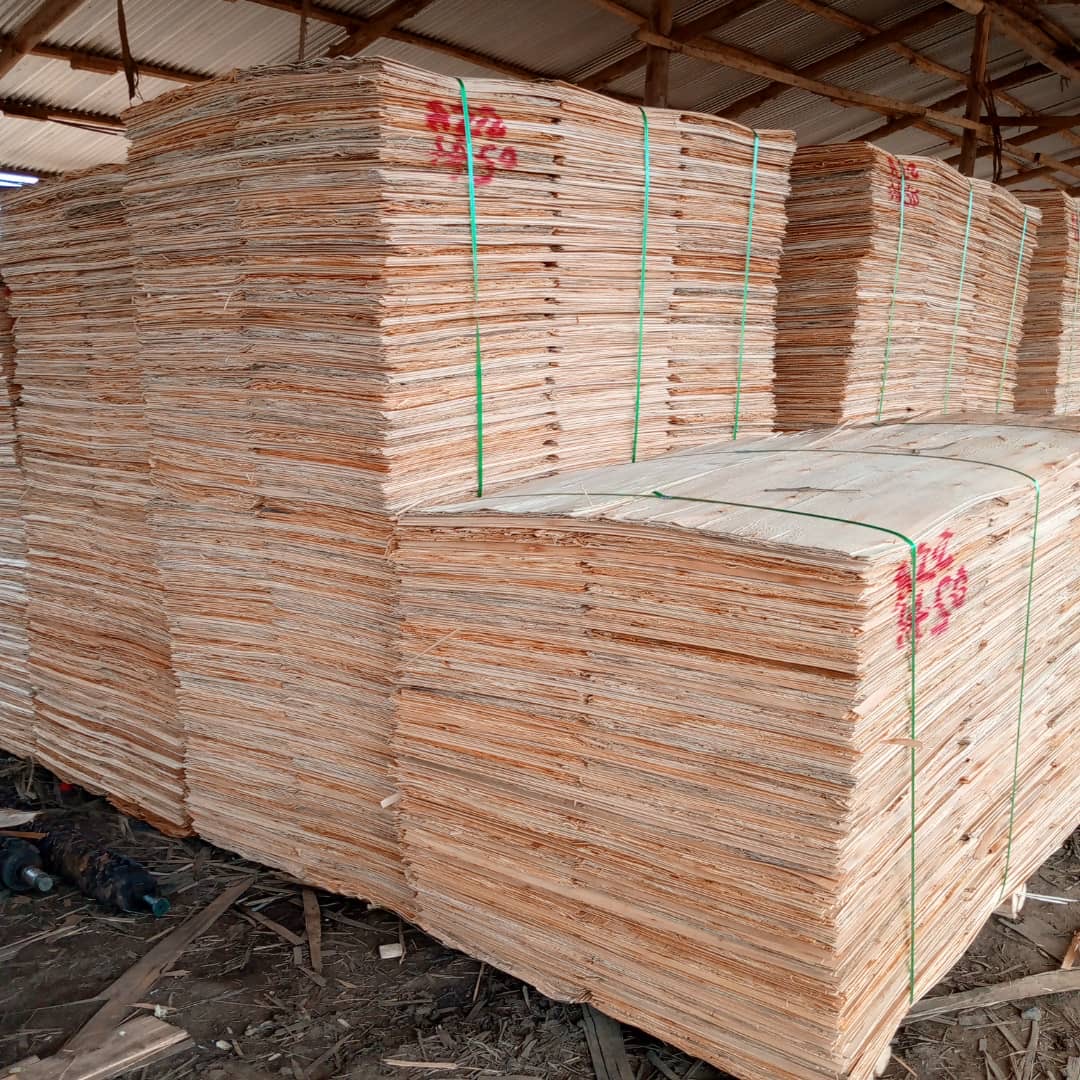
The sixth and most commonly missed cause happens before the veneer ever reaches the dryer: poor peeling quality. A veneer drying machine does not create cracks from nothing—it reveals micro-damage already present in the sheet. If the peeling blade is dull, the knife gap is wrong, or the log was under-cooked in the steam chamber, micro-fissures form along the veneer edge during cutting. These are invisible when the sheet is wet, but the moment it enters a wood veneer dryer and shrinks, those micro-cracks open into visible splits. This is why blade maintenance matters: Shine Machinery always ships one peeling blade and four cutting blades with each production line, and recommends customers keep 4–6 extra peeling blades and 8 extra cutting blades on hand. A sharp blade produces clean edges that survive drying. A dull blade guarantees edge cracks no matter how perfectly the wood veneer dryer is tuned.
Beyond these six causes, there are operational habits that make or break edge quality. Grading dried sheets immediately after exit helps identify cracking patterns early—if cracks appear on one side of the sheet consistently, the burner or fan on that side of the veneer drying machine may be over-firing. If cracks concentrate at the tail end of each sheet, line speed is likely too fast for the thickness. If every sheet from a certain log batch cracks, the problem is species or log preparation, not the dryer itself. Recording these patterns creates a feedback loop: the dryer talks to the peeling lathe, the steam boiler, and the grading table. A wood veneer dryer is not an isolated box; it is the quality checkpoint where every upstream mistake becomes visible.
For equipment selection, the type of dryer also influences edge-cracking risk. Mesh belt dryers support thin decorative veneer fully across the width, preventing edge curl that leads to uneven drying. Roller dryers flatten thicker stock mechanically but can concentrate heat at roller contact lines, sometimes worsening edge stress on sensitive species. A modern veneer drying machine from Shine Machinery uses a combination of multi-zone temperature profiling, humidity feedback, heat recovery, and variable-speed conveyance to keep moisture removal gentle and uniform. When configured correctly for the customer's wood species—whether Falcata, Lauan, rubberwood, or pine—edge cracking drops from a chronic problem to a rare exception.
In practical terms, eliminating edge cracks means following eight words: low temperature, slow drying, even exhaust. Lower the inlet zone by 10°C to 20°C. Add a preheating section if the current wood veneer dryer lacks one. Reduce line speed until output quality stabilizes. Adjust side air nozzles away from sheet edges. Install edge baffles. Add or extend the cooling section. Replace peeling blades on schedule. And most importantly, match the drying curve to the wood species instead of using one generic setting for everything.
Edge cracking is not a mystery. It is the wood telling the operator that something in the system is out of balance. The veneer drying machine is both the place where cracks appear and the tool to prevent them. When temperature, speed, airflow, cooling, and peeling quality all align, veneer leaves the wood veneer dryer flat, intact, and ready for gluing—without a single crack along the edge. For any plywood mill that treats drying as a precision step rather than a rush job, edge cracking becomes a problem of the past, not a cost of doing business.