

Biomass Veneer Dryer Wins
In Southeast Asia, the onset of the rainy season has long been a major concern for veneer manufacturers. High humidity, persistent downpours, and limited sunlight make natural drying of freshly rotary-cut veneers almost impossible. For those without dedicated drying equipment, the consequences are clear: production slows or halts, order fulfillment is delayed, and profits shrink. The inability to control moisture content in green veneers not only affects product quality but also creates logistical headaches for mills that must either stockpile raw material or risk late deliveries.
This seasonal disruption is especially severe in countries such as Indonesia, Malaysia, Thailand, and the Philippines, where monsoon cycles can last for several months. During this period, rotary-cutting operations may continue, but the resulting wet veneers cannot be processed or sold until they dry—a process that, under natural conditions, can take a week or more. The delay forces manufacturers to choose between idling expensive machinery or accumulating large amounts of semi-finished inventory, tying up capital and warehouse space.
The solution lies in a veneer dryer equipped with a biomass heat source. Unlike electric or gas-powered models, a biomass-fueled dryer uses renewable organic materials—such as wood waste, sawdust, rice husks, or coconut shells—as its primary energy input. This approach offers two immediate benefits: uninterrupted drying regardless of weather, and significantly lower fuel costs. In regions where biomass resources are abundant and inexpensive, the economic argument is compelling.
A modern biomass veneer dryer operates on a closed-loop principle. Freshly cut veneers are loaded onto a conveyor system and pass through a drying chamber where temperature, airflow, and humidity are precisely controlled. The biomass furnace generates heat that is distributed evenly by high-efficiency fans, while moisture-laden air is vented or recirculated through a heat recovery system. Sensors monitor the moisture content in real time, and a PLC adjusts the temperature and fan speed to ensure uniform drying without overheating or damaging the veneer surface.
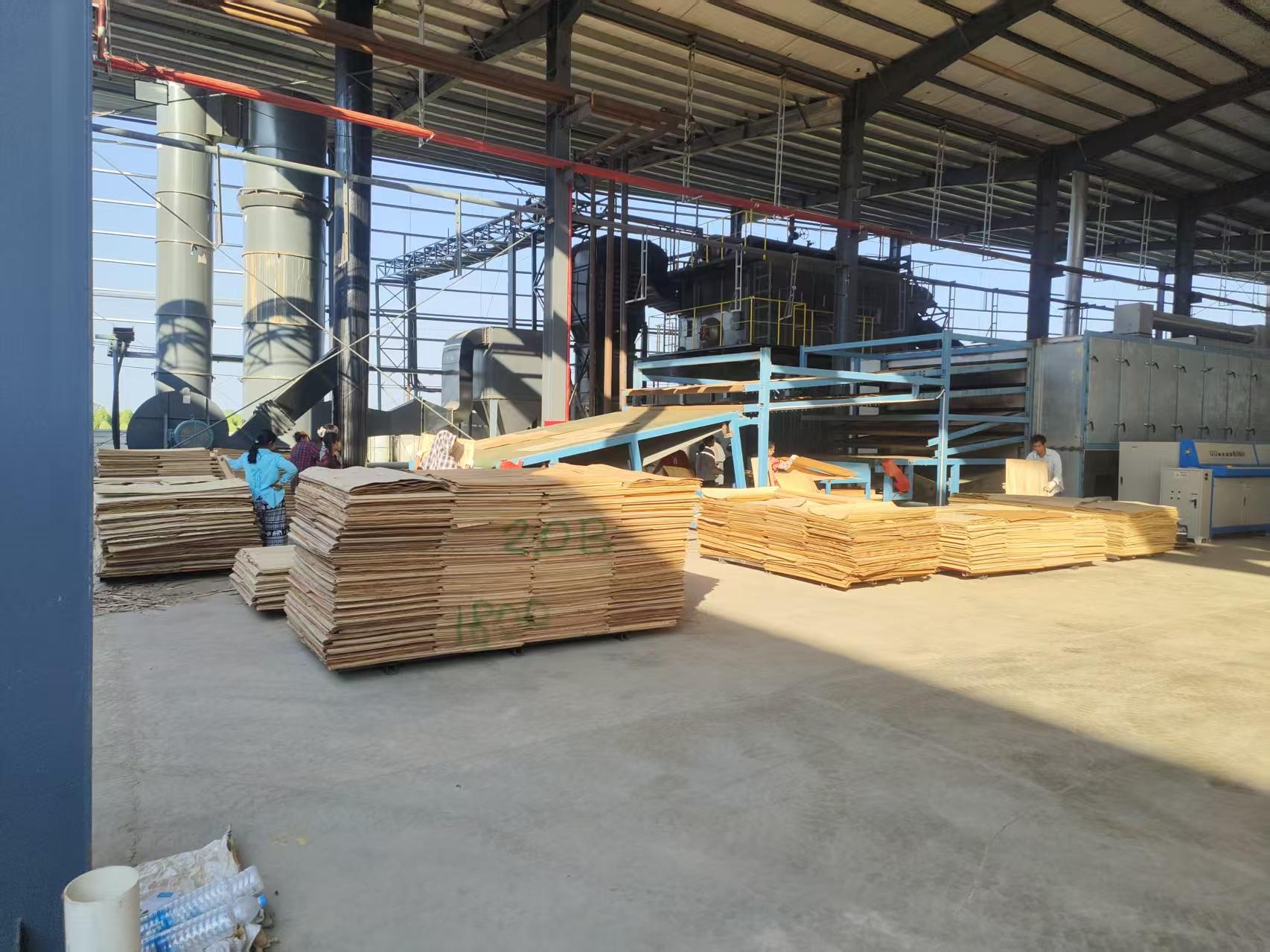
The energy efficiency of biomass systems is a key selling point. Because the fuel is locally sourced and often a byproduct of other wood processing activities, transport and acquisition costs are minimal. A well-designed biomass veneer dryer can reduce energy expenses by 40% to 60% compared to electric models, and 20% to 30% compared to natural gas systems. In addition, the use of renewable fuel aligns with global trends toward greener manufacturing, which is increasingly important for exporters targeting environmentally conscious markets.
From a technical perspective, a quality biomass veneer dryer is built to handle the rigors of continuous operation. The drying chamber is insulated with high-density panels to minimize heat loss, and the conveyor rollers are made from corrosion-resistant stainless or galvanized steel. The furnace itself is constructed to burn biomass cleanly, with automated feeding systems that regulate fuel input and maintain consistent combustion. This prevents fluctuations in temperature that could lead to uneven drying or product defects.
The capacity of these dryers can be tailored to the size of the mill. Small operations may install a 30 meter long unit with a 2m3 per hour throughput, while large-scale plywood or LVL producers often opt for 40 meter 4 layers dryers capable of processing 5-6m3 per hour. The flexibility in design means that even modest workshops can gain the benefits of year-round production without requiring massive capital outlays.
The impact of switching to a biomass veneer dryer is measurable. A mill in central Sumatra, for example, used to lose 15 to 20 working days each rainy season due to slow natural drying. After installing a 20-meter biomass veneer dryer, the company eliminated these losses entirely, allowing it to maintain a steady output of high-quality veneer for its export customers. The mill also reported a 50% reduction in energy costs, thanks to the use of its own sawdust as fuel.
Beyond cost savings, the dryer improves product consistency. Green veneers dried in open yards often suffer from uneven moisture distribution, leading to warping, cracking, or poor adhesion during lamination. A controlled drying process ensures that every sheet reaches the target moisture content uniformly, enhancing dimensional stability and bonding strength. This translates into fewer rejected panels and higher customer satisfaction.
Adopting biomass technology also strengthens supply chain resilience. Manufacturers can negotiate larger contracts and commit to delivery schedules without building in seasonal allowances for drying delays. For buyers in Europe, Africa, or South America, knowing that a supplier operates a reliable drying system reduces the risk of shipment disruptions caused by weather-related slowdowns.
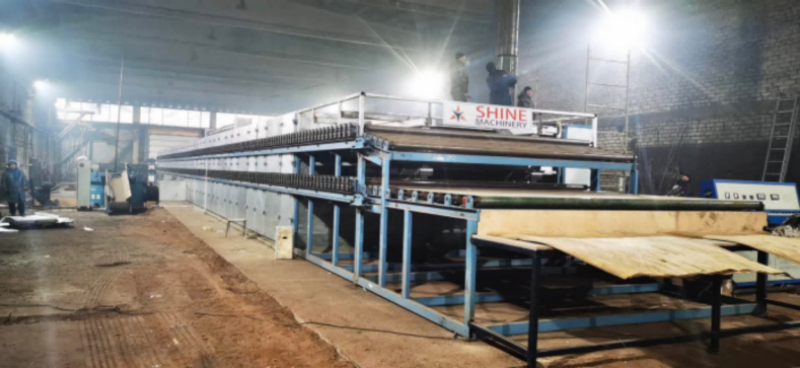
Maintenance is straightforward. Biomass furnaces require periodic cleaning to remove ash and soot, but the modular design of most commercial dryers simplifies access and servicing. Automated feeding mechanisms reduce operator workload, and remote monitoring systems allow engineers to track performance and troubleshoot issues without being on-site.
As Southeast Asian economies push toward sustainable industrial practices, biomass veneer dryers offer a practical pathway forward. They combine proven drying technology with renewable energy, delivering both environmental and financial benefits. Mills that invest in such systems gain more than just protection from the rainy season—they secure a competitive edge in an increasingly demanding global market.
For veneer manufacturers tired of watching profits erode during monsoon months, the message is clear: a biomass veneer dryer is not just a tool for drying wood—it is a strategic asset that boosts output, cuts costs, and ensures reliable deliveries all year round.