

New 2 Layer Roller Veneer Dryer in China
The plywood and veneer manufacturing industry in Southwest China is witnessing a significant technological leap forward. In Pu'er, Yunnan Province, a brand-new roller veneer dryer has just been installed and commissioned, setting a new benchmark for efficiency and productivity in the region. This state-of-the-art machine, featuring a two-deck 56-meter drying chamber with a working width of 3.75 meters, is powered by a 10-ton biomass burner and utilizes a double-station manual feeding system. Designed specifically for drying rubberwood veneer, this production line is capable of processing an impressive 100 to 110 cubic meters of veneer every 22 hours, bringing the final moisture content down to an unprecedented 0%. This remarkable achievement not only highlights the robustness of modern drying technology but also underscores the growing demand for high-quality rubberwood products in both domestic and international markets.
The installation of this roller veneer dryer represents a strategic investment for the factory, aimed at overcoming the inherent challenges of drying rubberwood. Rubberwood, derived from rubber trees (Hevea brasiliensis) after they complete their latex-producing cycle, is a popular material for furniture, flooring, and plywood core layers due to its light color, uniform texture, and relatively low cost. However, it is also known for its high moisture content when freshly peeled—often exceeding 80%—and its tendency to develop mold or discoloration if not dried quickly and evenly. Achieving a final moisture content of 0% is an extreme requirement, typically reserved for specialized applications where the veneer will undergo further treatment, such as chemical impregnation or high-frequency curing. This level of dryness ensures that no residual water remains to interfere with subsequent processes, guaranteeing maximum dimensional stability and adhesive bonding strength.
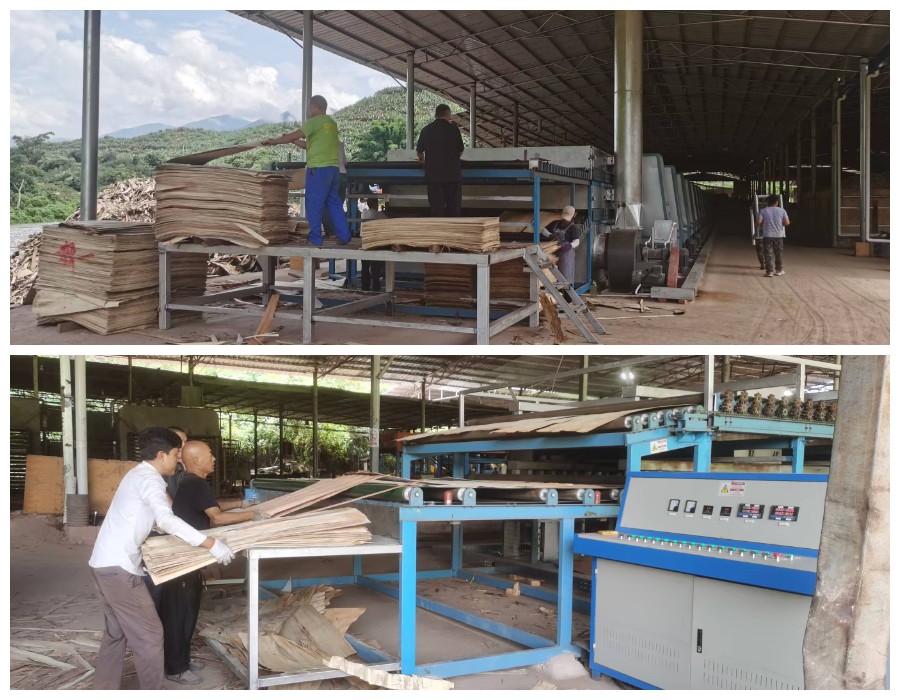
At the heart of this production line is the two-deck 56-meter roller veneer dryer. The double-deck design is a space-saving innovation that effectively doubles the drying capacity without expanding the footprint of the machine. Veneer sheets travel through the upper and lower chambers simultaneously, with hot air circulating in a carefully controlled pattern to ensure uniform heat distribution. The 56-meter length provides ample residence time for the veneer to gradually lose moisture, preventing case hardening—a condition where the surface dries too quickly and forms a barrier that traps moisture inside. The working width of 3.75 meters is notably generous, allowing the dryer to accommodate wide rubber wood veneer sheets without trimming, thereby reducing waste and increasing the yield of usable material.
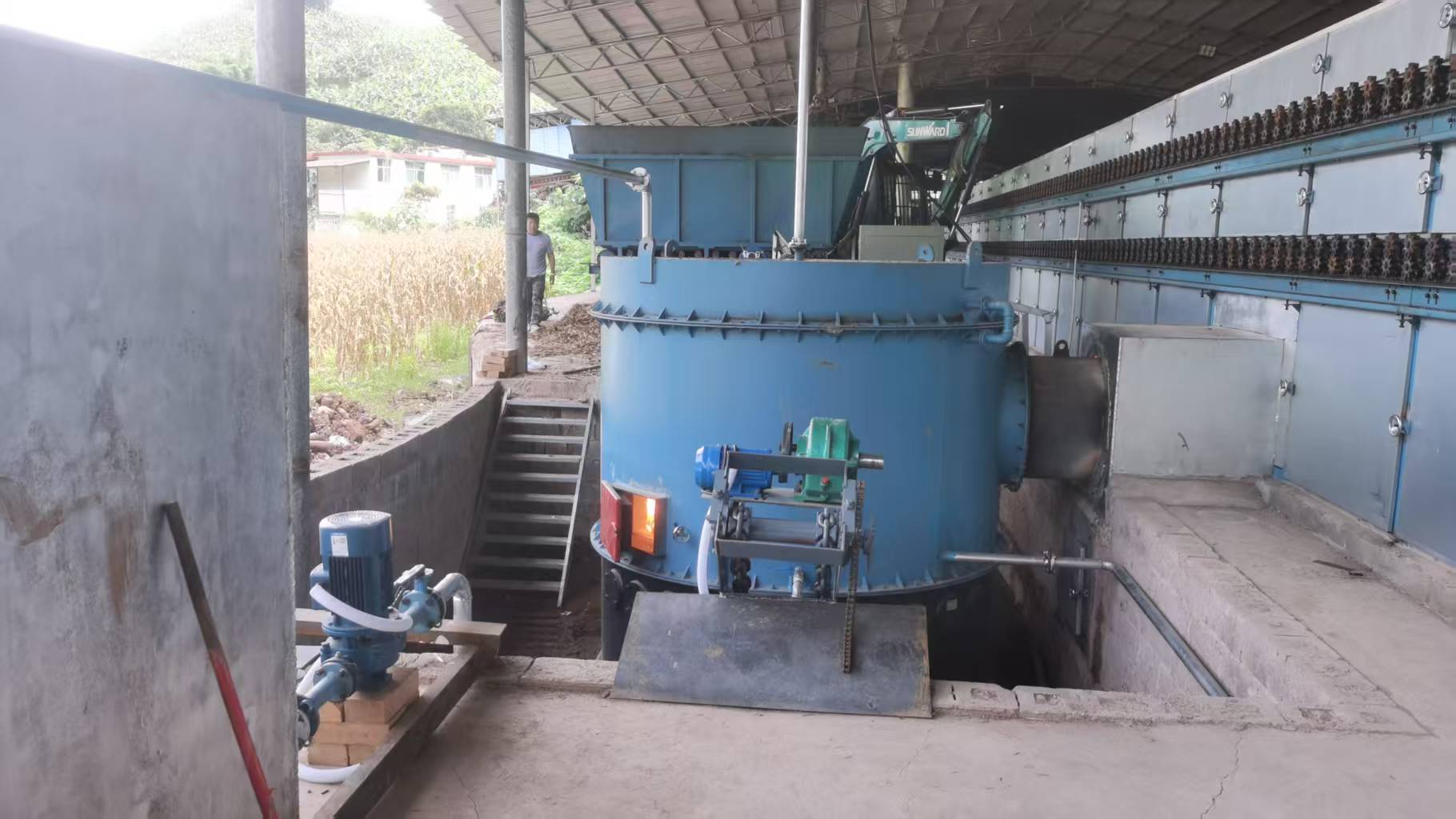
The drying process is fueled by a 10-ton biomass burner, a choice that reflects both economic and environmental considerations. Biomass combustion systems are increasingly popular in the wood processing industry because they can utilize waste wood, sawdust, and other organic residues as fuel. This not only reduces operating costs but also aligns with global sustainability initiatives by minimizing reliance on fossil fuels. The 10-ton capacity ensures a steady and powerful heat output, capable of maintaining the high temperatures required to drive the moisture content of rubberwood veneer down to 0%. Advanced combustion technology ensures complete burning, reducing emissions and ash content, while an automated feeding system keeps the burner supplied with fuel without interrupting production.
One of the standout features of this installation is the double-station manual feeding system. While automation is the trend in many large-scale factories, manual feeding with two stations offers distinct advantages in certain contexts. The double-station setup allows one operator to load the dryer while the other prepares the next batch of veneer, minimizing idle time and ensuring a continuous flow of material. This approach is particularly effective for rubberwood veneer, which can vary in thickness and shape, requiring a degree of human judgment to stack and align properly. The result is a significant boost in overall efficiency, as the dryer is kept consistently fed, maximizing its output of 100 to 110 cubic meters per 22-hour cycle. This productivity level is remarkable, translating to an average throughput of approximately 4.5 to 5 cubic meters per hour, a figure that places this operation among the most efficient in the region.
Achieving a final moisture content of 0% is no small feat. It requires precise control over every aspect of the drying process, from the initial temperature ramp-up to the final conditioning phase. The roller veneer dryer is equipped with a sophisticated control system that monitors temperature, humidity, and airflow at multiple points along the 56-meter chamber. In the early stages, the temperature is gradually increased to avoid thermal shock, which could cause the rubberwood veneer to crack. As the drying progresses, the system adjusts the speed of the rollers and the intensity of the hot air to ensure that moisture is removed evenly from both the surface and the core of each sheet. The exhaust fans, modulated by humidity sensors, expel moist air at the optimal rate, conserving heat and energy. By the time the veneer exits the dryer, every fiber has been thoroughly dehydrated, reaching the target of 0% moisture content. This level of dryness is verified using precision moisture meters, ensuring consistency and compliance with customer specifications.
The benefits of this installation extend beyond mere numbers. For the factory in Pu'er, the new roller veneer dryer means enhanced product quality and a stronger competitive edge. Rubberwood veneer dried to 0% moisture content is less prone to warping, shrinking, or fungal attack during storage and transportation. It also provides a superior substrate for gluing, as the absence of water eliminates the risk of adhesive failure due to trapped moisture. This is particularly important for manufacturers of high-grade plywood, where the integrity of the bond between layers is critical. Furthermore, the ability to consistently produce such dry veneer opens up new market opportunities, including export to regions with stringent quality standards. International buyers, especially in the furniture and construction sectors, are willing to pay a premium for materials that guarantee long-term performance and reliability.
From a broader perspective, this project exemplifies the ongoing transformation of the wood processing industry in Yunnan Province. Pu'er, known primarily for its tea, is emerging as a hub for rubber wood utilization, thanks to its proximity to rubber plantations and a growing network of timber enterprises. The adoption of advanced drying technology not only adds value to local resources but also creates employment and stimulates economic growth. The success of this roller veneer dryer is likely to inspire other manufacturers in the region to upgrade their equipment, leading to a collective improvement in product quality and operational efficiency.
The technical specifications of this machine also offer valuable insights for engineers and factory managers worldwide. The combination of a two-deck design, wide working width, and high-capacity biomass burner demonstrates how to balance space constraints, energy efficiency, and production demands. The double-station manual feeding system, often overlooked in favor of full automation, proves that a well-designed semi-manual process can still deliver exceptional results when tailored to the specific characteristics of the material. Moreover, the achievement of 0% final moisture content pushes the boundaries of what is possible with conventional hot-air drying, suggesting that with precise control and robust equipment, even the most challenging drying targets can be met.
Looking ahead, the factory plans to further optimize its operations by integrating additional quality control measures, such as inline moisture scanning and automated stacking systems. However, the core of its success will remain the roller veneer dryer—a machine that has already proven its worth by consistently delivering high volumes of perfectly dried rubber wood veneer. As the global demand for sustainable and high-quality wood products continues to rise, installations like this one in Pu'er will play a crucial role in shaping the future of the industry. They represent not just an upgrade in machinery, but a commitment to excellence, efficiency, and environmental responsibility. For manufacturers seeking to stay ahead in a competitive market, the lessons from this project are clear: invest in the right technology, adapt it to your specific needs, and never compromise on quality. The result will be a product that stands out, a process that runs smoothly, and a business that thrives.