

8%–12%: The Veneer Moisture Rule
Every plywood manufacturer knows the scene: freshly peeled veneer comes off the lathe soaking wet, sometimes at 60%–100% moisture content, heavy, floppy, and unfit for gluing. The job of the veneer dryer is to take that green sheet and turn it into a stable, press-ready material. But the real question asked by experienced mill owners is not “how dry can you go?”—it is “how dry should you go?” Across the global wood panel industry, the answer has stayed remarkably consistent: for standard plywood production, veneer leaving the veneer dryer should normally sit in the 8%–12% moisture content (MC) range.
Why 8%–12%? Because this is the window where wood fibers are dry enough to avoid steam explosions in the hot press, yet moist enough to let thermosetting adhesives flow, penetrate, and cure into a continuous glue line. When veneer exits the veneer dryer above 12%–15%, the free water left inside the sheet turns into high-pressure steam at 110°C–140°C platen temperatures. That steam blows through the adhesive film and creates blisters, bubbles, and delamination. On the other hand, when operators believe “drier is better” and push the veneer dryer until sheets hit 3%–5% or even near 0%, the wood becomes brittle, surface fibers oxidize, and the sheet acts like a sponge that sucks water out of the glue mix. The result is a “starved glue line”—brittle, weak, and prone to open joints after cooling.
The 8%–12% band is not an arbitrary marketing number. It is the practical compromise between three forces in plywood making: adhesion, dimensional stability, and handleability. At 8%–12% MC, veneer still has enough flexibility to survive automatic lay-up without cracking. It has low enough water content that urea-formaldehyde and phenol-formaldehyde resins cure correctly. And it is close enough to the equilibrium moisture content of most indoor markets that the finished panel will not twist the moment it leaves the warehouse. A modern veneer dryer is therefore not judged by how close it can get to zero—it is judged by how reliably it lands every sheet inside that narrow, profitable window.
Uniformity matters as much as the average. A mill can report a “perfect” average of 10% MC and still produce garbage panels, because the real problem is distribution. If one face veneer reads 6% and its symmetrical backing reads 14%, the panel will cup, bow, or twist as it cools. If the left edge of a sheet is 9% and the right edge is 13%, internal stress builds and the glue bond fails under shear testing. That is why a well-designed veneer dryer uses multi-zone temperature control, balanced hot-air jets, variable-frequency conveyors, and insulated chambers to avoid cold spots near the doors. The target is not just “dry veneer”; it is “every sheet in the batch within roughly ±2% of the others.” Top mills go tighter, holding ±0.5%–1% on export-grade lines.
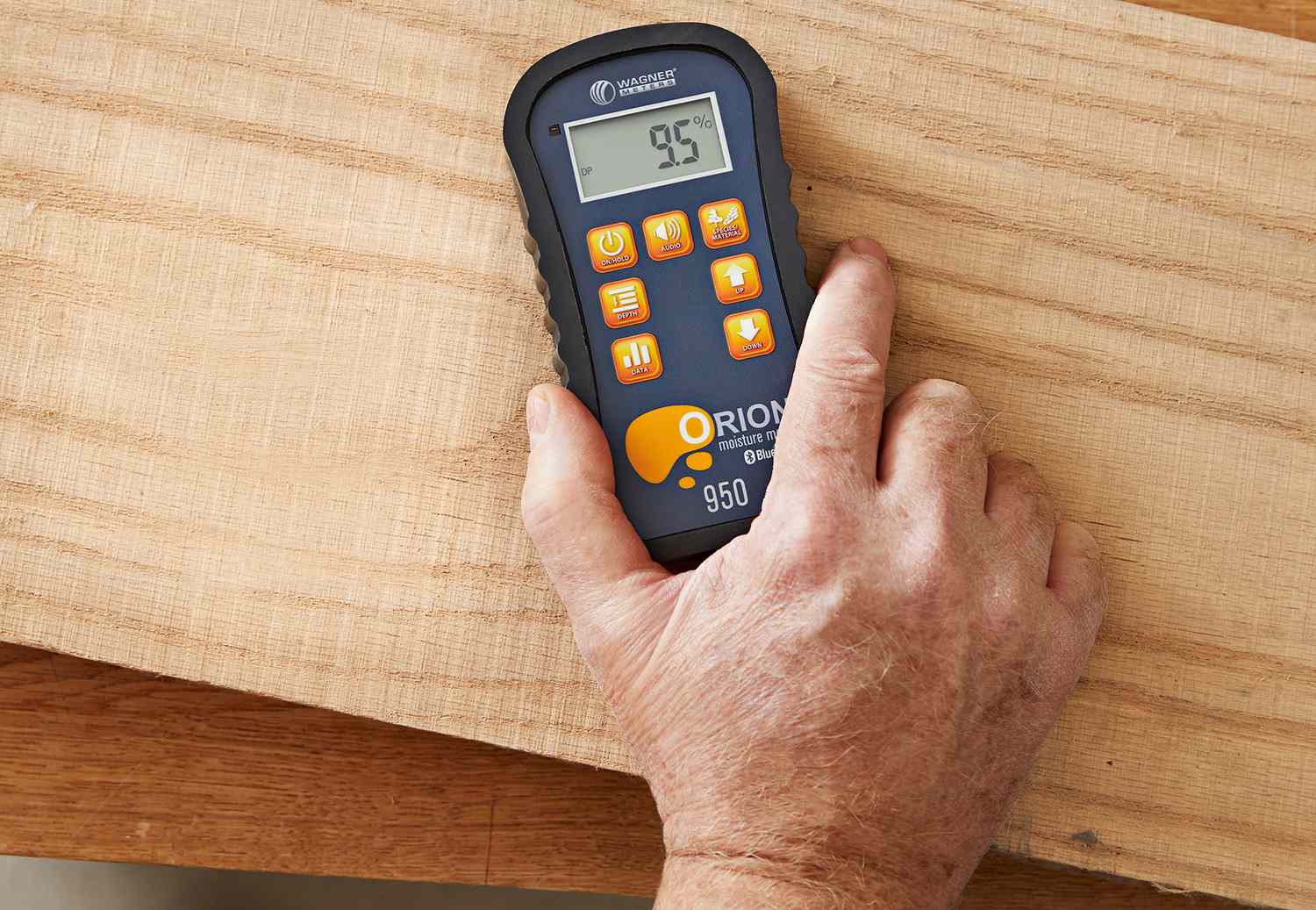
Different products allow small adjustments around the rule. Face and back veneers for export furniture plywood are often held at 8%–10%, because European and North American buyers demand tight dimensional stability and clean machining. Core veneers can tolerate 10%–12% or slightly higher, since they sit inside the panel and are less exposed to finishing. Special adhesives—protein glues, some melamine systems, or tropical-climate formulations—may shift the target a little, but rarely far from the 8%–12% center. The famous “0% MC rubber wood” case, such as the Pu’er line drying thick sheets to zero for a special order, is an exception driven by sugar/starch control and customer specification—not a standard to copy on a commercial plywood line. A veneer dryer can do it, but that does not mean it should be the daily target.
Moisture control also protects the money side of the business. Green veneer is heavy; drying it from 80% to 10% MC cuts the weight of a cubic meter by roughly half. That means lower freight cost, longer safe storage time, and the ability to peel in the wet season and press in the dry season without spoilage. A veneer dryer that holds 8%–12% turns perishable green veneer into a storable asset. By contrast, over-dried veneer that re-absorbs humidity in a tropical yard can jump from 4% back to 10% in a few hours, causing spring-back, cupping, and lay-up gaps that no hot press can fully fix.
The practical workflow is simple to state and hard to execute: peel, sort by initial moisture, dry in a controlled veneer dryer, check MC at the outlet, grade sheets by moisture/thickness/flatness, send wet sheets back for a second pass, and only then spread glue. Mills that skip the outlet check “because the dryer is new” usually discover the truth in the press line—blisters on Monday, edge delamination on Tuesday, and a container rejected in Rotterdam or Jeddah by Friday. Moisture meters, inline sensors, and AI sorting lines are no longer luxury items; they are the quality gate between the veneer dryer and the glue spreader.
For Shine Machinery and other industrial dryer makers, the engineering goal has evolved. The old mentality was “blast heat, get it dry.” The new mentality is “remove water with a controlled profile.” A roller veneer dryer for thick rubber wood, birch, or beech uses a hotter front zone to stop mold and remove surface water, then modulates mid and rear zones so the sheet leaves at 8%–12% without case hardening. A mesh belt veneer dryer for thin 0.3–2.0 mm decorative veneers does the same with gentler airflow and lower mechanical pressure. In both cases, the machine’s intelligence—PLC logic, humidity feedback, heat recovery, and zone balancing—exists to defend that moisture window.
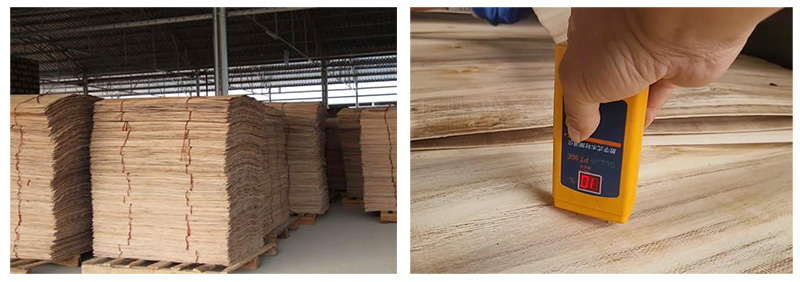
So, what is the right moisture content after the veneer dryer? For 90% of plywood mills: 8%–12%. For export face stock: 8%–10%. For core stock: 10%–14% if the glue system allows it. For special tropical hardwood orders: follow the customer spec, but treat anything near 0% as a process exception, not a standard. And above all, chase uniformity. A line that delivers 10% ± 0.5% beats a line that averages 9% but swings from 4% to 15%.
In the end, the veneer dryer does not win awards for hitting the lowest number. It wins contracts for the plywood mill by shipping panels that do not delaminate, do not cup, and do not come back. Moisture content is invisible, but it judges everything: glue strength, panel flatness, mold resistance, CNC machining accuracy, and final profit. Keep it in the 8%–12% sweet spot, measure it at the outlet, grade what you dried, and let the press do the easy part. That is the difference between a factory that sells plywood and a factory that sells trust.