

Why Grade Veneer After Drying?
In the plywood manufacturing industry, many factory owners focus intensely on how fast their veneer dryer can process wet sheets, but far fewer pay attention to what happens immediately after the drying cycle ends. The truth is, even the most advanced veneer dryer on the market will produce output with natural variations in moisture content, flatness, color, and thickness. If these dried sheets are mixed together and sent directly to the glue spreader and hot press, the result is almost always the same: wasted high-grade material, unstable glue bonds, higher rejection rates, and lower profit margins. This is why grading veneer after drying is not an optional extra step—it is a critical operation that directly determines plywood grade, yield, and final return on investment.
The primary reason to grade veneers after they exit the veneer dryer is to match each sheet with the correct plywood grade so that it can be sold at its full market value. Plywood is classified into grades such as AA, AB, BB, and CC based on appearance and structural quality. An A-grade face veneer must have a moisture content between 8% and 12%, zero warping, uniform color, and consistent thickness. If such a sheet is mixed with lower-grade material and pressed into a BB panel, the factory essentially gives away five-dollar value for two dollars. Over hundreds of cubic meters, this invisible loss amounts to tens of thousands of dollars annually. Proper grading ensures that every sheet from the veneer dryer is directed to its highest-value application—A-grade sheets become faces and backs, B-grade sheets go to inner layers, and C-grade sheets serve as core filling material.
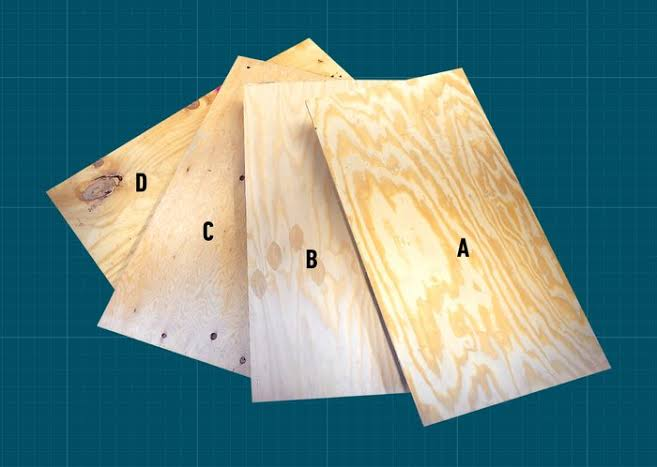
Moisture variation is the second major driver for post-drying grading. Even when a modern veneer dryer is equipped with PLC controls, humidity sensors, and heat recovery systems, the moisture content of output sheets can still fluctuate slightly due to differences in initial veneer thickness, wood density, or loading patterns. Some sheets may emerge overdried at below 5% moisture content, while others may retain 15% or more. Overdried veneers absorb glue too quickly, leading to starved glue lines and delamination. Overwet veneers trap moisture inside the panel, causing bubbles and layer separation during hot pressing. By grading dried sheets from the veneer dryer into moisture-based categories—typically 8%–12% for face sheets, 10%–15% for inner layers, and below 8% or above 15% for reprocessing—factories can keep the moisture deviation within any single production batch to within plus or minus 2%. This single practice dramatically improves glue bond strength and reduces panel rejection.
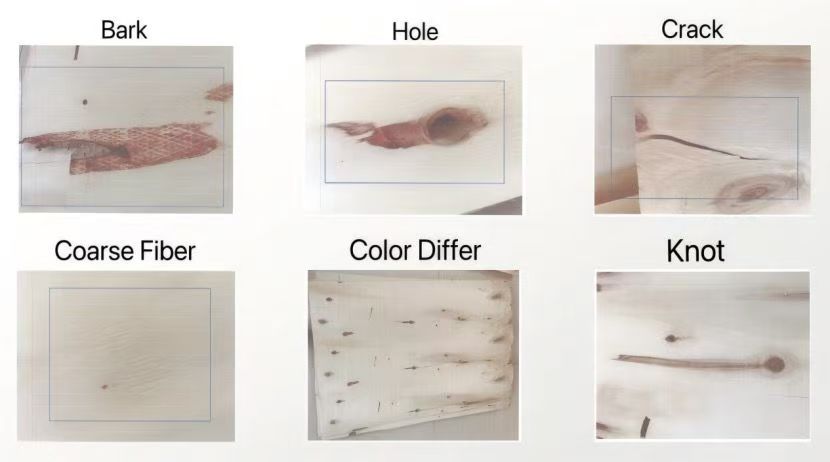
The third reason is defect removal. During the drying process inside a veneer dryer, several physical defects can appear. Warping, waviness, and curling often result from uneven roller pressure or excessive line speed. Thinner veneers may fold or crease if they misalign on mesh belts. Color changes can occur if resin-rich species like pine or rubber wood are exposed to excessive heat. If these defective sheets are not identified and separated after leaving the veneer dryer, they proceed to the hot press where they cause misalignment, edge gaps, and pressure imbalance—generating scrap that could have been avoided. Grading allows warped or curled sheets to be sent back for a second pass through the veneer dryer or downgraded to core stock, while only flat, defect-free sheets move forward to high-grade production.
Thickness control is another essential aspect of grading. Plywood total thickness is the sum of all individual veneer layers. If sheets from the veneer dryer vary widely in thickness—for example, from 1.4 mm to 2.0 mm when the target is 1.7 mm—the finished panel will fail thickness tolerance checks, leading to customer rejection. By sorting dried veneers into thickness brackets such as 1.6–1.8 mm and 1.8–2.0 mm, operators ensure that every layer in a given panel uses consistently thick sheets. This keeps finished plywood thickness tolerance within plus or minus 0.2 mm, a standard requirement for export-grade panels. Without this step, even a perfectly tuned veneer dryer cannot prevent thickness-related quality complaints.
Grading also plays a vital role in enabling automation. Modern plywood plants increasingly rely on automatic lay-up systems, glue spreaders, and AI vision sorters. These machines expect uniform input. When sheets exiting the veneer dryer are pre-sorted by moisture, thickness, and flatness, automatic feeders operate without jamming, glue rollers maintain consistent application rates, and vision systems focus only on detecting genuine defects rather than compensating for preventable variations. Feeding unsorted veneers from a veneer dryer directly into an automated line is like forcing a high-speed printer to handle crumpled paper—it creates constant jams, alarms, and slowdowns.
From a financial perspective, the return on investment for a grading station after the veneer dryer is compelling. A basic manual grading table with two or three workers can pay for itself within months by catching high-grade sheets that would otherwise be downgraded. An automated AI grading line costs more upfront but can process 10 to 15 sheets per minute with near-perfect consistency, reducing labor costs and human error. In either case, the alternative—skipping grading—guarantees that a percentage of premium veneers will be wasted in low-grade panels, a loss that no factory can afford in a competitive market.
Consider a practical example: a medium-sized factory running a two-deck roller veneer dryer producing 100 cubic meters of rubber wood veneer per day. Without grading, roughly 15% of A-grade face sheets may be mixed into BB or CC panels, representing a daily loss of over 1,500 dollars. Installing a grading station after the veneer dryer captures these sheets, redirects them to face production, and increases daily revenue immediately. Over a year, this single change can add more than 400,000 dollars to the bottom line.
It is also worth noting that grading is not just about catching problems—it is about understanding the performance of the veneer dryer itself. By systematically recording the moisture distribution, defect types, and thickness variation of dried sheets, factory managers can fine-tune the veneer dryer settings. If grading data shows a consistent pattern of overdried sheets on one side of the chamber, the burner or fan balance can be adjusted. If warping spikes at certain line speeds, the roller pressure or temperature profile can be modified. In this way, grading creates a feedback loop that continuously improves the veneer dryer operation.
In conclusion, grading veneer after drying is far more than an extra handling step. It is the bridge between removing water and creating profit. By sorting sheets from the veneer dryer according to moisture content, flatness, thickness, and visual quality, manufacturers maximize yield, stabilize glue bonds, reduce waste, and ensure that every sheet reaches its highest-value use. For any plywood factory serious about quality and profitability, a grading system after the veneer dryer is not optional—it is essential. The veneer dryer removes the water; grading captures the value. Together, they form the foundation of a modern, competitive wood processing operation.