

Is Auto-Loading Worth the Investment?
In the high-stakes world of wood processing, profit margins are often won or lost at the drying stage. While much attention is given to the thermal efficiency of the wood veneer dryer itself—debating biomass versus steam or tweaking heat recovery systems—manufacturers frequently overlook the pivotal moment a green veneer enters the machine. The transition from manual feeding to an automated loading system is not merely an incremental upgrade; it is a fundamental reconstruction of the drying process’s cost-effectiveness. By addressing quality stability, safety, production release, and hidden losses, automation transforms a chaotic entry point into a precision gateway. For operations dealing with challenging species like eucalyptus, rubberwood, or Acacia mangium, understanding these benefits is crucial for staying competitive.
1. Guaranteeing Aerodynamic Precision
Manual feeding is inherently erratic. Human operators inevitably cause sheets to overlap, enter at skewed angles, or allow edges to curl before reaching the infeed rollers. This inconsistency creates "dead zones" within the drying chamber. When sheets overlap, the hot air cannot penetrate the layers, leading to drastic variations in final moisture content—sometimes by as much as ±5% within a single batch. Under-dried sections risk mold, while over-dried sections become brittle.
An automated loading system, utilizing synchronized vacuum suction cups or precision fork feeders, ensures every sheet is singulated, centered, and fed into the veneer drying machine with millimeter accuracy. This maintains a uniform gap between sheets, allowing convective heat to circulate freely. By maximizing the effective ventilation area, the dryer performs exactly to its design specifications, turning theoretical capacity into tangible output.
2. Safeguarding Delicate Surfaces
Fast-growing plantation species dominate the market due to their economic viability, but they are notoriously difficult to handle. Green veneers peeled from eucalyptus or rubberwood are exceptionally soft. Manual handling, even with gloves, often leaves behind pressure marks or scuff marks that ruin the veneer's aesthetic value. Dragging sheets across metal tables or rough handling during stacking frequently causes edge tears.
Automated systems are engineered for finesse. Vacuum arrays distribute lifting force across a wide surface area, preventing localized stress points. Soft-touch fork systems cradle the wood rather than gripping it. This non-invasive handling is vital for producing A-grade decorative veneers, where surface perfection dictates market price. By eliminating human-induced surface defects, an automated loader directly increases the percentage of high-value output.
3. Evolving the Human Role
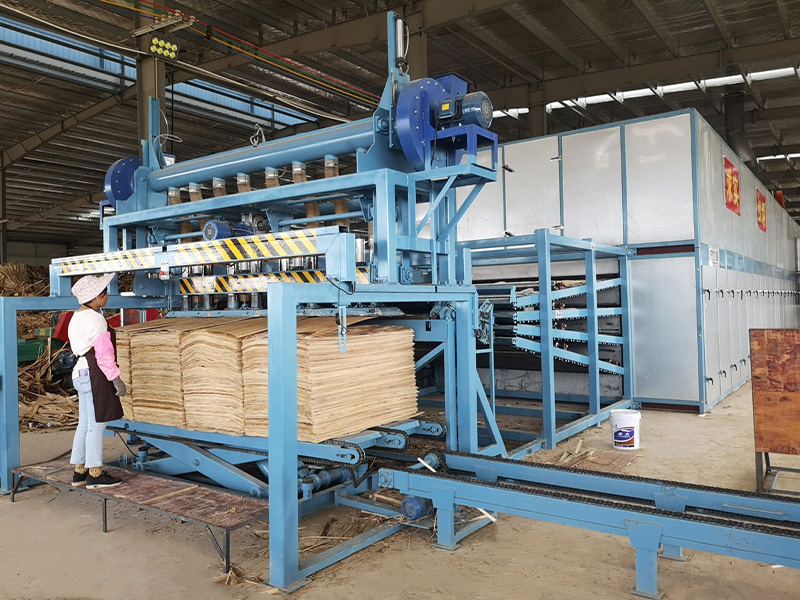
Manual loading is one of the most physically taxing jobs in a mill. Operators perform thousands of repetitive bending and lifting motions per shift, leading to chronic injuries and high turnover. Fatigue inevitably leads to sloppy technique and increased sheet overlap. Post-automation, the dynamic shifts dramatically. Instead of four laborers managing three machines, a single technician can supervise the infeed area.
This individual acts as a guardian of the process rather than a participant in the brute labor. They monitor for occasional suction failures or misfeeds rather than performing the exhausting task of pushing boards. This evolution reduces payroll liabilities and allows for the reallocation of skilled labor to more value-added tasks like quality control or final stacking, optimizing the entire plant's human resource deployment.
4. Enabling True Closed-Loop Continuity
A wood veneer dryer achieves peak thermal efficiency when running at a consistent, full capacity. Manual feeding is subject to rhythm fluctuations—breaks, shift changes, or simple fatigue create gaps in the infeed. These gaps force the dryer to expend energy heating nothing but air, drastically lowering the energy-to-output ratio.
An automated loader integrates seamlessly with the dryer’s Programmable Logic Controller (PLC) and Variable Frequency Drive (VFD). It matches the infeed pace to the belt speed in real-time. Whether the machine is running at 5 meters per minute or 22 meters per minute, the loader adjusts its cycle time to ensure the chamber remains consistently full. This synergy ensures the dryer operates at its thermal optimum, minimizing fuel consumption per cubic meter of output.
5. Combating Moisture Regain in Tropical Climates
In humid regions like Southeast Asia, green veneers begin reabsorbing atmospheric moisture almost immediately after peeling. In manual operations, sheets often sit stacked on the floor or in carts for extended periods before drying. During the rainy season, this "wait time" can increase moisture content by 2% to 3%, forcing the dryer to work harder.
Automated loading systems facilitate a direct, continuous flow from the peeler to the dryer. Integrated conveyor networks move veneers directly from the lathe to the infeed table, minimizing floor time. This rapid transition preserves the initial moisture state of the wood, reducing the total energy required for evaporation and shortening the overall drying cycle—a critical factor in preventing fungal staining.
6. Fortifying Safety Perimeters
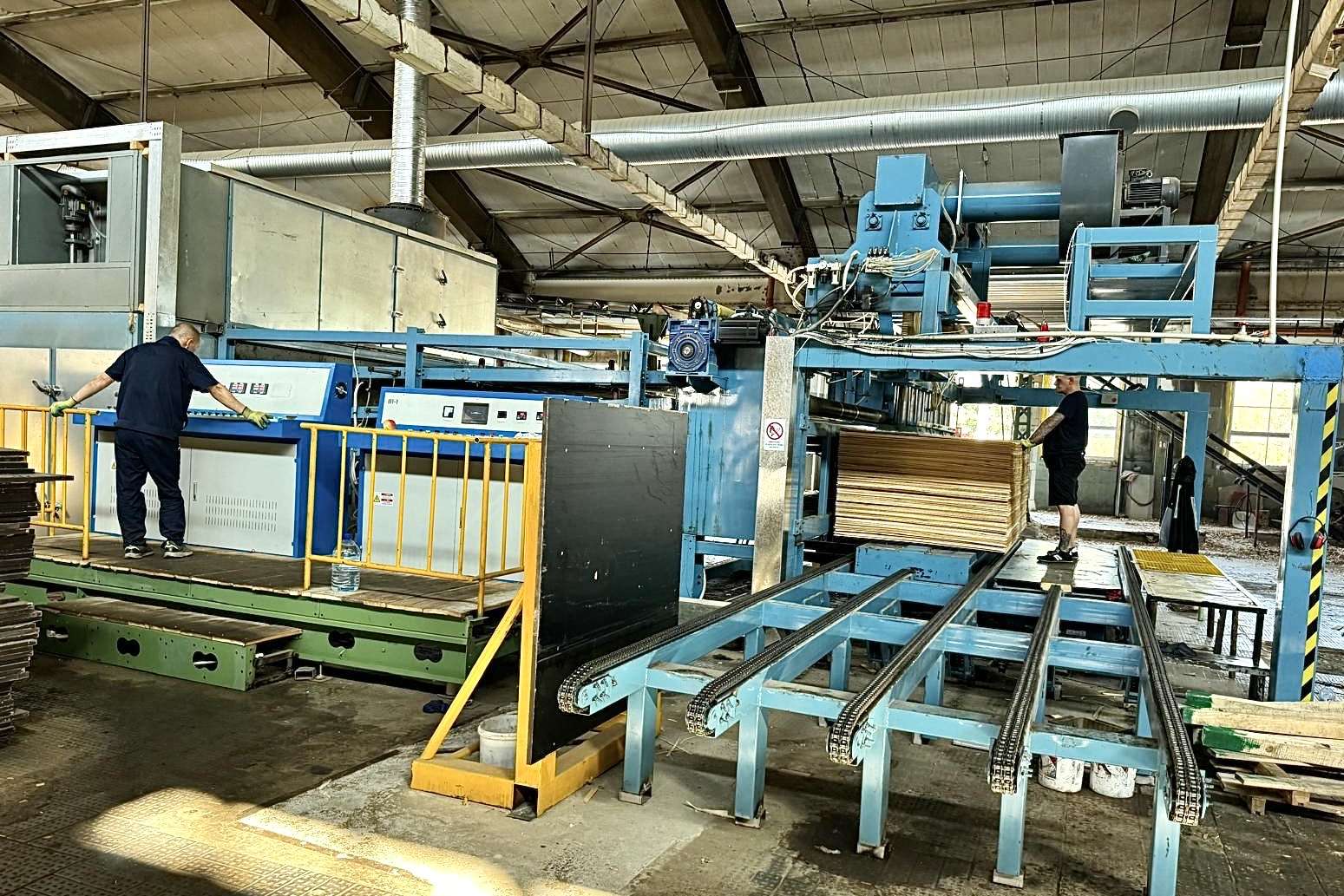
Feeding sheets into the nip point of a roller conveyor presents a severe risk of finger and hand crushing. Unfortunately, such incidents are reported with alarming frequency in mills relying on manual labor. Automation moves human operators away from the danger zone. Safety light curtains and physical guarding create a secure perimeter.
With features like emergency stops, two-hand start sequences, and area locking as standard, the risk profile of the factory is fundamentally altered. This enhanced safety boundary not only protects employees but also positively impacts insurance premiums. For manufacturers targeting markets with stringent compliance requirements, such as Europe, North America, or Australia, automated loading is a prerequisite for passing audits like ISO 45001.
7. Integrating Industry 4.0 Capabilities
Finally, the automated loading station serves as the ideal junction for digital transformation. Unlike manual processes, machines can be fitted with an array of sensors. Counting sensors can track production volumes in real-time, while inline calipers or laser scanners measure thickness. Most importantly, it provides a stable platform for integrating AI-powered optical scanners.
When combined with a smart veneer drying machine, this data allows for dynamic process adjustments. If a scanner detects a batch with higher-than-average initial moisture, the PLC can automatically adjust the conveyor speed or temperature profile. This level of precision is impossible with manual loading. By automating the front end, manufacturers build the foundation for a fully connected, data-driven factory that optimizes quality at every step.
Conclusion
Upgrading to an automated loading system is far more than a simple labor-saving device; it is a strategic investment in quality, safety, and thermal efficiency. By ensuring uniform loading, protecting delicate wood species, enhancing safety, enabling continuous operation, and reducing moisture regain, these systems reconstruct the performance of any wood veneer dryer. For manufacturers aiming to compete in the high-value veneer market, automating the loading process is no longer an option—it is an essential step toward achieving production excellence.