

The Bonding Future of Plywood—Resin Glues
In the bustling production halls of today's plywood making industry, a silent revolution has solidified—quite literally. The shift towards synthetic resin adhesives for the glue-spreading step is more than a trend; it's a fundamental evolution driven by the demands of modern manufacturing. This transition from traditional protein-based or inorganic binders to chemistries like urea-formaldehyde (UF), phenol-formaldehyde (PF), and melamine-urea-formaldehyde (MUF) resins is rooted in a compelling combination of superior performance, production efficiency, and overall cost-effectiveness. This article explores the multifaceted reasons behind the dominance of resin glues in contemporary plywood production.
The Unmatched Performance: Strength and Water Resistance
The primary driver for adopting resin adhesives lies in their exceptional technical properties, which enable the production of reliable, high-performance plywood for diverse applications.
The most significant advantage is the dramatic improvement in bonding strength and water resistance. Resin glues form robust, cross-linked polymer networks that create powerful chemical bonds with the wood fibers. The result is a plywood panel where the glue line itself is often stronger than the wood substrate, ensuring structural integrity under stress.
This performance is categorized by resistance to moisture:
Urea-Formaldehyde (UF) Resins: As the most cost-effective option, UF resins produce what is known as MR-Grade (Moisture-Resistant) plywood. This makes them ideal for interior applications like furniture, cabinetry, and indoor flooring, where exposure to liquid water is minimal but humidity fluctuations occur.
Phenol-Formaldehyde (PF) Resins: These darker-colored resins are the key to producing BRP-Grade (Boil-Proof and Weather-Resistant) plywood. Panels bonded with PF resin can withstand prolonged exposure to weather, moisture, and even cyclic boiling water tests, making them indispensable for concrete formwork, exterior sheathing, and truck trailer bodies. This level of durability was unattainable with older adhesive technologies.
Streamlining Modern Production: Speed and Adaptability
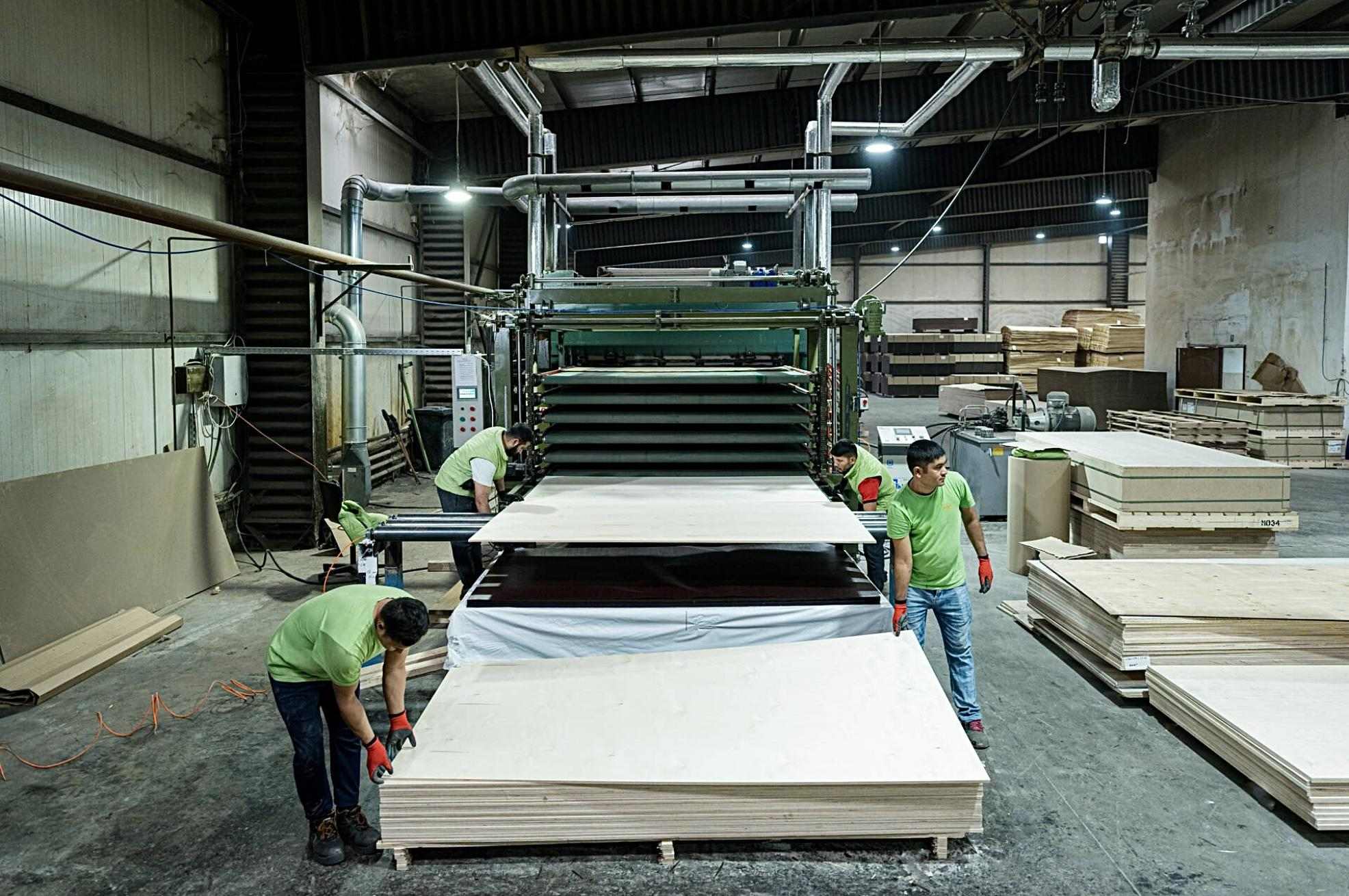
The rise of resin adhesives is inextricably linked to the automation and high-speed demands of modern plywood mills. Their characteristics are perfectly suited for continuous, efficient production lines.
A critical factor is their tailorable viscosity and flow properties. Resin formulations can be precisely engineered to possess the ideal viscosity for roller spreaders, allowing for a thin, uniform film application across the veneer surface. This consistency prevents over-penetration into the wood (which wastes glue and causes "starved" joints) and under-application (which leads to delamination).
Furthermore, resin glues exhibit rapid thermal curing. Under the high temperature and pressure inside a hot press, they polymerize and set quickly. This fast cure time translates directly into shorter press cycles, enabling a single press to produce more panels per hour. This efficiency is a cornerstone of profitable, large-scale manufacturing.
The pre-pressing capability of resin adhesives is another crucial operational benefit. After glue spreading, the layered veneers (known as a "layup" or "mat") undergo a cold pre-press stage. The tackiness of resin glues provides sufficient initial green strength for the mat to be handled and transported into the hot press without shifting, a vital step for automated lines.
The Bottom Line: Superior Overall Cost-Effectiveness
While the raw material cost of some resins (particularly PF) can be higher than traditional alternatives, the total cost-in-use favors resins overwhelmingly, making them the economically smart choice.
This cost-effectiveness stems from several factors:
Lower Spread Consumption: Due to their high bonding efficiency, resin glues require a lower application rate per unit area (grams per square meter) to achieve a strong bond, reducing adhesive consumption.
Increased Production Throughput: As mentioned, rapid curing shortens press cycles. Maximizing the output of the hot press—often the production bottleneck—lowers the fixed cost allocated to each panel, significantly improving overall plant economics.
Reduced Rejection Rates: The reliable and consistent bond quality achieved with resins minimizes production defects like delamination and blistering. A higher yield of first-quality panels directly boosts profitability and reduces waste.
Meeting Market Demands and Navigating the Eco-Conscious Future
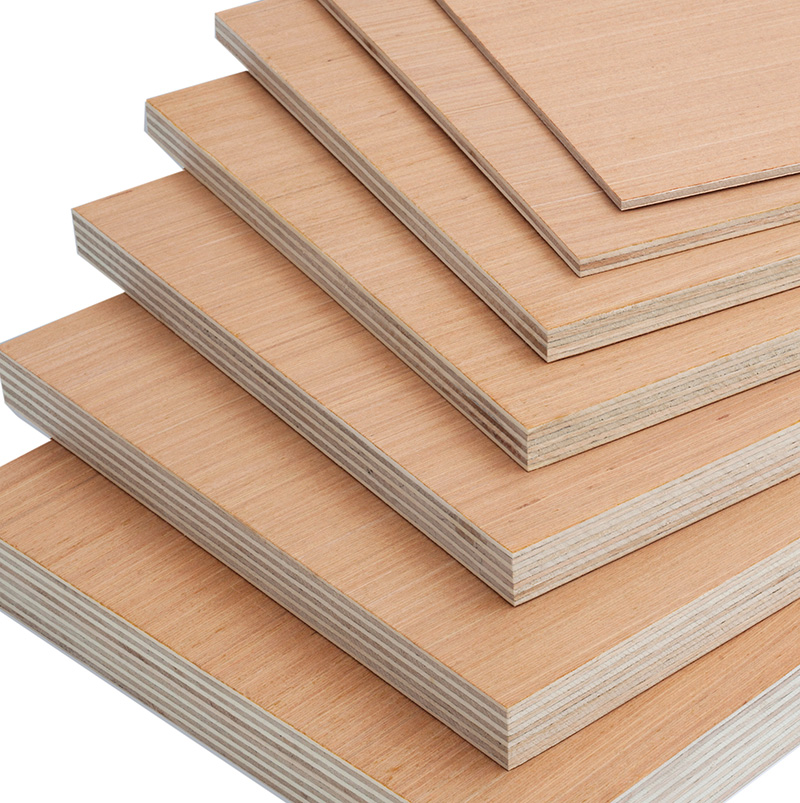
The versatility of resin adhesives allows manufacturers to meet a wide array of international quality standards and performance specifications, from interior E0/E1 low-formaldehyde emission grades to stringent structural ratings. However, the industry is acutely aware of the primary challenge associated with the most common resin: formaldehyde emissions from UF-bonded panels.
Stringent global regulations, such as China's GB 18580, Europe's E1 classification, and the CARB regulations in California, are pushing the industry toward innovation. The response is not an abandonment of resin technology but its refinement. Manufacturers are increasingly adopting low molar ratio UF resins and Melamine-Urea-Formaldehyde (MUF) blends to significantly reduce free formaldehyde emissions. The frontier of innovation lies in developing true no-added-formaldehyde (NAF) adhesives, such as polyurethane-based glues and advanced bio-adhesives derived from soy or tannin, though their cost remains higher.
The widespread adoption of resin adhesives in plywood manufacturing is a testament to their unparalleled ability to balance performance, production efficiency, and cost. They have enabled the industry to evolve from crafting a basic building material to engineering a high-performance composite that meets the rigorous demands of modern construction and design. As the industry continues to prioritize environmental responsibility, the future will be shaped by advancements in resin chemistry itself, focusing on creating ever-more sustainable bonds without compromising the critical benefits that made these adhesives the cornerstone of modern plywood production.