

Boosting Plywood Quality on the Production Line
In the competitive global wood panel market, product quality is the ultimate differentiator that determines whether a manufacturer secures long-term contracts or faces costly returns. For plywood producers, achieving consistent, high-grade output is not the result of a single action but the culmination of meticulous control across every stage of the manufacturing process. From raw veneer selection to the final finishing touches, each step on the plywood production line plays a critical role in determining the strength, flatness, and durability of the boards. A weak link anywhere—be it uneven drying, improper gluing, or incorrect pressing—can compromise the entire batch. Therefore, understanding and optimizing the key factors that influence plywood quality is essential for any factory aiming to scale up while maintaining international standards.
The journey to superior plywood begins with raw material control. The choice of veneer species sets the foundation. Ideally, manufacturers should use wood species with similar density and hardness within the same batch to prevent differential shrinkage, which can lead to warping after pressing. More importantly, veneer moisture content must be strictly managed. The optimal range is between 8% and 12%, though this may be adjusted slightly depending on the adhesive type. If the veneer is too wet, the excess water can turn into steam during hot pressing, causing blisters and delamination. If it is too dry, the adhesive may cure prematurely or fail to penetrate the wood fibers adequately, resulting in weak bonds. Maintaining a moisture deviation of within ±2% across all veneer sheets is a best practice that separates top-tier mills from average ones.
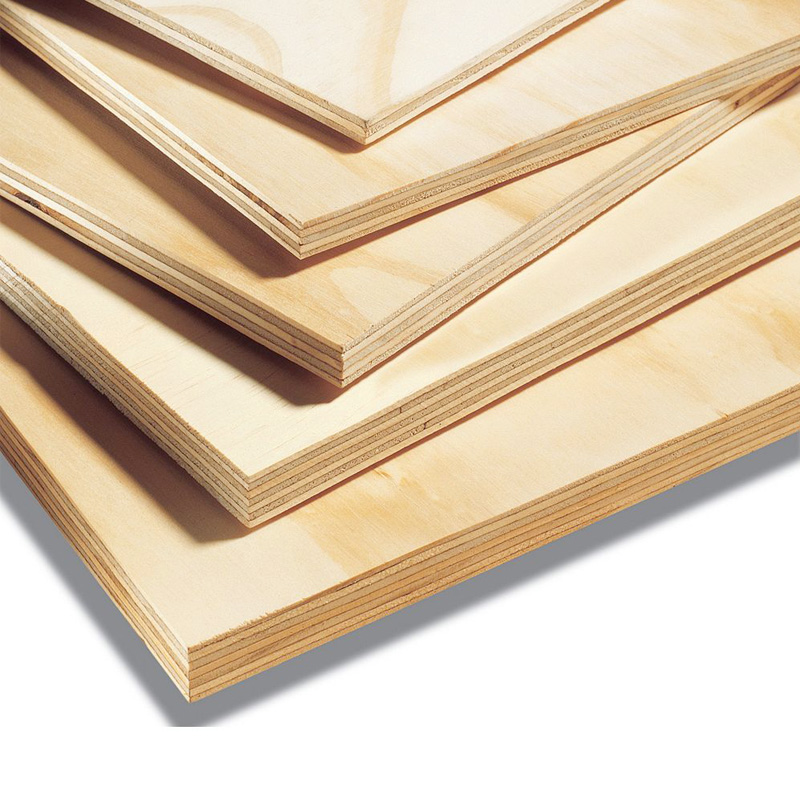
A crucial piece of equipment in achieving this consistency is the veneer dryer. The performance of the dryer directly impacts the moisture uniformity of the veneer, which in turn affects the entire downstream process. Modern drying machines must provide a stable, evenly distributed temperature profile across the drying chamber. As discussed in previous technical analyses, the insulation of the dryer doors—often using high-grade aluminum silicate fiber blanket—plays a vital role in minimizing heat loss and maintaining thermal stability. Poor insulation leads to cold spots near the doors, causing uneven drying. When veneers leave the dryer with inconsistent moisture levels, the operator is forced to make compromises during lay-up, often resulting in defective boards. Therefore, investing in a well-insulated, efficiently controlled veneer dryer is not merely an energy-saving measure; it is a direct investment in product quality.
Once the veneer is properly dried, the next critical phase is gluing and lay-up. The adhesive application must be both sufficient and uniform. For most plywood applications, a spread rate of 280 to 350 grams per square meter per double side is recommended. Too much glue wastes cost, increases the risk of glue penetration to the surface, and slows down curing. Too little glue leads to starved joints and false bonding. The uniformity of the glue line depends heavily on the condition of the glue spreader rollers. Regular calibration of roller gaps and thorough cleaning of dried adhesive residues are necessary to ensure consistent film thickness. Additionally, the glue mixture itself must be adjusted according to ambient conditions. In hot, humid summers, the pot life shortens, requiring adjustments to the hardener ratio. In winter, slightly increasing the hardener or warming the glue room can prevent under-curing.
The principle of symmetry in lay-up cannot be overstated. Plywood is, by design, an odd-numbered, cross-banded structure. To prevent post-press warping, the thickness, species, moisture content, and grain direction of the veneers on either side of the central core must be symmetrical. Any asymmetry creates internal stress imbalances that manifest as bowing or twisting once the panels cool. Furthermore, after lay-up, the assembled mat should be fed into the pre-press or hot press without unnecessary delay to avoid glue migration or premature curing. A typical cold pre-press at 0.8 to 1.2 MPa for 15 to 30 minutes imparts enough tackiness to the mat, making it easier to handle and reducing the exhaust time needed during hot pressing.
The hot pressing stage is where the final bonding strength is forged. Three parameters—temperature, pressure, and time—must be perfectly balanced. For urea-formaldehyde adhesives, platen temperatures usually range from 110°C to 125°C, while phenolic glues require 130°C to 150°C. Insufficient temperature results in incomplete curing, leaving the board soft and prone to delamination. Excessive temperature can cause the glue line to become brittle or even scorch the surface veneer. Pressure settings, typically between 1.0 and 1.8 MPa depending on the target density, must be high enough to bring the veneers into intimate contact but not so high as to crush the inner cores. Pressing time is generally calculated at 0.8 to 1.2 minutes per millimeter of final thickness. One often overlooked but critical aspect is the pressure release curve. After the cycle ends, the pressure should be reduced gradually in stages, especially for thicker panels. A sudden pressure drop can cause trapped steam to expand violently, blowing bubbles inside the board.

Post-press handling is equally important. Freshly pressed plywood should be stacked flat and allowed to cool and cure naturally for 24 to 48 hours before sanding or grading. This "conditioning" period lets internal stresses relax and the adhesive reach its full cross-linking potential. Rushing this step often leads to shape distortion. When sanding is finally performed, the trimming allowance should be kept minimal—usually 0.3 to 0.5 mm per side—to avoid sanding through the decorative face veneer.
Finally, a robust quality management system ties all these elements together. First-piece inspection at the start of each shift, checking bond strength, moisture content, and thickness, acts as an early warning system. In-process patrol inspections every two hours help catch deviations in real time. Equipment maintenance, particularly the flatness of hot press platens (tolerance within 0.1 mm per meter) and the sealing of dryer doors, ensures that the process parameters remain within specification. Environmental control in the workshop, maintaining relative humidity between 50% and 70%, prevents veneers from reabsorbing moisture before pressing.
In summary, elevating plywood quality demands a holistic approach across the entire plywood production line. From the precision drying achieved by a high-performance veneer dryer to the exacting standards of gluing, symmetrical lay-up, and controlled hot pressing, every detail matters. Manufacturers who invest in better insulation, stricter process controls, and comprehensive testing will not only reduce waste and rework but also build a reputation for reliability in the international market. As global buyers become increasingly quality-conscious, the mills that master these fundamentals will be the ones leading the industry forward.