

How Does a Combined Veneer Peeler Work?
In the high-stakes area of wood processing, maximizing raw material yield while minimizing operational friction is the ultimate goal. For decades, manufacturers faced a fundamental mechanical dilemma: how to efficiently process a log from its initial large diameter down to a minimal core without manual intervention or a drop in quality. The answer lies in the technological marvel known as the Combined Spindle & Spindleless Veneer Peeler. This machine is not merely a piece of equipment; it is an integrated solution designed to seamlessly bridge the gap between heavy-duty roughing and precision finishing. But how exactly does this sophisticated apparatus operate to transform raw timber into continuous veneer sheets?
The operational brilliance of the Combined Spindle & Spindleless Veneer Peeler lies in its dual-mode functionality, which mirrors the natural progression of a log being reduced to a thin sheet. The process begins in Spindle Mode. When a fresh, large-diameter log enters the machine, it is securely gripped at both ends by hydraulic chucks (the spindles). These chucks rotate the log at a high, controlled speed while a stationary blade peels away the outer layers. This method is crucial for the initial phase because it provides the stability required to handle heavy, unbalanced logs, ensuring that the first few layers of veneer are cut with exceptional thickness accuracy and a smooth surface finish. This is the stage where the foundation of quality is laid for plywood manufacturing.
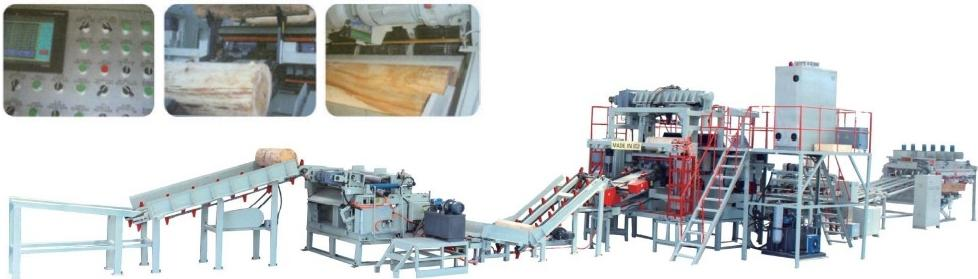
However, as the peeling process continues, the log inevitably shrinks in diameter. Once the log becomes too slender to be safely supported by the spindles without excessive vibration—typically around 150mm—the machine initiates an automatic transition. This is where the Spindleless Mode takes over. The hydraulic chucks retract, and the log is now cradled by a series of driven rollers. These rollers press the log firmly against the blade and rotate it through friction. This mode allows the peeling to continue all the way down to a core diameter of just 30mm to 40mm. The seamless switch between these two mechanical states is governed by an advanced CNC servo control system, which instantly adjusts the feed rate and rotational speed to maintain a consistent veneer thickness throughout the transition.
This dynamic operational capability unlocks a wide array of critical applications. Primarily, it serves as the backbone for full-process peeling in plywood and multi-layer board factories. By enabling a "log-to-core" workflow without manual handling, the machine ensures a continuous, non-stop output of veneer. This eliminates the traditional bottleneck of transferring heavy wood cores from a spindle peeler to a separate spindleless machine, drastically reducing labor costs and increasing throughput.
Furthermore, the versatility of the Combined Spindle & Spindleless Veneer Peeler makes it indispensable for processing small-diameter timber and branch wood. Many mills rely on fast-growing plantations like poplar and eucalyptus, which often yield smaller, irregular logs. These materials are unsuitable for standalone spindle peeling due to instability. The integrated machine can bypass the spindle phase entirely, starting directly in spindleless mode to convert these challenging resources into high-quality veneer, thereby maximizing the utilization of every tree harvested.
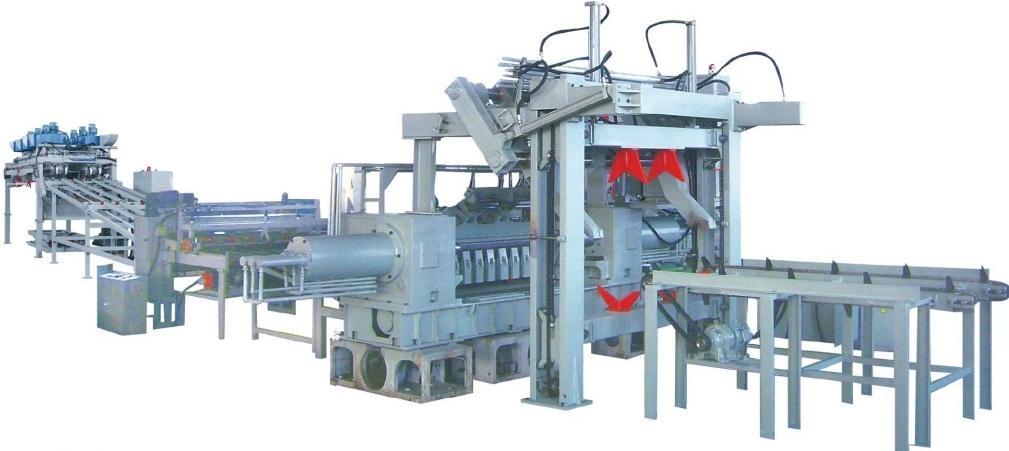
For small and medium-sized board manufacturers, space is often a premium commodity. This integrated peeler is a game-changer, replacing the footprint of two separate machines with a single, compact unit. It offers a "space-for-capacity" solution, allowing smaller factories to compete with larger operations by efficiently processing both large and small logs on one production line.
Finally, the precision of the transition is vital for high-end CNC production lines. The ability of the machine to maintain a uniform thickness—for instance, keeping a steady 1.7mm cut—during the switch from spindle to spindleless mode prevents the creation of defective, variable-thickness veneer. This high degree of automation and control ensures a higher yield of first-grade veneer, reduces waste, and significantly lowers the overall cost per square meter of finished product.
In essence, the Combined Spindle & Spindleless Veneer Peeler works by intelligently adapting its mechanical grip to the changing geometry of the log. It combines brute-force stability with delicate precision, ensuring that whether you are dealing with massive hardwood logs or slender softwood branches, the machine extracts the maximum value from the raw material. For any manufacturer looking to optimize efficiency, reduce labor, and boost profitability in a competitive market, understanding and utilizing this dual-mode operation is no longer optional—it is essential.