

Why Immediate Drying Defines Veneer Quality
In the high-stakes world of wood processing, efficiency is often measured by production speed and output volume. However, seasoned plywood and LVL manufacturers understand that true profitability lies in the details—specifically, the critical window between peeling and drying. Freshly cut green veneers are in their most vulnerable state immediately after the lathe slices them from the log. If these delicate sheets are not fed into a wood veneer dryer within hours, the consequences range from cosmetic defects to total material loss. This article explores the scientific and economic imperatives behind immediate drying and why a high-performance veneer drying machine is the most crucial investment for any modern mill.
The Biological Clock: Preventing Microbial Decay
The most urgent threat to freshly peeled veneers is biological degradation. With a moisture content often exceeding 60–80%, these sheets are essentially wet sponges saturated with natural sugars and starches. This environment is a perfect breeding ground for mold, mildew, and stain-causing fungi. In tropical and subtropical climates, such as those in Southeast Asia and South America, fungal spores can germinate on the wet surface of a veneer in as little as four to eight hours. Within 24 hours, visible black, green, or gray patches can render an entire stack of premium hardwood unsalable.
This phenomenon, known as "blue stain" in softwoods or "sap stain" in hardwoods like rubberwood, is not merely a surface issue. The discoloration penetrates the wood cells, making it impossible to remove through simple sanding or bleaching. By introducing the veneers to a veneer drying machine immediately after peeling, the moisture content is rapidly reduced to below 20%, a level at which fungal metabolism essentially stops. Once the moisture content reaches the optimal 8–12% range, the wood becomes biologically inert, preserving the pristine aesthetic required for high-grade decorative panels and structural plywood.
Managing Internal Stress and Warping
Beyond biology, physics plays a significant role in the necessity of immediate drying. The rotary cutting process itself imparts significant internal stresses into the veneer. As the log is peeled, the wood fibers are stretched, compressed, and bent. When the continuous sheet is clipped into individual veneers, these internal stresses are released, causing the wood to curl, twist, and warp.
If left in a wet pile, these stresses interact with uneven moisture evaporation. The surface dries faster than the core, creating a "case-hardening" effect where the outer layer shrinks and hardens while the inside remains plastic. This leads to severe warping, cockling, and internal checking (micro-cracks). A modern wood veneer dryer addresses this by applying controlled heat and pressure while the veneer is still in a thermally plastic state. Roller dryers, in particular, use the weight of upper rollers to flatten the veneer physically, locking in a flat profile as the moisture is removed. Delaying this process allows the wood to set in a warped configuration, making it incredibly difficult—if not impossible—to flatten later without breakage.
Chemical Stability and Species-Specific Risks
Certain wood species are chemically reactive when wet. Rubberwood (Hevea brasiliensis), a staple in the furniture industry, contains high levels of free sugars and latex proteins. When wet veneers are stacked without airflow, fermentation begins rapidly. This process generates organic acids that cause "acid burn," turning the white wood a yellowish-brown color and degrading the cellulose structure. Similarly, species like eucalyptus and acacia contain tannins and extracts that can leach and cause uneven staining if not dried quickly.
Immediate drying halts these chemical reactions in their tracks. The high temperatures inside a veneer drying machine denature the enzymes and evaporate the volatile compounds responsible for degradation. This locks in the wood's natural color and ensures the structural integrity of the fibers, which is vital for maintaining the mechanical properties required for load-bearing LVL beams and high-strength plywood.
The Economics of Weight and Storage
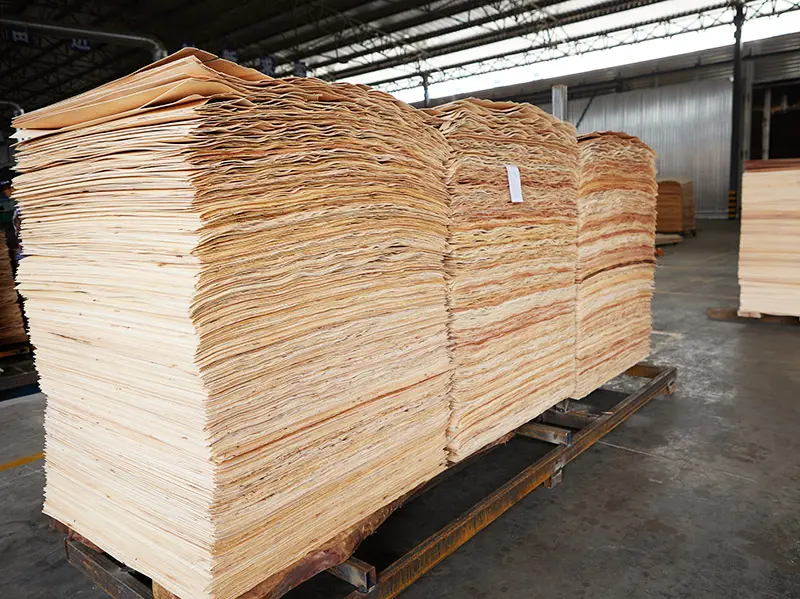
From a logistical and financial perspective, drying veneers immediately is a strategic move to optimize cash flow and reduce overhead. Wet veneers are heavy; a cubic meter of green veneer can weigh over 1,100 kg. Once dried to a standard 8–12% moisture content, that same volume weighs approximately 550 kg—a 50% reduction. Transporting water is a direct loss of profit, as you are paying freight costs for weight that adds no value to the final product.
Furthermore, wet veneers require immediate processing. They cannot be stored for long periods; they must be processed or dried within days to avoid spoilage. In contrast, dried veneers can be safely stored for months or even years in a controlled environment. This decouples the drying process from the pressing process, allowing factories to continue drying operations even if the hot press line goes down for maintenance. It also enables mills to build up inventory during peak peeling seasons to sell during dry seasons when log supplies might be low. A reliable wood veneer dryer essentially acts as a bank, converting perishable raw material into stable, storable assets.
Ensuring Optimal Adhesion and Bonding
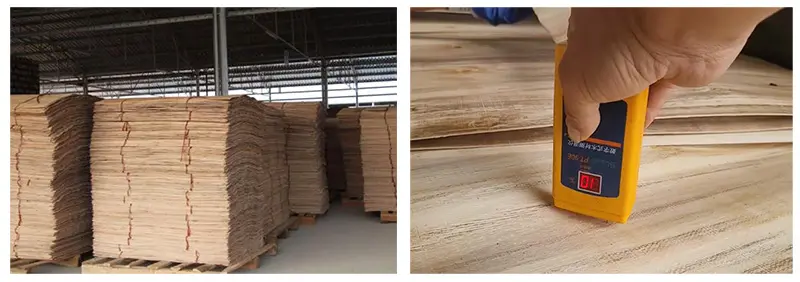
The ultimate goal of producing veneers is to bond them into plywood or LVL. The success of this bonding process is entirely dependent on the moisture content of the veneers. If veneers are too wet (above 15%), the water trapped inside will turn to steam during hot pressing. This steam pressure can blow out the glue lines, causing bubbles, blisters, and delamination. On the other hand, if veneers are too dry (below 6%), they become "thirsty" and tend to over-absorb the liquid resin from the glue mix. This starves the glue line of resin, leading to poor adhesion and weak spots in the panel.
The ideal moisture content for gluing is between 8% and 12%. Immediate drying ensures that the veneers exit the veneer drying machine within this narrow, optimal window. It also ensures uniformity; a high-quality wood veneer dryer guarantees that every sheet in a batch has a consistent moisture level.
Integration with Modern Automation
The principle of immediate drying is further reinforced by the trend toward Industry 4.0 and automation. Modern mills are increasingly integrating their peeling lines directly with their wood veneer dryer via high-speed conveyor belts and automatic loading systems. This seamless transition minimizes the time the veneers spend exposed to ambient humidity. It also allows for real-time data exchange; sensors can detect the initial moisture content of the logs and automatically adjust the speed and temperature of the veneer drying machine to compensate. This level of integration is impossible if veneers are allowed to sit in piles, as manual handling introduces variability and delays that automated systems cannot correct.
Conclusion
In the wood processing industry, time is not just money—it is quality. The interval between peeling and drying is a race against biology, physics, and chemistry. Delaying the drying process by even a few hours can lead to irreversible damage, turning high-value timber into low-grade fuel. Immediate drying using a sophisticated veneer drying machine is the only way to prevent fungal degradation, control warping, halt chemical reactions, reduce logistical costs, and ensure perfect gluing conditions. For any manufacturer serious about producing premium plywood or LVL, investing in a high-efficiency wood veneer dryer and committing to immediate drying protocols is not merely an operational choice—it is the cornerstone of a profitable and sustainable business.