

Small Mills, Big Gains: The Multi-Layer Veneer Dryer
In the competitive landscape of wood processing, small and medium-sized veneer producers often face a unique set of challenges. Unlike large industrial operations with sprawling facilities and massive budgets, these smaller mills—typically producing between 5 to 20 cubic meters per day—must maximize every square meter of floor space and every dollar of investment. For decades, the conventional wisdom dictated that scaling up was the only path to profitability. However, the advent of the multi-layer hot press veneer dryer is rewriting the rules, offering a compact, versatile, and highly efficient alternative that is rapidly becoming the secret weapon for agile veneer manufacturers. This technology is not merely a smaller version of industrial dryers; it represents a fundamental shift in drying philosophy, perfectly aligned with the operational realities of smaller enterprises
The Vertical Advantage: Maximizing Space Utility
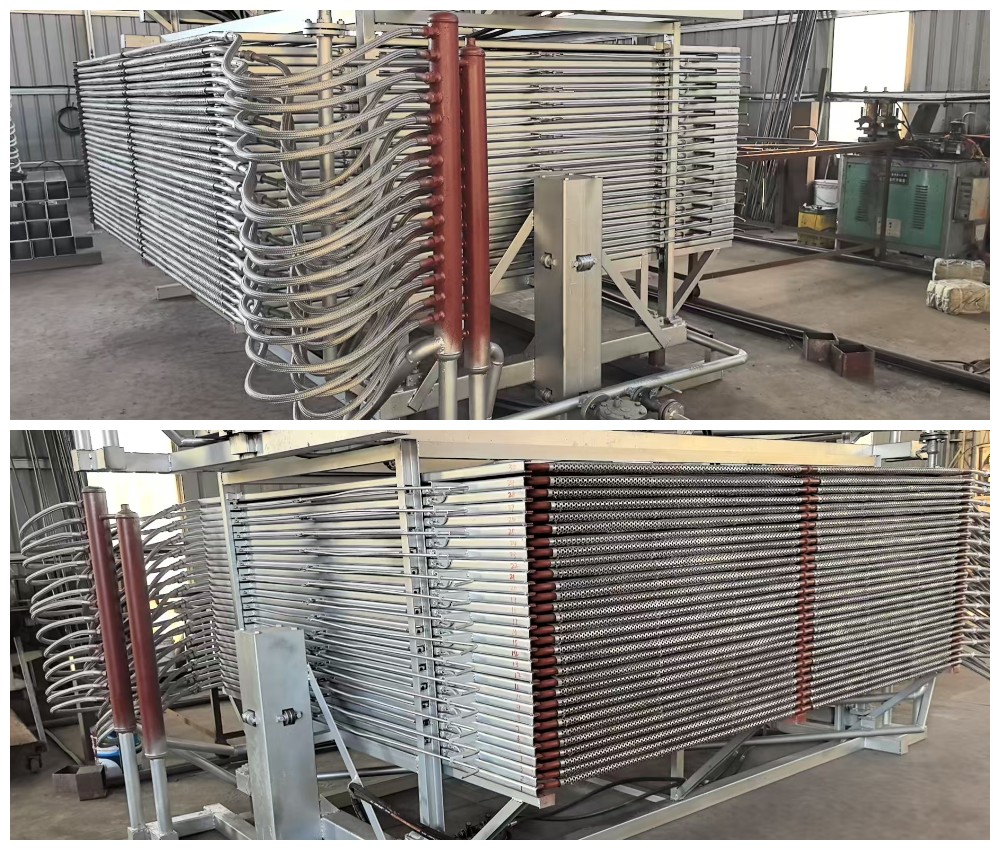
Real estate is often the most significant constraint for small mills. Leasing or constructing large factory buildings to accommodate a 30-meter-long mesh belt or roller dryer is frequently financially prohibitive. The multi-layer hot press dryer addresses this challenge through brilliant vertical engineering. Instead of spreading the drying process across a vast horizontal plane, it stacks the process vertically. A typical 15 to 20-layer unit requires a footprint of only about 24 square meters—roughly the size of a small office. This compact design allows mill owners to install high-capacity drying capabilities in corners of existing workshops or in facilities previously deemed too small for any serious drying operation. By transforming vertical space into productive capacity, these mills avoid costly expansions and reduce their rent overhead, directly boosting their bottom line. This spatial efficiency is the first step in a cascade of savings that defines the multi-deck dryer’s value proposition.
A Paradigm Shift in Heat Transfer Efficiency
Traditional continuous dryers—whether mesh belt or roller types—rely on convection, using large volumes of hot air to transfer heat to the veneer. This method is inherently inefficient, as a significant portion of the thermal energy is lost to the atmosphere through radiation and air leakage. In contrast, the multi-layer hot press dryer utilizes conduction heat transfer. The veneers are sandwiched between heated platens, allowing for direct thermal contact. This method is vastly more efficient, as it minimizes the energy wasted on heating the surrounding air. For a small mill where every unit of energy translates directly to profit, this efficiency is transformative. It allows the use of a wider range of heat sources, including simple biomass burners that might not generate the high-velocity hot air streams required by larger convection systems. The result is a dramatic reduction in fuel consumption, insulating the mill from volatile fossil fuel markets and lowering the barrier to entry for sustainable, waste-fueled operations.
Streamlining Operations: The All-in-One Solution
Small mills often struggle with fragmented production lines. After drying, veneers frequently require additional handling, such as cold pressing to improve flatness or manual repairs for minor defects. The multi-layer hot press dryer integrates these steps into a single, seamless operation. As the heated platens close, they apply a controlled pressure—typically between 0.5 to 2 MPa—which accomplishes three critical tasks simultaneously. First, it flattens the veneer, correcting waves and warps that are common with lower-grade logs. Second, it helps to close minor splits and fissures, reducing the need for labor-intensive manual filling and patching. Third, it ensures a uniform moisture profile across the entire sheet. By consolidating drying, flattening, and pre-repair into one cycle, the mill eliminates the need for separate cold press machinery and reduces the labor required for material handling between stages. This consolidation not only saves on equipment costs but also significantly reduces the physical footprint of the entire production workflow.
Fuel Flexibility and Waste Valorization
One of the most compelling advantages for small producers is the veneer dryer’s remarkable fuel flexibility. While large-scale operations often rely on expensive, consistent fuels like natural gas or high-grade diesel, the multi-layer system can be efficiently coupled with a variety of heat sources. It can be easily integrated with a simple thermal oil heater or a small biomass combustion chamber. This opens the door to waste valorization—the process of converting production waste into value. Sawdust, wood chips, bark, and even rejected veneer pieces can be used as fuel. For a small mill, this means the primary input cost for drying can be reduced to nearly zero. Instead of paying to dispose of waste materials, the mill uses them to power its most energy-intensive process. This creates a closed-loop system that is not only environmentally responsible but also provides a powerful hedge against rising energy costs, a critical factor for businesses operating on thin margins.
Simplifying Labor and Maintenance
Labor is a significant and often volatile expense for small mills. Operating a complex continuous veneer dryer requires skilled technicians who understand airflow dynamics, chain tensioning, and complex PLC controls. Maintenance can be frequent and requires specialized knowledge. The multi-layer hot press dryer, by contrast, operates on principles familiar to anyone in wood processing: heat, pressure, and time. The control systems are straightforward, typically involving simple PLC interfaces for setting temperature, pressure, and cycle duration. Workers can be trained to operate the machine competently in a single day. Furthermore, the mechanical simplicity of the system—lacking the long chains, complex ductwork, and numerous high-speed fans of continuous dryers—means that routine maintenance can often be handled by a local general mechanic. This reduces reliance on specialized service engineers and minimizes costly downtime, ensuring that production runs smoothly with a minimal crew.
Enhancing Product Quality and Consistency
In the veneer market, consistency is king. Small mills often struggle to compete with larger factories on quality consistency, which affects their pricing power. The multi-layer hot press dryer significantly levels the playing field. Because each batch is processed under identical, tightly controlled conditions of temperature and pressure, the variation in final moisture content is minimal—often within a tight ±1% range. This consistency is vital for high-quality gluing in the plywood pressing stage. Furthermore, the flattening effect of the hot press ensures that the veneers are perfectly planar, reducing the incidence of "spring-back" or warping after gluing. For mills working with challenging species like rubberwood or lower-grade logs, this ability to produce a flat, uniformly dried product can transform a low-value input into a high-value output, commanding better prices in the market.
Operational Agility and Market Responsiveness
Small mills thrive on their ability to be nimble—to take on custom orders, switch between wood species, or adjust to fluctuating log supplies. Large continuous dryers are optimized for long, uninterrupted runs of a single product. Changing over to a different thickness or species can be time-consuming and wasteful. The multi-layer hot press dryer excels in this environment of change. Switching from drying thin decorative veneers to thick core veneers is often as simple as adjusting the pressure setting and cycle time on the PLC. There is no long conveyor to clear or complex air balance to re-establish. This agility allows the mill to be highly responsive to customer demands, taking on diverse orders that larger competitors might decline. It also allows for efficient "nesting" of production runs, minimizing waste and maximizing the utilization of every log.
Conclusion: A Strategic Imperative for Small Producers
The multi-layer hot press veneer dryer is more than just a piece of equipment; it is a strategic tool that addresses the core constraints of small-scale veneer production. By solving the problems of limited space, high energy costs, labor shortages, and quality inconsistency, it empowers smaller mills to compete effectively in a global market. It transforms the drying process from a bottleneck into a competitive advantage. For any small or medium-sized veneer producer looking to enhance profitability, improve product quality, and build a more resilient business, investing in multi-layer hot press drying technology is not just an operational upgrade—it is a fundamental step toward securing a prosperous future in the wood processing industry. The era of "bigger is better" is giving way to a new paradigm where "smarter and more compact" wins the day.