

How Shine Automated Loading System Improve Efficiency by 30%
Shine’s automated loading system is engineered to turn a manual veneer dryer line into a consistently high‑throughput, data‑driven operation. For plants that still rely on manual infeed, upgrades commonly deliver 5–20% more output, and Shine has documented cases approaching 30% throughput improvement when the baseline is heavily manual and unstable. By following a structured, numbers‑first approach, mill managers can evaluate, implement, and verify these gains with minimal disruption to existing veneer dryer lines.
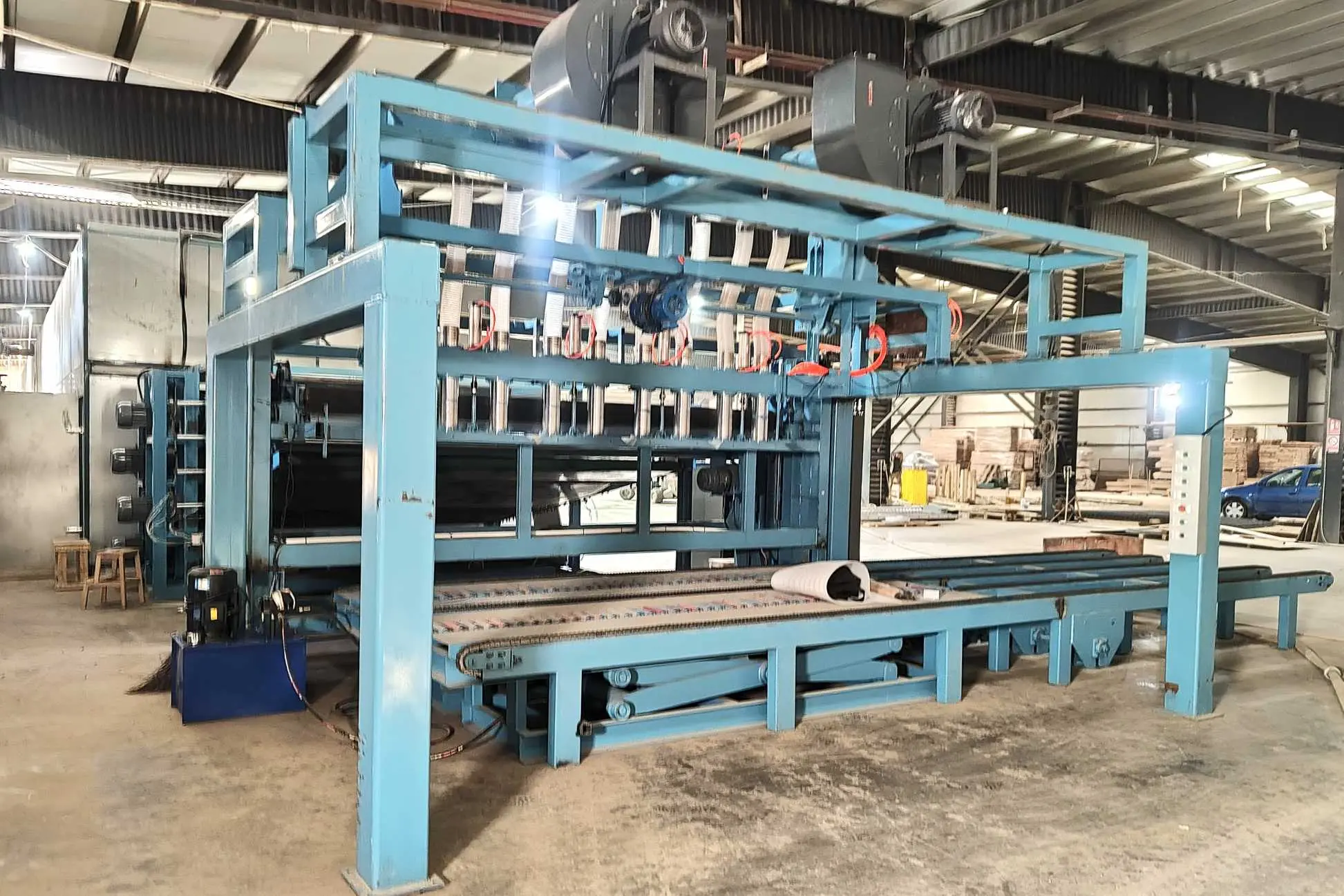
Why Automate the Veneer Dryer Infeed?
For plywood, furniture, and decorative panel producers, the veneer dryer is often the bottleneck. When loading is manual, you typically see:
•Irregular gaps and overlaps between sheets
•Frequent misfeeds and stoppages
•Under‑filled decks and poor dryer utilization
•Higher labor hours and inconsistent quality
An automated loading system such as the Shine automatic veneer feeder stabilizes these variables. It delivers consistent veneer positioning, optimized overlap, and smooth hand‑off into the Shine veneer dryer, helping you move more volume through each shift without pushing the dryer beyond its design limits.
Step 1: Baseline Assessment and KPI Definition
Before you invest, quantify where you stand today. A focused baseline audit over 1–2 weeks is usually enough to capture the key numbers and loss modes on your veneer dryer line.
Core KPIs to measure
•Throughput – sheets/minute or m³/day through the veneer dryer
•Dryer fill rate – % of usable deck length actually occupied by veneer
•Misfeed / jam rate – events per shift and total time lost
•Cycle time – average seconds between sheets entering the dryer
•Labor hours – operators per shift dedicated to loading and rework
•Scrap and damage – % of veneer rejected due to handling defects
•Energy per unit output – fuel or kWh per m³ of dried veneer
A simple time‑and‑motion study—using a stopwatch, line counters, or PLC logs—will reveal where your capacity is being lost. Even a small improvement in overlap consistency and fill rate compounds into significant additional cubic meters per day.
Step 2: Technical Specification and Best Practices
Once the baseline is clear, you can specify an automatic veneer feeder that matches both your present and future production needs.
Feeder capacity and sizing
•Define your required feeds per minute based on target output.
•Specify peak feeder capacity at least 10–20% above that requirement to handle surges and thicker material.
•Use leading feeder lines (such as high‑speed industrial veneer feeders rated around 24 feeds/min) as a benchmark when discussing requirements with Shine.
This headroom ensures that the automated loading system will not become your next bottleneck as demand grows.
Control logic and overlap strategy
The control system is where much of the throughput gain is unlocked. Well‑designed dryer infeed logic can maintain high fill rates without repeatedly stopping the shine veneer dryer.
Best‑practice features include:
•Smart‑Pause / anti‑gap control – dynamically adjusts feed timing to keep the deck effectively filled.
•Consistent overlap control – practical industry rules of thumb suggest that each inch of stable, safe overlap can add roughly 1% to effective throughput when implemented correctly.
•Smooth start/stop coordination – avoids shocks, jams, and uneven heat exposure at the infeed.
By combining these functions, the automated loading system pushes material through more efficiently while protecting veneer quality.
Vision, sensors, and reliability
For continuous industrial duty, the feeder should be specified with:
•Camera‑guided or sensor‑based alignment for accurate sheet positioning
•Heat‑resistant components near the veneer dryer entrance
•A robust PLC/HMI platform with clear operator screens
•Safety interlocks and guarding meeting local standards
•Built‑in data logging for key KPIs (throughput, downtime events, alarms)
These elements make it easier for operators to run the system consistently and give management transparent performance data.
Step 3: Practical Implementation Timeline
Shine designs the automatic veneer feeder as a retrofit‑friendly module for existing veneer dryer lines. A typical project roadmap looks like this:
1. Baseline audit (1–2 weeks)
•Capture KPIs on the current manual line
•Identify root causes of lost capacity (gaps, misfeeds, staffing, etc.)
•Agree on realistic improvement targets, often in the 5–20% range with upside toward 30% where manual loading is especially unstable
2. Engineering and integration (4–8 weeks)
•Mechanical and electrical design tailored to your dryer deck configuration
•Interface planning with existing controls, conveyors, and safety systems
•Fabrication and pre‑assembly of the automated loading system
3. Commissioning and operator training (1–2 weeks)
•On‑site installation and integration with the Shine veneer dryer or other compatible dryers
•Testing of feed rates, overlap settings, safety functions, and alarms
•Operator and maintenance training focused on daily checks and simple adjustments
4. 90‑day tuning and KPI tracking
•Fine‑tuning feed timing, overlap, and sensor thresholds based on real production
•Comparing new KPIs with the baseline to verify the actual throughput improvement
•Documenting a stable “standard recipe” for each veneer grade and thickness
To explore feasibility, request a demo, or obtain the detailed Automatic Veneer Feeder specification, visit the product page:
Automatic Veneer Feeder: https://www.sdshinemachinery.com/automatic-veneer-0/
For direct consultation, you can reach Shine Machinery at:
E‑mail: info@sdshinemachinery.com
Phone / WhatsApp: +86 158 0662 5431
Shine Machinery, a leading China top veneer dryer factory and China veneer dryer supplier, can help you model, implement, and validate an automated loading upgrade that fits your specific veneer dryer line and production targets.