

Roller Veneer Dryer: A Complete Guide
In the wood processing industry, the veneer drying machine is one of the most critical pieces of equipment on the production floor. After peeling, freshly cut veneers carry a high moisture content, often between 80% and 100%, which must be reduced to 8%–12% for successful gluing and pressing into plywood. Among the various drying technologies available, the roller veneer dryer stands out as the most widely used continuous drying solution for thick wood veneers. Its unique design, which uses staggered upper and lower heated steel rollers to clamp, convey, and dry veneers, offers a combination of efficiency, flatness, and high-volume output that mesh belt dryers simply cannot match for certain applications. This article provides a comprehensive overview of what a roller veneer dryer is, how it works, where it excels, and how it compares to alternative drying methods.
A roller veneer dryer is a continuous drying machine built around a series of stainless steel rollers arranged in upper and lower rows. These rollers serve a dual purpose: they act as both the conveyor system and the heating surface. As wet veneers enter the drying chamber, they are gripped between the rollers and pulled forward at a controlled speed. During this journey, hot air is blown through upper and lower jet boxes directly onto the veneer surface, while the heated rollers transfer thermal energy through direct contact with the veneer back. This dual heating mechanism—hot air penetration combined with conductive heat transfer—makes the roller dryer exceptionally efficient for thicker veneers. The entire process takes place inside an insulated chamber with aluminosilicate fiber walls at least 50 mm thick, minimizing heat loss and maintaining stable internal temperatures.
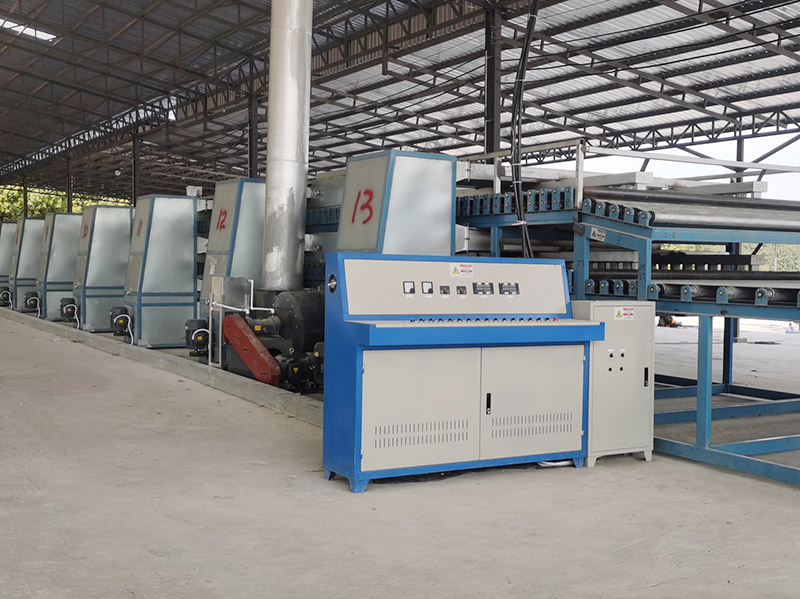
The working principle of a roller veneer dryer is straightforward but highly effective. First, freshly peeled wet veneers are fed into the machine, either manually at a dual-station loading table or automatically through a mechanical feeder. Once inside, the veneers are clamped between the staggered rollers. The lower rollers support the sheet and drive it forward, while the upper rollers press down gently to prevent warping, curling, or misalignment. As the veneer moves through the drying zones, high-temperature air—generated by a biomass burner, natural gas furnace, or thermal oil system—is forced through the veneer from both sides. Moisture rapidly vaporizes and is extracted by exhaust fans. Some advanced systems incorporate heat recovery devices that capture waste heat from the exhaust, preheating incoming fresh air and reducing fuel consumption by 15%–30%. Finally, the dried veneer exits at the discharge end, cooled and ready for stacking or further processing.
One of the key advantages of a roller veneer dryer is its ability to handle thick wood veneers. The machine is ideally suited for veneers ranging from 1.2 mm to 5.0 mm in thickness. Thinner sheets below 1.2 mm are generally better processed on mesh belt dryers to avoid roller marks, while very thin veneers also risk being damaged by the clamping pressure. However, for thick rubber wood, birch, beech, poplar, and pine veneers, the roller dryer is the clear choice. The physical pressure exerted by the upper rollers keeps the veneer flat throughout the drying cycle, preventing the curling and cupping that often plague thick-sheet drying. This results in a uniformly dried product with excellent flatness, ready for high-quality plywood production.
Different wood species demand different drying parameters, and the roller veneer dryer is versatile enough to accommodate a wide range. Softwoods like pine and spruce, with densities around 0.4–0.5 g/cm³, dry quickly but require careful temperature control to prevent resin bleed. The roller dryer’s segmented temperature zones allow operators to start with moderate heat in the preheating section and gradually increase it, avoiding excessive resin flow that could contaminate the rollers or the veneer surface. Medium-density species such as poplar dry easily but need stable line speeds to prevent case hardening. High-density hardwoods like birch, beech, and oak demand slower line speeds and longer drying chambers to allow moisture to migrate from the core without causing internal cracks. Rubberwood, which contains latex, requires precise temperature control between 140°C and 155°C—a task made easier by the roller dryer’s responsive PLC and HMI touchscreen controls.
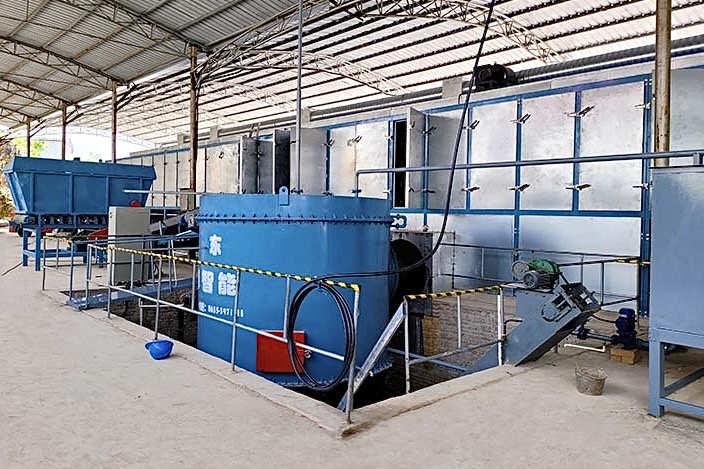
A practical example of a roller veneer dryer in action can be seen in Pu’er, Yunnan, where a two-deck, 56-meter machine equipped with a 10-ton biomass burner processes thick rubber wood veneers. Operating for 22 hours, this line produces 100–110 cubic meters of dried veneer, reducing moisture content to as low as 0% for specialized applications. The dual-deck design maximizes floor space efficiency, while the biomass combustion system keeps fuel costs low by utilizing wood waste. This installation demonstrates the scalability and cost-effectiveness of roller dryers in real-world, high-volume production environments.
When comparing roller dryers to mesh belt dryers, several distinctions emerge. Mesh belt dryers are the preferred choice for thin veneers between 0.3 mm and 2.0 mm, where surface perfection is paramount and even the slightest roller mark is unacceptable. They rely purely on hot air penetration, without contact conduction, which is gentler on delicate sheets. However, they offer less resistance to warping, and very thin veneers can sometimes blow off the belt or become misaligned. Roller dryers, by contrast, excel with thicker stock, delivering superior flatness through physical compression. The trade-off is a slight roller impression on the back side of the veneer—a minor cosmetic issue that is irrelevant for most plywood applications where the sheet will be glued and pressed anyway. Maintenance also differs: roller dryers require periodic cleaning of the rollers to prevent resin buildup, especially when drying pine or rubberwood, while mesh belt dryers demand regular belt tensioning and alignment checks.
Modern roller veneer dryers are increasingly integrated with smart technologies. Temperature and humidity sensors placed throughout the drying chamber provide real-time feedback to the control system, allowing automatic adjustment of line speed, fan frequency, and burner output. Some lines even incorporate AI vision systems that detect veneer thickness and moisture variations before drying, automatically tuning parameters for each batch. Heat recovery exchangers capture exhaust heat, further cutting fuel costs. These intelligent features transform the traditional roller dryer from a simple heated tunnel into a data-driven, energy-efficient production asset.
For manufacturers evaluating a veneer drying machine purchase, the roller veneer dryer represents a proven, high-return investment. Its ability to process thick veneers at high volumes, maintain excellent flatness, and integrate with automated controls makes it the backbone of medium to large plywood operations worldwide. Whether drying rubberwood in Southeast Asia, birch in Eastern Europe, or pine in South America, the roller dryer delivers consistent results that directly impact the quality and profitability of the final plywood product.
In summary, a roller veneer dryer is far more than a conveyor with hot air. It is a precision-engineered system that combines mechanical clamping, conductive and convective heating, intelligent controls, and energy recovery to transform wet, fragile veneers into flat, stable, market-ready sheets. For any wood processing enterprise looking to scale up thick veneer production, understanding and investing in the right roller dryer technology is not just an operational decision—it is a strategic one that will define their competitiveness for years to come.