

AI Vision: Smarter Peeling and Drying
In the rapidly evolving wood processing industry, the integration of artificial intelligence and machine vision technology is revolutionizing traditional production lines. For manufacturers of plywood and veneer, the journey from raw log to finished sheet involves two critical stages: peeling and drying. Historically, both the veneer peeling machine and the veneer drying machine relied heavily on human operators to inspect quality, make adjustments, and sort products. However, with rising labor costs, increasing demands for consistency, and the push toward fully automated "lights-out" factories, machine vision has emerged as a game-changing solution. By embedding high-resolution cameras, advanced lighting, and deep learning algorithms directly into the production line, companies can now achieve levels of precision, efficiency, and yield that were unimaginable just a decade ago.
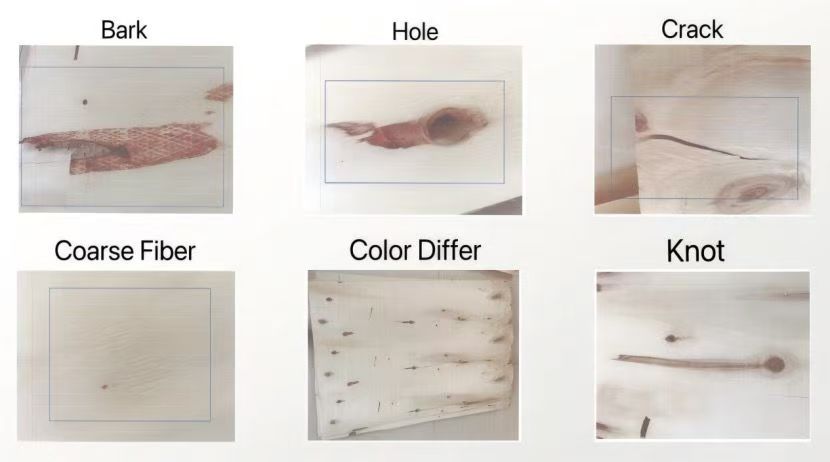
The application of vision systems at the peeling stage begins the moment a log is loaded onto the lathe. Modern veneer peeling machines are often equipped with cameras that scan the log ends to measure diameter, detect curvature, and identify the location of knots and defects before the blade even touches the wood. This information is fed into a controller that adjusts the centering mechanism, ensuring the log is positioned optimally to maximize the yield of full-sheet veneer and minimize waste. As the veneer ribbon peels off the log, line-scan cameras mounted above the outfeed conveyor capture detailed images at speeds exceeding 100 meters per minute. These cameras, often using polarized or diffused lighting to suppress glare from the wet surface, work in conjunction with AI models trained to recognize knots, wormholes, cracks, bark pockets, and other imperfections in real time.
One of the most significant contributions of vision technology in peeling is its integration with the clipper. Traditionally, operators had to make split-second decisions about where to cut the continuous veneer ribbon. Too often, good wood was wasted or defective sections ended up in the final product. With an AI-driven visual analyzer, the system pinpoints the exact coordinates of defects and signals the clipper to cut only at the optimal points. This maximizes the recovery of high-grade face veneer while diverting lower-quality sections to core or patching streams. The result is a measurable increase in the value of the output, as more sheets meet the stringent requirements of furniture and flooring manufacturers.
Beyond defect detection, vision systems at the peeling stage also monitor veneer thickness and uniformity. By analyzing the edge profile of the ribbon, the system can detect variations that might indicate blade wear or hydraulic pressure issues on the peeling machine. This early warning allows maintenance teams to intervene before a whole batch is compromised. Additionally, some advanced setups combine visual data with microwave sensors to measure moisture content on the fly. Wet veneer is then sorted into different stacks for tailored drying, a practice that significantly improves energy efficiency down the line.
As the veneer moves to the drying phase, the role of vision technology shifts from optimization to final grading and quality assurance. The veneer drying machine presents a different set of challenges: the surface of dry veneer is matte rather than reflective, but it may exhibit new defects such as drying cracks, scorching, or discoloration caused by uneven heat. Cameras installed at the outfeed of the dryer capture high-resolution images of each sheet as it emerges. AI algorithms classify the veneer into grades—Face A, Face B, Core, or Reject—based on a combination of visual criteria and moisture readings from integrated sensors. This automated grading is not only faster than manual inspection but also far more consistent, eliminating the subjectivity that can lead to customer disputes.
The synergy between the peeling and drying stages is further enhanced when vision data is shared across the entire production line. For instance, if the system detects a high concentration of knots in a particular log, it can adjust the drying parameters for that batch to prevent over-drying or case hardening. Conversely, if the dryer vision system identifies a recurring defect pattern, it can trace the issue back to the peeling machine and prompt an inspection of the blade or pressure bar. This closed-loop feedback transforms the factory from a series of isolated machines into a smart, self-optimizing ecosystem.
Another area where vision systems add value is in the prevention of machine downtime. In the drying line, cameras can monitor the behavior of veneer sheets on the conveyor, detecting jams or misalignments before they cause a shutdown. Similarly, at the peeling stage, vision can verify that the veneer ribbon is tracking correctly and that the clipper is functioning as intended. By catching anomalies early, manufacturers avoid costly interruptions and maintain a steady flow of production.
The economic benefits of adopting AI vision in both peeling and drying are compelling. Factories report reductions in labor costs of up to 50% for inspection tasks, while yield improvements of 3% to 7% are common due to better optimization of cuts and drying. In an industry where profit margins are often thin, these gains can be the difference between success and failure. Moreover, the ability to provide detailed quality reports for each batch—complete with images and defect maps—gives manufacturers a competitive edge when dealing with quality-conscious international buyers.
Looking ahead, the technology continues to advance. Next-generation systems are incorporating 3D laser profiling to measure veneer thickness with micron-level accuracy, and hyperspectral imaging to detect chemical changes or fungal infections invisible to conventional cameras. As these tools become more affordable, even small and medium-sized enterprises will be able to upgrade their veneer peeling machines and veneer drying machines with smart vision capabilities. The trend is clear: the future of wood processing is not just automated, but visually intelligent.
In conclusion, the deployment of machine vision across the peeling and drying stages represents a paradigm shift in veneer production. From log to dried sheet, every millimeter of wood is analyzed, optimized, and graded with superhuman precision. For plywood manufacturers aiming to stay competitive in a global market, investing in these technologies is no longer optional—it is essential. The combination of a high-performance veneer peeling machine and a state-of-the-art veneer drying machine, both guided by the unblinking eye of AI, is the new gold standard for the industry.