

Automating Veneer Dryers: The Smart Way Forward
In the fast-evolving global wood processing industry, automation is no longer a luxury reserved for high-tech sectors—it has become a necessity for survival and growth. For plywood manufacturers and veneer mills, the drying phase is often the bottleneck where efficiency, quality, and costs intersect. Traditional veneer dryers, heavily reliant on manual adjustments and operator intuition, are increasingly unable to meet the demands of modern production: consistent moisture content, minimal energy waste, and reduced labor dependency. The shift toward fully automated veneer dryers is not just a trend; it is a strategic imperative that separates industry leaders from those struggling to stay profitable.
The journey toward automation begins at the very front of the production line: the infeed and paving system. In many conventional plants, workers manually lift and place veneer sheets onto the dryer conveyor—a labor-intensive task prone to inconsistencies. Upgrading to automated infeed systems, such as vacuum suction cups or robotic arms, eliminates the physical strain on workers and ensures a steady, uniform flow of material. More importantly, integrating laser or ultrasonic sensors at the entrance allows the machine to automatically detect veneer thickness. This real-time data feeds into the central controller, which adjusts conveyor speed and temperature setpoints without any human intervention. The result is a seamless transition from one batch to another, even when veneer dimensions vary widely, reducing idle time and preventing bottlenecks that typically plague manual operations.
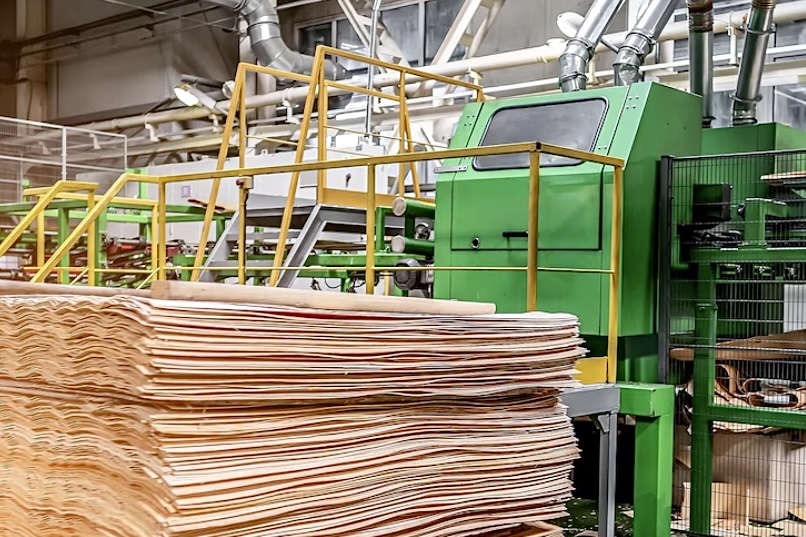
Beyond material handling, the heart of automation lies in the closed-loop control of core process parameters. Traditional dryers often rely on open-loop systems where operators manually tweak burner settings based on occasional temperature readings. Modern automated veneer dryers, however, employ a network of high-temperature-resistant sensors distributed across multiple zones—preheating, main drying, and balancing. These sensors continuously monitor both temperature and humidity, feeding data back to a Programmable Logic Controller (PLC). Using advanced PID algorithms, the system automatically modulates the burner’s fuel valve and the circulation fans’ speed to maintain optimal conditions. This level of precision keeps temperature fluctuations within ±2°C, a feat impossible to achieve consistently with manual control. The benefits are immediate: uniform drying, fewer rejects, and significant fuel savings.
One of the most impactful advancements in automation is the integration of moisture detection and exhaust management. In older systems, exhaust fans often run continuously, blowing out not just humid air but also valuable heat. Automated dryers link exhaust dampers to real-time humidity sensors, opening them only when necessary to expel moisture-laden air. This intelligent venting can reduce heat loss by 10% to 20%. Furthermore, the installation of near-infrared (NIR) moisture meters at the outfeed provides instant feedback on the final product’s moisture content. If the veneer is slightly over-dried or under-dried, the PLC automatically fine-tunes the conveyor speed or temperature for subsequent batches. This self-correcting mechanism ensures that every sheet meets the required specifications, minimizing waste and maximizing yield.
Automation also extends to the mechanical drive systems, where variable frequency drives (VFDs) have become indispensable. By replacing fixed-speed motors with VFD-controlled ones for both the conveyor chains and circulation fans, the dryer can adapt its operation to the exact load. For instance, when processing thinner veneers that require less residence time, the system automatically accelerates the conveyor while reducing fan speed to save energy. Conversely, for thicker sheets, it slows down the line and increases airflow. This dynamic matching of speed and thermal output not only enhances product quality but also slashes electricity consumption by 20% to 30%, a substantial saving for any operation running round the clock.
The user interface is another area where automation transforms the operator’s role. Modern wood veneer dryers are equipped with intuitive Human-Machine Interface (HMI) touchscreens that replace banks of buttons and analog gauges. Operators can simply select a “recipe” tailored to a specific wood species and thickness, and the machine automatically configures all parameters. This recipe-based system drastically reduces the learning curve for new employees and eliminates the variability introduced by human error. Additionally, the integration of Industrial Internet of Things (IIoT) technology allows plant managers to monitor dryer performance remotely via smartphones or computers. They can receive real-time alerts for anomalies, access historical data for trend analysis, and even perform remote diagnostics, ensuring minimal downtime and proactive maintenance.
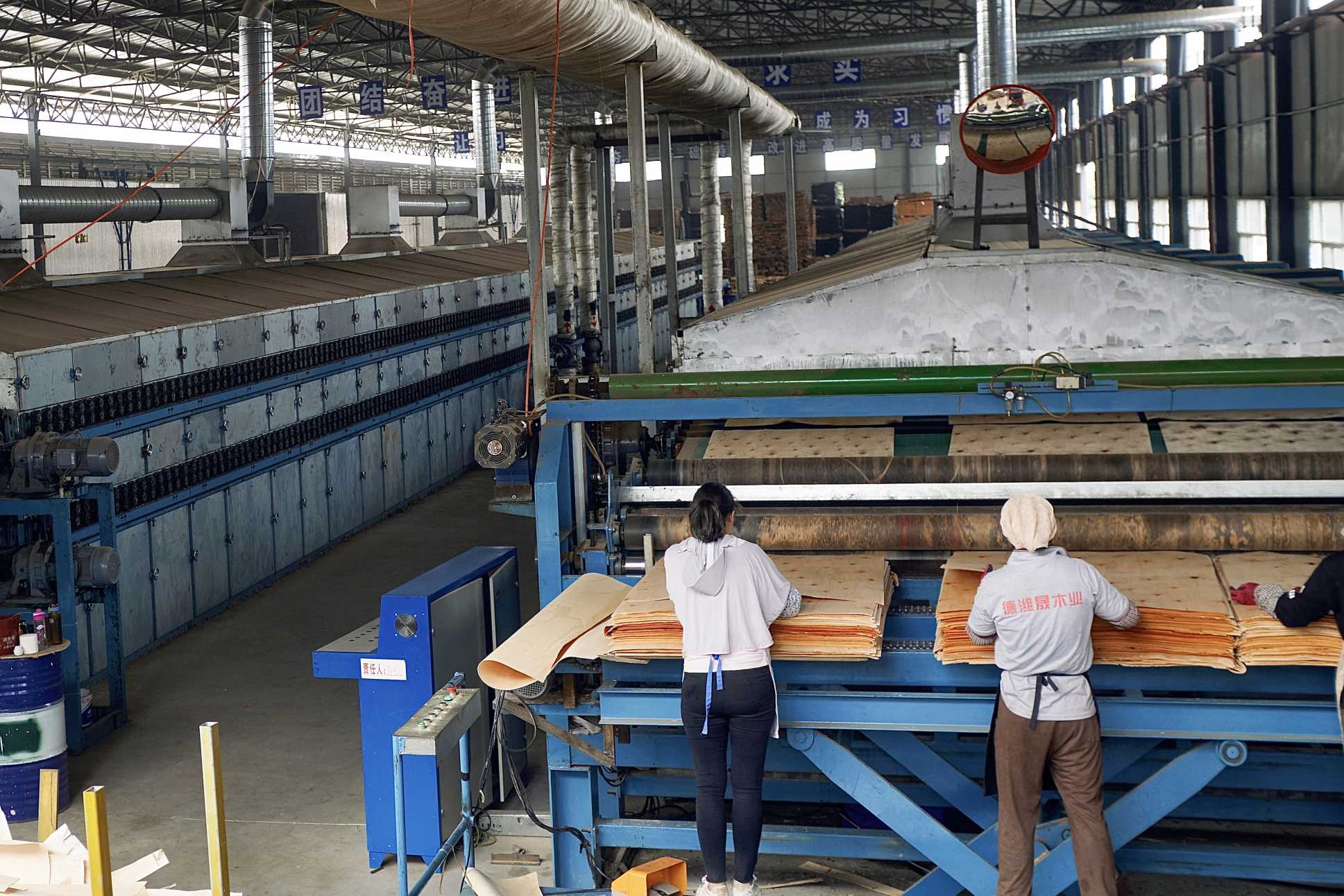
Safety and maintenance have also been revolutionized by automation. Traditional dryers often suffer from undetected mechanical faults or, worse, fire hazards caused by overheating and dust accumulation. Automated systems now include self-diagnostic capabilities that continuously monitor motor currents, bearing temperatures, and sensor integrity. When a deviation is detected, the HMI displays a precise error message—such as “Fan #2 overcurrent”—enabling maintenance teams to address issues swiftly. Moreover, advanced fire prevention systems with spark detectors and automatic water mist suppression can instantly douse a potential blaze, protecting both personnel and assets. Automated lubrication systems for chains and bearings further reduce wear and tear, extending equipment lifespan and reducing unplanned stoppages.
At the outfeed end, automation continues to deliver value through automated stacking and sorting. Pneumatic kickers and lift tables neatly stack dried veneer, ready for forklift transport, eliminating the need for workers to stand by the hot exit. Looking ahead, some cutting-edge facilities are experimenting with AI-powered vision systems that inspect each sheet for defects like cracks, knots, or discoloration, automatically grading them into A, B, or C categories. This level of automation not only saves labor but also ensures consistent grading standards that buyers trust.
For manufacturers considering an upgrade, a phased approach is often the most practical. The first step, focusing on quality assurance, involves installing a PLC with HMI, PID temperature control, and automated exhaust linkage. This foundational upgrade alone can dramatically improve product consistency and reduce energy waste. The second phase, aimed at cost reduction, adds full VFD control, automated infeed paving, and remote monitoring capabilities. Finally, the third phase—the “lights-out” factory—integrates robotic arms, online moisture scanning, and AI sorting. Each step builds upon the previous one, allowing businesses to spread capital expenditure while immediately reaping operational benefits.
In conclusion, automating veneer dryers is not merely about adopting new technology; it is about rethinking the entire drying process to achieve unprecedented levels of efficiency, quality, and safety. As global competition intensifies and labor costs rise, the mills that embrace automation will be the ones that thrive. The future of wood drying is smart, connected, and autonomous—and that future is already here.